The changing shape of support in the work of port chaplains

Read in the August issue of the IJMH (requires subscription) the article by Wendy Cadge, Nelson Turgo and Helen Sampson: “The changing shape of support in the work of port chaplains”

This article draws on historical and ethnographic data from port chaplains working with the Mission to Seamen/Seafarers in the United Kingdom in the 1950s and 2010s to chart a shift in the shape of that work. Relationships with seafarers are at the core of the work in both decades. This work is described through individual support for seafarers, work around death, support for community-building, and religious gatherings and events. While there is evidence for each of these components of the work in each decade, there is a clear shift in the shape of pastoral or caring work, which became more individualized and practically oriented over time. This shift likely results from automation and shorter turnaround times for vessels, as well as changes in the spiritual and religious identities of seafarers and port chaplains.

https://journals.sagepub.com/doi/abs/10.1177/08438714251355687

The Crisis of British Sea Power: The Collapse of a Naval Hegemon 1942

Read in the August issue of the IJMH (requires subscription) the review by Tim Benbow of The Crisis of British Sea Power: The Collapse of a Naval Hegemon 1942 by James Levy

This work is a close examination of the conditions surrounding and precipitating the last gasp of British naval hegemony and events that led to its demise.

Great Britain undertook a massive naval building program in the late-1930s in order to deter aggression and secure dominance at sea against her nascent enemies, Nazi Germany and Fascist Italy. But the failure of the policy of Appeasement to deter war or delay it into the early 1940s left the building program only partially complete, and the exigencies of war led to the cancellation of the critical but costly and time-consuming “Lion” class battleships, and the slow delivery of the “1940 battlecruiser” (HMS Vanguard) and two vital fleet carriers. Adding to these issues, the fall of France spurred the USA to initiate her own, even larger, naval building program, and together with the entry of the powerful and capable Imperial Japanese Navy completely overwhelmed Britain’s position as the world’s premier naval power.

This book will be of value to those interested in the history of the Second World War, British strategy, and the British navy.

The Crisis of British Sea Power: The Collapse of a Naval Hegemon 1942

https://journals.sagepub.com/doi/abs/10.1177/08438714251355580

Le trafic dunkerquois au XVIIIe siècle (1729–1792)

Read in the August issue of the IJMH (requires subscription) the review by Lewis Wade of Le trafic dunkerquois au XVIIIe siècle (1729–1792) by Christian Pfister-Langanay

Dunkirk is well known to historians and the general public as the capital of privateers, with its namesake hero Jean Bart. In the Spanish era, however, the Armada of Flanders and its privateers won successes just as considerable—if not greater—than those of the Northern Squadron under the Sun King. One forgets that the Flemish port, after the demolition of its facilities in 1713, had a hard time finding its way back to peaceful trade over the course of the eighteenth century.

Dunkirk’s maritime trade experienced spectacular growth, and its maritime reach extended across all the seas of the world. The leave registers kept by the Admiralty and the reports of annual accounts make it possible to examine Dunkirk’s navigation. Even more interesting are the pilotage reservation registers kept by the sailors themselves, which detail the port’s arrivals and departures in a French phonetic transcription of a whole series of idioms, from Scandinavian to the French these Flemings had not yet mastered.

This work collects—and above all, synthesizes in a uniform manner—all these data. More than 32,000 ship departures are classified according to their origin and destination, and recorded across more than 730 ports. To this day, it is the best statistical coverage available for a French port of the eighteenth century.

Revue du Nord n° Hors-série 48. Le trafic dunkerquois au XVIIIe siècle (1729-1792)

https://journals.sagepub.com/doi/abs/10.1177/08438714251355568

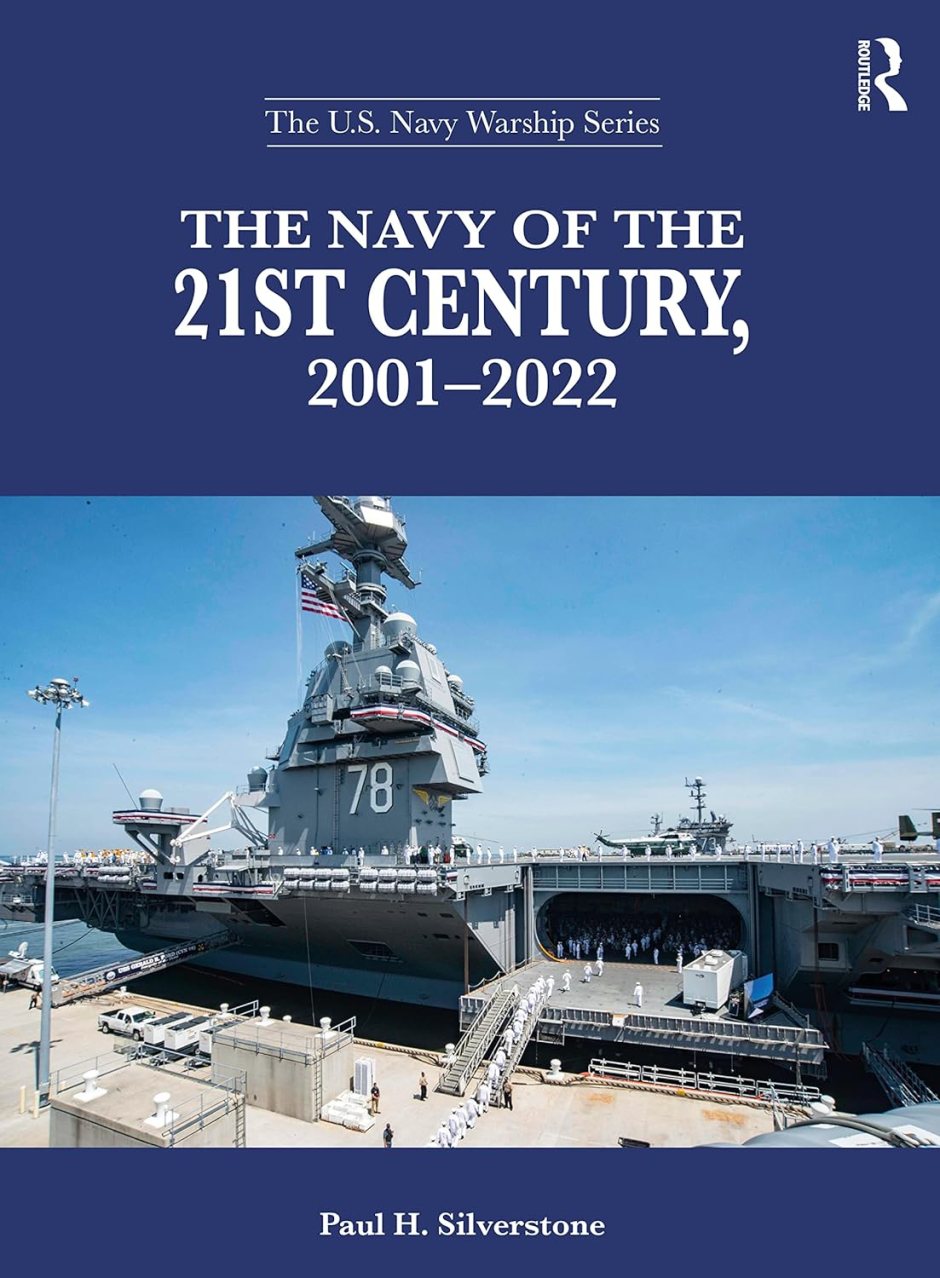
The Navy of the 21st Century, 2001–2022

Read in the August issue of the IJMH (requires subscription) the review by William M. McBride of The Navy of the 21st Century, 2001–2022 by Paul H. Silverstone

The Navy of the 21st Century, 2001– 2022 presents an all- inclusive listing of the ships that have served in the US Navy since the start of the new century.

The newest and sixth volume of the US Navy Warship Series provides insight into the technological innovations and modern weaponry featured in newer naval vessels, as well as controversies over the naming conventions of ships over past decades. The text contains specifications and illustrations for all the ships and submarines that have helped the US maintain the world’s largest and most powerful navy to the present day. Many new developments have occurred during this period, and several new types of ships have emerged. The book includes latest developments such as the unmanned seagoing drones, as well as those now under construction or projected. Ships of other government departments, such as the Coast Guard, NOAA, and the Army, that would be used in conjunction with the Navy, are also highlighted.

This is an essential reference volume for scholars and institutions specializing in American military history, policy, and strategy.

https://www.routledge.com/The-Navy-of-the-21st-Century-2001-2022/Silverstone/p/book/9780367407865?srsltid=AfmBOopMRWSvkwd1s8b0q5KJsbm2Q9nTRAHEC-H0nWbp9LBfTE42Po4j

https://journals.sagepub.com/doi/abs/10.1177/08438714251355542

Sea-Time: An Ethnographic Adventure

Read in the August issue of the IJMH (requires subscription) the review by Andrew Linington of Sea-Time: An Ethnographic Adventure by Helen Sampson

This book is an ethnography that draws upon 25 years of qualitative research and shipboard fieldwork in the merchant cargo shipping sector. It explores the lives and work of seafarers and how these have changed over time. Change over time and the experience of time on board are organising themes throughout the text. They are contextualised with accounts of transformation in the regulation of the shipping industry and technological innovation.

The book begins with a unique account of a voyage on a container ship. In this, the author details both the research process and the daily activities and shared thoughts of the seafarers who are on board. The narrative is further enhanced with illustrative examples taken from other voyages to illustrate continuities and change over time.

The book will be of value to individuals, scholars, and researchers interested in ethnography of all kinds. Sociologists, anthropologists, maritime studies students, seafarers, ship operators and policy makers will find the text engaging and revealing. It provides a vivid account that will appeal to academics interested in the study of work, workplace change and time. It is accessibly written and will be enjoyed by readers interested in the contemporary shipping industry, and the life and work of seafarers.

https://www.routledge.com/Sea-Time-An-Ethnographic-Adventure/Sampson/p/book/9781032576060?srsltid=AfmBOoqmyEDc8F1NF2wDNSxUh5NGTbZIwKeVQ7bIRSdXMFRYAL7QeCoW

https://journals.sagepub.com/doi/abs/10.1177/08438714251355566

The Archaeology of Modern Worlds in the Indian Ocean

Read in the August issue of the IJMH (requires subscription) the review by Annalisa C. Christie of The Archaeology of Modern Worlds in the Indian Ocean by Mark William Hauser and Julia Jong Haines, eds.

This volume brings together a diverse range of specialists working in multiple areas of the Indian Ocean world, providing broad geographical coverage and comparisons across sites. Contributors use a historical archaeological approach, which bridges everyday life in the recent past with large-scale processes of globalization, to examine topics related to colonialism, labor, race, ethnicity, diaspora, human-environment relationships, and heritage.

Case studies from Zanzibar, Mauritius and the Mascarene islands, India, Indonesia, Java, and other locations emphasize networks and connections across the Indian Ocean. Contributors apply a variety of disciplinary methods, including bioanthropology, analysis of medieval illustrations and colonial documents, architectural history, and anthropology of built space. They discuss the material history of domestic areas, religious structures, and colonial outposts; the structure of the slave trade; and the everyday implications of disease and health management within laboring populations.

This volume decenters European narratives and actors to show the important ways this region shaped the modern world. By highlighting the experiences of ordinary people in East Africa and South and Southeast Asia, the research in these chapters contributes to a better understanding of histories in the Global South over the last four hundred years.  

University Press of Florida: The Archaeology of Modern Worlds in the Indian Ocean

https://journals.sagepub.com/doi/abs/10.1177/08438714251355576

American Slavers: Merchants, Mariners, and the Transatlantic Commerce in Captives, 1644–1865

Read in the August issue of the IJMH (requires subscription) the review by Claire Steele of American Slavers: Merchants, Mariners, and the Transatlantic Commerce in Captives, 1644–1865 by Sean M. Kelley

A total of 305,000 enslaved Africans arrived in the New World aboard American vessels over a span of two hundred years as American merchants and mariners sailed to Africa and to the Caribbean to acquire and sell captives. Using exhaustive archival research, including many collections that have never been used before, historian Sean M. Kelley argues that slave trading needs to be seen as integral to the larger story of American slavery.

Engaging with both African and American history and addressing the trade over time, Kelley examines the experience of captivity, drawing on more than a hundred African narratives to offer a portrait of enslavement in the regions of Africa frequented by American ships. Kelley also provides a social history of the two American ports where slave trading was most intensive, Newport and Bristol, Rhode Island.

In telling this tragic, brutal, and largely unknown story, Kelley corrects many misconceptions while leaving no doubt that Americans were a nation of slave traders.

https://journals.sagepub.com/doi/abs/10.1177/08438714251355565

Misinformation and the Limits of Empire in the Brazilian Backlands

Read in the August issue of the IJMH (requires subscription) the review by Filipa Ribeiro da Silva of Adrift on an Inland Sea: Misinformation and the Limits of Empire in the Brazilian Backlands by Hal Langfur

From 1750 until Brazil won its independence in 1822, the Portuguese crown sought to extend imperial control over the colony’s immense, sea-like interior and exploit its gold and diamond deposits using enslaved labor. Carrying orders from Lisbon into the Brazilian backlands, elite vassals, soldiers, and scientific experts charged with exploring multiple frontier zones and establishing royal authority conducted themselves in ways that proved difficult for the crown to regulate. The overland expeditions they mounted in turn encountered actors operating beyond the state’s purview: seminomadic Native peoples, runaway slaves, itinerant poor, and those deemed criminals, who eluded, defied, and reshaped imperial ambitions.

This book measures Portugal’s transatlantic projection of power against a particular obstacle: imperial information-gathering, which produced a confusion of rumors, distortions, claims, conflicting reports, and disputed facts. Drawing on interdisciplinary scholarship in the fields of ethnohistory, slavery and diaspora studies, and legal and literary history, Hal Langfur considers how misinformation destabilized European sovereignty in the Americas, making a major contribution to histories of empire, frontiers and borderlands, knowledge production, and scientific exploration in the eighteenth and nineteenth centuries.

https://www.sup.org/books/history/adrift-inland-sea

https://journals.sagepub.com/doi/abs/10.1177/08438714251355556

Mooring the Global Archive: A Japanese Ship and Its Migrant Histories

Read in the August issue of the IJMH (requires subscription) the review by Boyd Cothran of Mooring the Global Archive: A Japanese Ship and Its Migrant Histories by Martin Dusinberre

Martin Dusinberre follows the Yamashiro-maru steamship across Asian and Pacific waters in an innovative history of Japan’s engagement with the outside world in the late-nineteenth century. His compelling in-depth analysis reconstructs the lives of some of the thousands of male and female migrants who left Japan for work in Hawai’i, Southeast Asia and Australia. These stories bring together transpacific historiographies of settler colonialism, labour history and resource extraction in new ways. Drawing on an unconventional and deeply material archive, from gravestones to government files, paintings to song, and from digitized records to the very earth itself, Dusinberre addresses key questions of method and authorial positionality in the writing of global history. This engaging investigation into archival practice asks, what is the global archive, where is it cited, and who are ‘we’ as we cite it? This title is also available as Open Access.

https://www.cambridge.org/core/books/mooring-the-global-archive/F72102F79AB9FCFF8616628FCF5B2C14#fndtn-information

https://journals.sagepub.com/doi/abs/10.1177/08438714251355545

The Kings of Algiers: How Two Jewish Families Shaped the Mediterranean World

Read in the August issue of the IJMH (requires subscription) the review by Francesca Bregoli of The Kings of Algiers: How Two Jewish Families Shaped the Mediterranean World during the Napoleonic Wars and Beyond by Julie Kalman

At the height of the Napoleonic Wars, the Bacri brothers and their nephew, Naphtali Busnach, were perhaps the most notorious Jews in the Mediterranean. Based in the strategic port of Algiers, their interconnected families traded in raw goods and luxury items, brokered diplomatic relations with the Ottomans, and lent vital capital to warring nations. For the French, British, and Americans, who competed fiercely for access to trade and influence in the region, there was no getting around the Bacris and the Busnachs. The Kings of Algiers traces the rise and fall of these two trading families over four tumultuous decades in the nineteenth century.

In this panoramic book, Julie Kalman restores their story—and Jewish history more broadly—to the histories of trade, corsairing, and high-stakes diplomacy in the Mediterranean during the Napoleonic Wars and their aftermath. Jacob Bacri dined with Napoleon himself. Thomas Jefferson, James Madison, and Horatio Nelson considered strategies to circumvent the Bacris’ influence. As the families’ ambitions grew, so did the perils, from imprisonment and assassination to fraud and family collapse.

The Kings of Algiers brings vividly to life an age of competitive imperialism and nascent nationalism and demonstrates how people and events on the periphery shaped perceptions and decisions in the distant metropoles of the world’s great nations.

https://press.princeton.edu/books/hardcover/9780691230153/the-kings-of-algiers?srsltid=AfmBOorjSXcwxTyQaR2jg0TdU1B0zUkYHZ7CRPODSLbx9gbXSHn1fR0q

https://journals.sagepub.com/doi/abs/10.1177/08438714251355570