Dutch Chartered Companies

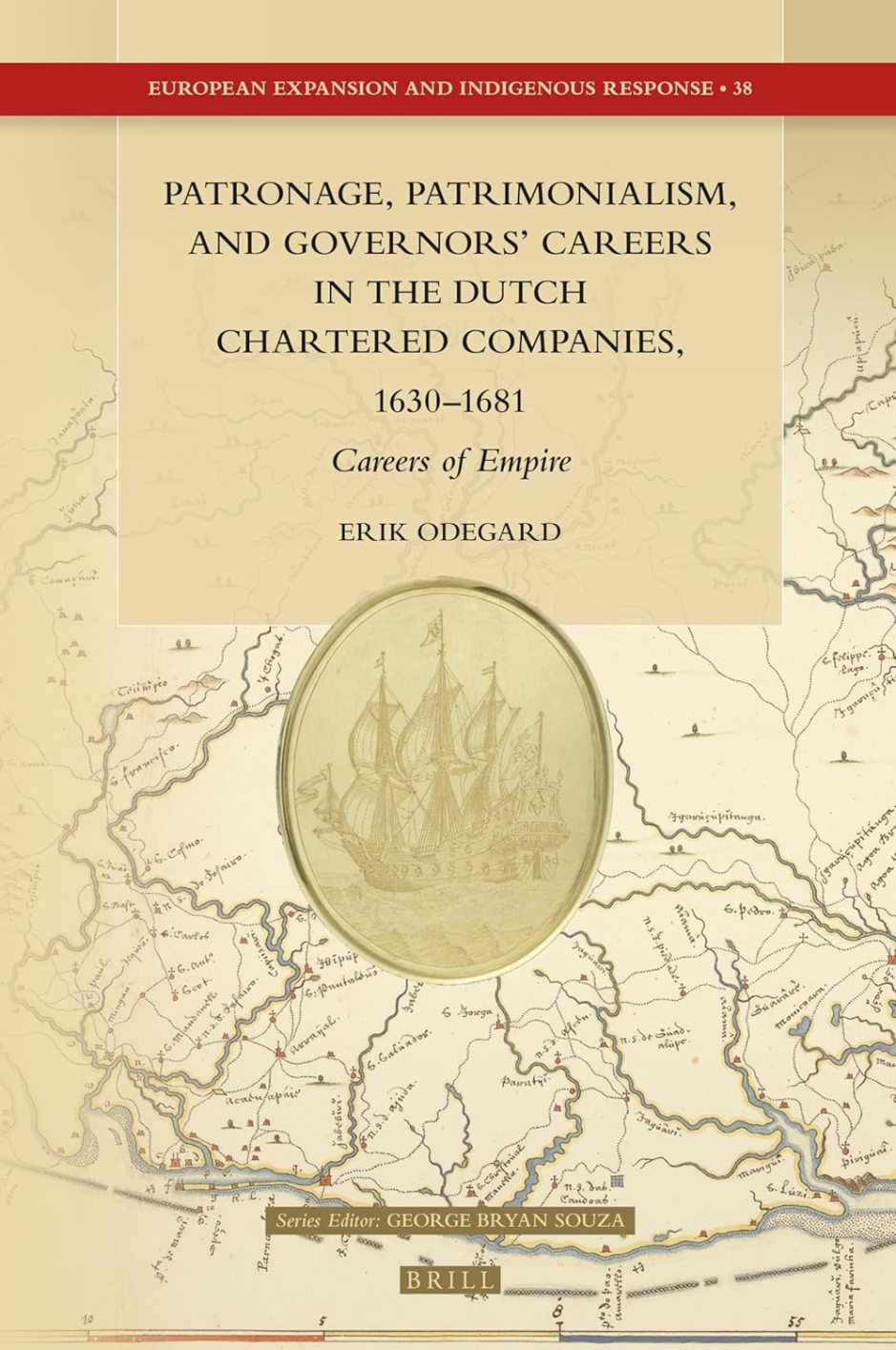
Patronage, Patrimonialism, and Governors’ Careers in the Dutch Chartered Companies, 1630–1681: Careers of Empire by Erik Odegard

Read the review (requires subscription) by Vany Susanto in the November 2024 issue of the IJMH

https://journals.sagepub.com/doi/abs/10.1177/08438714241272552

A description of the book is available here:

https://brill.com/display/title/59885

How did individuals advance to the highest ranks in the Dutch colonial administrations? And how, once appointed, was this rank retained? To answer these questions, this book explores the careers of Dutch colonial governors in the 17th century with a focus on two case-studies: Johan Maurits van Nassau-Siegen, governor of Dutch Brazil (1636-1644) and Rijckloff Volckertsz van Goens, Governor-General in Batavia in the 1670s.

By comparing a Western (Atlantic, WIC) and an Eastern (Asian, VOC) example, this book shows how networks sustaining career-making differed in the various parts of the empire: the West India Company was much more involved in domestic political debates, and this led to a closer integration of political patronage networks, while the East India Company was better able to follow an independent course. The book shows that to understand the inner workings of the Dutch India companies, we need to understand the lives of those who turned the empire into their career.

Ship-repair companies in Britain

“A Cinderella industry: Private and nationalized ship-repair companies in Britain, 1970–1986” by Hugh Murphy in the latest issue of the IJMH

Read it (requires subscription) at https://doi.org/10.1177/08438714241271821

This article explores Britain’s ship-repair industry under private enterprise and partly under state control from 1970 to 1986 in order to shed much-needed light on ship repair during a crucial period in its history – a period when a substantial proportion of the industry moved from private to state control, initially in 1974 when four major ship repairers were nationalized, and again in 1977 when a further six ship-repair companies came under state control through the British Shipbuilders Corporation. The last remaining nationalized ship-repair firm reverted to private control in 1986. The article aims to encourage maritime historians to look at the histories of their ship-repairing industries nationally and internationally, either monographically or by a case study approach, in order to build up a national historiographical approach to the subject.

Art on the Move in the Mediterranean and the Black Sea

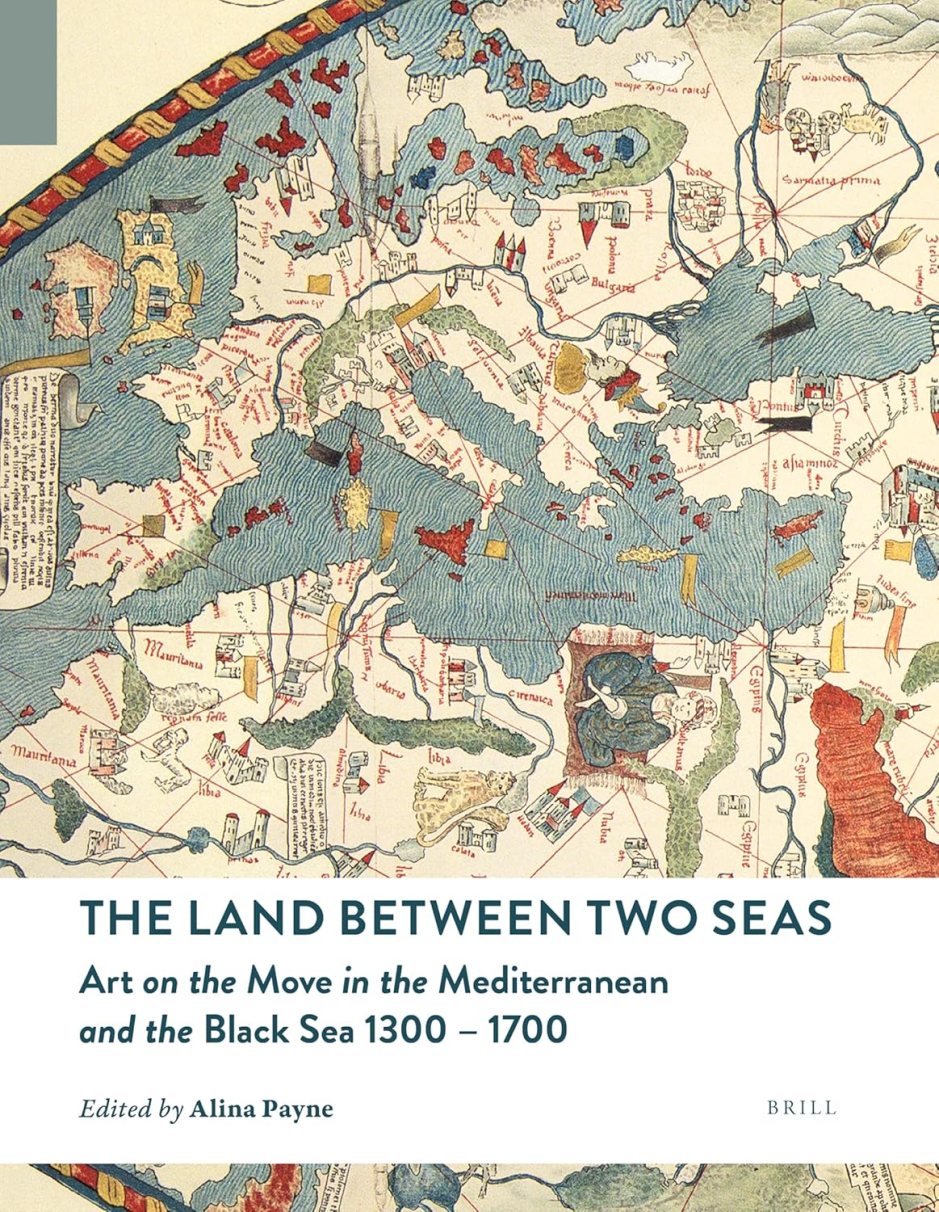
The Land between Two Seas: Art on the Move in the Mediterranean and the Black Sea 1300–1700 by Alina Payne, ed.

Read the review (requires subscription) by Maximilian Hartmuth in the November 2024 issue of the IJMH

https://journals.sagepub.com/doi/abs/10.1177/08438714241272537

A description of the book is available here:

https://brill.com/edcollbook-oa/title/61882

Based upon a sweeping command of Dutch East India Company (VOC) primary sources, Knaap’s manuscript offers a thought-provoking thematic examination and chronological survey of the Dutch Republic’s overseas and colonial expansion in Asia and South Africa, mainly through the VOC and its successors, the Batavian Republic, the Kingdom of Holland and Franco-Dutch Java, over a period of more than two centuries, 1596-1811. It elucidates and deals with several conceptual and theoretical issues that are intrinsically important and germane to a polity’s definition of and how it chooses to execute the process of expansion overseas in the early modern period. One of this work’s major arguments and contributions is its advocacy that the Dutch VOC’s expansion in Asia was an imperial project and must be seen as an act of empire, or, at the very minimum, the attempt to construct one via the innovative utilization of a highly organized and dynamic commercial institution with significant political and diplomatic power and naval and military resources.

Austrian seafarers’ shipboard collective protests

“Beyond docks, below decks: Austrian seafarers’ shipboard collective protests in the age of industrial shipping” by Matteo Barbano

Read it (open access) in the latest issue of the IJMH:

https://journals.sagepub.com/doi/abs/10.1177/08438714241271805

This article explores collective resistance actions among Austrian seafarers between the late nineteenth century and First World War, shedding light on the seaborne dimension of their struggles and investigating possible connections between the developmental stages of the seafarers’ labour movement in Trieste and their engagement in collective action at sea. In doing so, the research focuses particularly on the crews of Austrian Lloyd, the most powerful shipping company in the Habsburg merchant marine, which played a leading role in shaping labour relations between Austrian seafarers and shipowners. By analysing data extracted from the Black Book, the company’s tool for blacklisting seafarers, this article identifies seaborne collective resistance as a distinctive mode of struggle found in specific phases of the industrial relations between Lloyd and its seagoing personnel, underscoring the relevance of the ship as a significant stage in maritime labour conflicts in the age of industrial shipping.

First Dutch Colonial Empire in Asia and South Africa

Genesis and Nemesis of the First Dutch Colonial Empire in Asia and South Africa, 1596–1811 by Gerrit Knaap

Read the review (requires subscription) by Hanna te Velde in the November 2024 issue of the IJMH

https://journals.sagepub.com/doi/abs/10.1177/08438714241272592

A description of the book is available here:

https://brill.com/display/title/63374

Based upon a sweeping command of Dutch East India Company (VOC) primary sources, Knaap’s manuscript offers a thought-provoking thematic examination and chronological survey of the Dutch Republic’s overseas and colonial expansion in Asia and South Africa, mainly through the VOC and its successors, the Batavian Republic, the Kingdom of Holland and Franco-Dutch Java, over a period of more than two centuries, 1596-1811. It elucidates and deals with several conceptual and theoretical issues that are intrinsically important and germane to a polity’s definition of and how it chooses to execute the process of expansion overseas in the early modern period. One of this work’s major arguments and contributions is its advocacy that the Dutch VOC’s expansion in Asia was an imperial project and must be seen as an act of empire, or, at the very minimum, the attempt to construct one via the innovative utilization of a highly organized and dynamic commercial institution with significant political and diplomatic power and naval and military resources.

From warships to whaleships

“From warships to whaleships: Former Royal Navy vessels entering the South Seas fishery in the post-Napoleonic period, 1815–1845” by Julie Papworth and Roger Dence

Read it at https://doi.org/10.1177/08438714241282428 (subscription needed)

During Britain’s conflicts between 1793 and 1815, the Royal Navy changed markedly. New classes of smaller warships were introduced, with numerous vessels built to Admiralty (King’s Yard) designs in private shipyards rather than the Royal Dockyards. Many were sloops-of-war, flush-decked and unrated vessels, carrying 20 guns or fewer, that proved versatile in operations around the world. After 1815, the size of the fleet was reduced. Initially many vessels were kept in reserve, but eventually most were sold for mercantile service or breaking, some of the latter also then being resold for merchant use. These vessels proved attractive to long-established whaling owners and new entrants to the whaling trade alike. Such warship-to-whaleship transitions are examined through vessels entering the British southern whale fishery in the post-Napoleonic period between 1815 and 1845.

Maritime Men of the Asia-Pacific

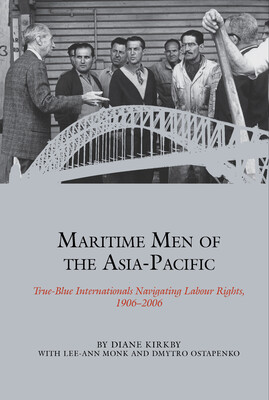
Maritime Men of the Asia-Pacific: True-Blue Internationals Navigating Labour Rights 1906–2006 by Diane Kirkby with Lee-Ann Monk and Dmytro Ostapenko

Read the review (requires subscription) by Helen Devereux in the November 2024 issue of the IJMH

https://journals.sagepub.com/doi/abs/10.1177/08438714241272554

A description of the book is available here:

https://www.liverpooluniversitypress.co.uk/doi/book/10.3828/9781802077193

Maritime workers occupy a central place in global labour history. This new and compelling account from Australia, shows seafaring and waterside unions engaged in a shared history of activism for legally regulated wages and safe liveable conditions for all who go to sea. Maritime Men of the South Pacific provides a corrective to studies which overlook this region’s significance as a provider of the world’s maritime labour force and where unions have a rich history of reaching across their differences to forge connections in solidarity. From the ‘militant young Australian’ Harry Bridges whose progressive unionism transformed the San Francisco waterfront, to Australia’s successful implementation of the Maritime Labour Convention 2006, this is a story of vision and leadership on the international stage. Unionists who saw themselves as internationalists were also operating within a national and imperial framework where conflicting interests and differences of race and ideology had to be overcome. Union activists in India, China and Japan struggled against indentured labour and ‘coolie’ standards. They linked with their fellow-unionists in pursuing an ideal of international labour rights against the power of shipowners and anti-union governments. This is a complex story of endurance, cooperation and conflict and its empowering legacy.

Transporting convict to Australia

“Exploiting inter- and intracontinental markets: The business of transporting convicts to the Australian colonies in the late eighteenth and early nineteenth century” by Lauren Darwin in the November 2024 issue of the IJMH

Read it in open access at https://doi.org/10.1177/08438714241274977

This article explores the pivotal role played by convict transports in the expansion and redirection of British maritime trade to the East. Through an investigation into the business of transporting prisoners across the seas in the late eighteenth and early nineteenth century, it reveals that contractors, shipowners and captains connected to convict transportation were at the forefront of exploiting new trading opportunities in the Indian and Pacific Oceans. By analysing the voyages of convict ships within the prism of long-haul trading ventures, this work reveals the often overlooked business acumen of those who organized and executed convict transportation as they participated in inter- and intra-continental maritime trade.

From Northeast Passage to Northern Sea Route

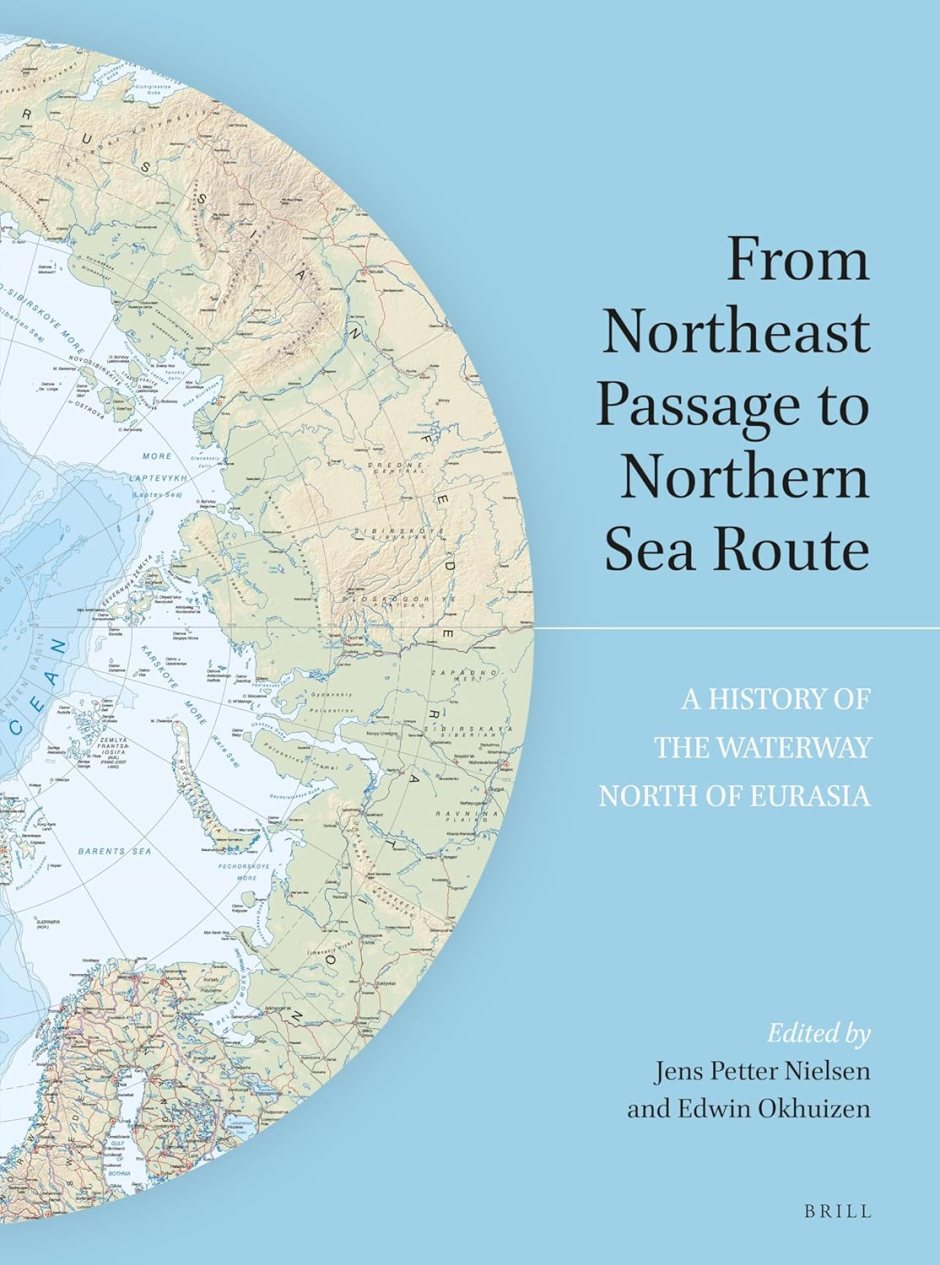
From Northeast Passage to Northern Sea Route: A History of the Waterway North of Eurasia by Jens Petter Nielsen and Edwin Okhuizen, eds.

Read the review (requires subscription) by Ingo Heidbrink in the November 2024 issue of the IJMH

https://journals.sagepub.com/doi/abs/10.1177/08438714241272603

A description of the book is available here:

https://brill.com/display/title/39591

The notion of a waterway north of Eurasia, conceived in the first half of the sixteenth century, remained only a dream for centuries, due to ice, unmapped coastlines and a lack of geographical knowledge. This volume is the first comprehensive, scholarly account in English of the slow but steady exploration and commercial exploitation of the Siberian coastal waters, and it proves that this was a truly international endeavour. However, in the end, the Northern Sea Route as a through traverse route came to be used primarily by the Soviet Union, for which it became a crucial vehicle for the geopolitical and economic integration of its vast territories. As an international trade route the Northern Sea Route is only today about to win its way, essentially as a result of global warming. This being the case, should we rejoice or despair?

The Anglo-Dutch Wars

“The balance of sea power in the early modern era: The Anglo-Dutch Wars (1652-1674)” by Izidor Janžekovič was published in the November 2024 issue of the IJMH

Read it in open access at https://doi.org/10.1177/08438714241269611

The balance of power is among the foundational principles in international relations. This principle, however, has been analysed mostly in relation to land powers on the European continent, while the historiography has failed to appropriately recognize its naval aspect so far. This article compares the English and Dutch sea powers or fleets during the three Anglo-Dutch Wars (1652–1674). Warships or ships of the line were the main instruments of naval warfare, and hence key to any measurements of sea power. Detailed tables of the fleets with the number of warships and guns for the major engagements show the balance of sea power at the time. Attaining and maintaining the balance of (sea) power in the early modern era was not just an abstract idea, but also an interactive process, based on numerical analysis. The author argues that there was a real or naval balance of sea power between the fleets or alliances of fleets; that the balance of sea power was acknowledged in the international alliance treaties; and that the balance of sea power became an element of early modern political discourse.