Shipping in Camogli

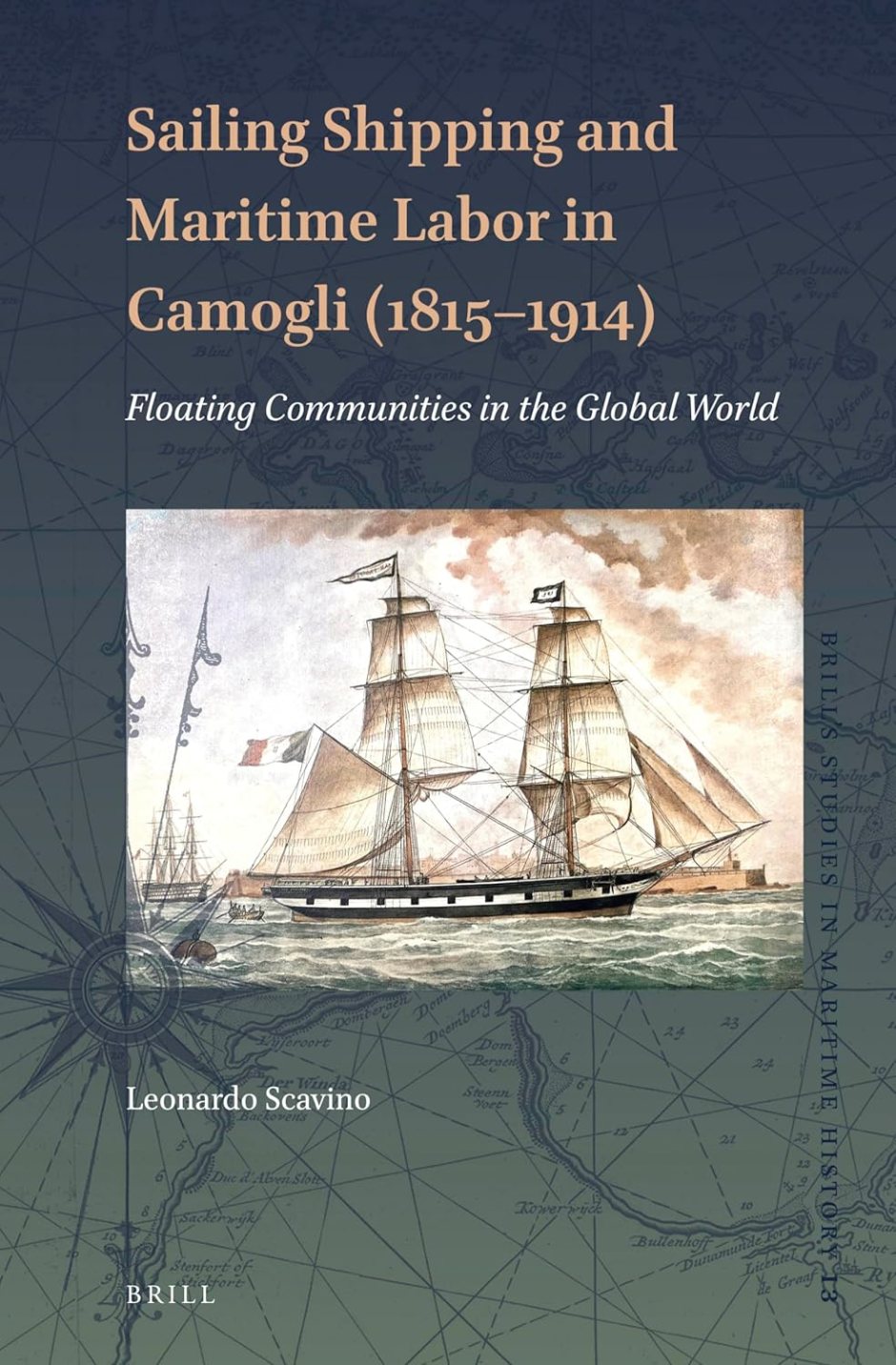
Sailing Shipping and Maritime Labor in Camogli (1815–1914): Floating Communities in the Global World by Leonardo Scavino

https://brill.com/display/title/62173

This book explores the historical evolution of a Mediterranean village that radically changed its core self-sustaining activities in less than a century, from fishing for anchovies in the Ligurian Sea to rounding Cape Horn. Drawing on a vast set of unpublished archival sources, this book addresses a micro-historical subject to investigate macro-historical processes, including the technological transition from sail to steam and globalization. At the core of the book lie Camogli’s rise in the world shipping industry and the transformations that occurred in its maritime labor system; seaborne trade, maritime routes, individual careers in seafaring represent the vivid elements that contribute to the book’s dive into the nineteenth-century maritime world.
Read the review by Andrea Zanini in the August 2024 issue of the IJMH (requires subscription)
https://doi.org/10.1177/08438714241261792

East India Company

Adventurers: The Improbable Rise of the East India Company by David Howarth

https://yalebooks.yale.edu/book/9780300276497/adventurers/

The East India Company was the largest commercial enterprise in British history, yet its roots in Tudor England are often overlooked. The Tudor revolution in commerce led ambitious merchants to search for new forms of investment, not least in risky overseas enterprises—and for these “adventurers” the most profitable bet of all would be on the Company.

Through a host of stories and fascinating details, David Howarth brings to life the Company’s way of doing business—from the leaky ships and petty seafarers of its embattled early days to later sweeping commercial success. While the Company’s efforts met with disappointment in Japan, they sowed the seeds of success in India, setting the outline for what would later become the Raj. Drawing on an abundance of sources, Howarth shows how competition from European powers was vital to success—and considers whether the Company was truly “English” at all, or rather part of a Europe-wide movement.

Read the review by Erik Odegard in the August 2024 issue of the IJMH (requires subscription)
https://doi.org/10.1177/08438714241261791

Naval technology and war

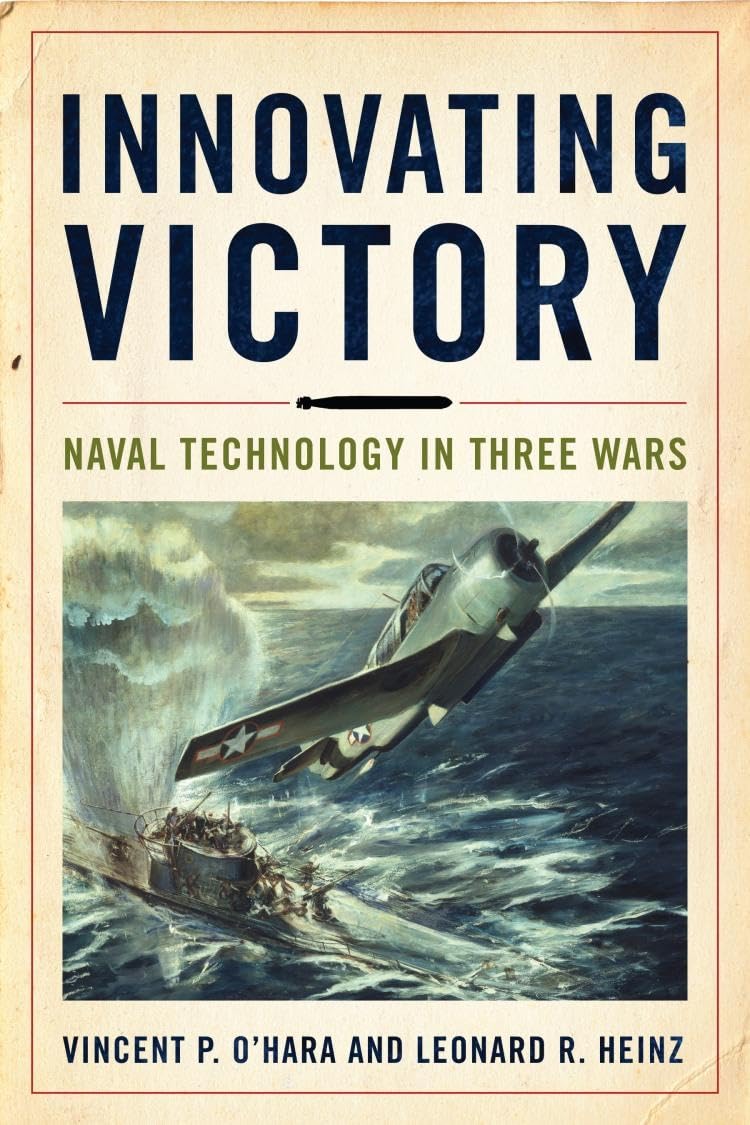
Innovating Victory: Naval Technology in Three Wars by Vincent P. O’Hara and Leonard R. Heinz

https://www.usni.org/press/books/innovating-victory

Innovating Victory: Naval Technology in Three Wars studies how the world’s navies incorporated new technologies into their ships, their practices, and their doctrine. It does this by examining six core technologies fundamental to twentieth-century naval warfare including new platforms (submarines and aircraft), new weapons (torpedoes and mines), and new tools (radar and radio). Each chapter considers the state of a subject technology when it was first used in war and what navies expected of it. It then looks at the way navies discovered and developed the technology’s best use, in many cases overcoming disappointed expectations. It considers how a new technology threatened its opponents, not to mention its users, and how those threats were managed.
Innovating Victory shows that the use of technology is more than introducing and mastering a new weapon or system. Differences in national resources, force mixtures, priorities, perceptions, and missions forced nations to approach the problems presented by new technologies in different ways. Navies that specialized in specific technologies often held advantages over enemies in some areas but found themselves disadvantaged in others. Vincent P. O’Hara and Leonard R. Heinz present new perspectives and explore the process of technological introduction and innovation in a way that is relevant to today’s navies, which face challenges and questions even greater than those of 1904, 1914, and 1939.

Read the review by Piotr Wawrzeniuk in the August 2024 issue of the IJMH (requires subscription)
https://doi.org/10.1177/08438714241264919

Mediterranean Seafarers in Transition

Mediterranean Seafarers in Transition: Maritime Labour, Communities, Shipping and the Challenge of Industrialization 1850s–1920s by Apostolos Delis, Jordi Ibarz, Anna Sydorenko and Matteo Barbano, eds (in open access)


https://brill.com/display/title/61880

This volume discusses the effects of industrialization on maritime trade, labour and communities in the Mediterranean and Black Sea from the 1850s to the 1920s. The 17 essays are based on new evidence from multiple type of primary sources on the transition from sail to steam navigation, written in a variety of languages, Italian, Spanish, French, Greek, Russian and Ottoman.

Questions that arise in the book include the labour conditions, wages, career and retirement of seafarers, the socio-economic and spatial transformations of the maritime communities and the changes in the patterns of operation, ownership and management in the shipping industry with the advent of steam navigation. The book offers a comparative analysis of the above subjects across the Mediterranean, while also proposes unexplored themes in current scholarship like the history of navigation.

Contributors are: Luca Lo Basso, Andrea Zappia, Leonardo Scavino, Daniel Muntane, Eduard Page Campos, Enric Garcia Domingo, Katerina Galani, Alkiviadis Kapokakis, Petros Kastrinakis, Kalliopi Vasilaki, Pavlos Fafalios, Georgios Samaritakis, Kostas Petrakis, Korina Doerr, Athina Kritsotaki, Anastasia Axaridou, and Martin Doerr.

Read the review by Roberto Giulianelli in the August 2024 issue of the IJMH (requires subscription)
https://doi.org/10.1177/08438714241261803

Pearl and the Nature of Empire

American Baroque: Pearls and the Nature of Empire, 1492–1700 by Molly A. Warsh

https://uncpress.org/book/9781469638973/american-baroque/

Published by the Omohundro Institute of Early American History and Culture and the University of North Carolina Press

Pearls have enthralled global consumers since antiquity, and the Spanish monarchs Ferdinand and Isabella explicitly charged Columbus with finding pearls, as well as gold and silver, when he sailed westward in 1492. American Baroque charts Spain’s exploitation of Caribbean pearl fisheries to trace the genesis of its maritime empire. In the 1500s, licit and illicit trade in the jewel gave rise to global networks, connecting the Caribbean to the Indian Ocean to the pearl-producing regions of the Chesapeake and northern Europe.
Pearls—a unique source of wealth because of their renewable, fungible, and portable nature—defied easy categorization. Their value was highly subjective and determined more by the individuals, free and enslaved, who produced, carried, traded, wore, and painted them than by imperial decrees and tax-related assessments. The irregular baroque pearl, often transformed by the imagination of a skilled artisan into a fantastical jewel, embodied this subjective appeal. Warsh blends environmental, social, and cultural history to construct microhistories of peoples’ wide-ranging engagement with this deceptively simple jewel. Pearls facilitated imperial fantasy and personal ambition, adorned the wardrobes of monarchs and financed their wars, and played a crucial part in the survival strategies of diverse people of humble means. These stories, taken together, uncover early modern conceptions of wealth, from the hardscrabble shores of Caribbean islands to the lavish rooms of Mediterranean palaces.

Read the review by Tijl Vanneste in the August 2024 issue of the IJMH (requires subscription)
https://doi.org/10.1177/08438714241261805

Inside the Britannic

Inside the Britannic. Uncovering the wreck of the Titanic’s sister ship, by Simon Mills – coming in March 2025

Documenting one of the most comprehensive surveys of a shipwreck ever conducted, Simon Mills’ new book takes you inside the SS Britannic for a unique dive into the past.

The Olympic Class ships were intended to be the greatest liners to ever sail the oceans, but the Britannic sank only four years after her sister ship the Titanic. While the wreck of the Titanic is 2 miles below the surface and rapidly deteriorating, the Britannic is much more accessible (only 400ft down) and remains largely intact. One of the largest passenger ships ever to have sunk, her wreck presents a unique opportunity to explore the interior of the Olympic Class liners, and examine areas which on the Titanic simply no longer exist.

Simon Mills bought the wreck of the Britannic in 1996 and has spent more time exploring it than anyone else. Inside the Britannic is the sum of decades of work covering every inch of the shipwreck as he searches for answers to century-old questions, and discovers new mysteries to solve. Simon takes a forensic approach but this book is more than just the autopsy report of a ship; it is a fascinating survey supported by stunning, never-beforeseen photos from inside the wreck, archival blueprints and original technical schematics of specific areas, and specially recreated digital images of how the ship would have looked.

About the author: Simon Mills has worked in the camera department of the British film industry since 1980 and as a qualified HSE scuba diver has, from time to time, also worked beneath the surface. For many years he has written articles on the Britannic and the Olympic class liners for maritime periodicals and is also the author of Olympic Titanic Britannic. In August 1996 Simon obtained the UK government’s former legal title to the wreck of the Britannic, and has been coordinating a number of surveys of the wreck since 2003.

https://www.bloomsbury.com/uk/inside-the-britannic-9781399414500/

The curse of the Somers

The Curse of the Somers: The Secret History behind the U.S. Navy’s Most Infamous Mutiny by James P. Delgado
https://global.oup.com/academic/product/the-curse-of-the-somers-9780197575222
A detailed and riveting account of the U.S. Navy’s greatest mutiny and its wide-ranging cultural and historical impact
The greatest controversy in the history of the U.S. Navy of the early American Republic was the revelation that the son of the Secretary of War had seemingly plotted a bloody mutiny that would have turned the U.S. brig Somers into a pirate ship. The plot discovered, he and his co-conspirators were hastily condemned and hanged at sea.

The repercussions of those acts brought headlines, scandal, a fistfight at a cabinet meeting, a court martial, ruined lives, lost reputations, and tales of a haunted ship “bound for the devil” and lost tragically at sea with many of its crew. The “Somers affair” led to the founding of the U.S. Naval Academy and it remains the Navy’s only acknowledged mutiny in its history. The story also inspired Herman Melville’s White-Jacket and Billy Budd. Others connected to the Somers included Commodore Perry, a relation and defender of the Somers’ captain Mackenzie; James Fenimore Cooper, whose feud with the captain, dating back to the War of 1812, resurfaced in his reportage of the affair; and Raphael Semmes, the Somers’ last caption who later served in the Confederate Navy.

The Curse of the Somers is a thorough recreation of this classic tale, told with the help of recently uncovered evidence. Written by a maritime historian and archaeologist who helped identify the long-lost wreck and subsequently studied its sunken remains, this is a timeless tale of life and death at sea. James P. Delgado re-examines the circumstances, drawing from a rich historical record and from the investigation of the ship’s sunken remains. What surfaces is an all-too-human tale that resonates and chills across the centuries.

Read the review by Steven Pfaff in the August 2024 issue of the IJMH (requires subscription)
https://doi.org/10.1177/08438714241261798

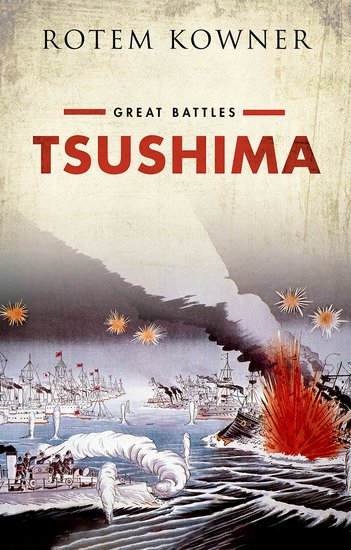
The Battle of Tsushima

https://global.oup.com/academic/product/tsushima-9780198831075

Tsushima by Rotem Kowner

The Battle of Tsushima was the most decisive naval engagement in the century that elapsed since the Battle of Trafalgar in 1805.

Although these two battles are often compared, the Battle of Tsushima, in which the Japanese Imperial Navy defeated the Russian Imperial Navy, was also unprecedented in many ways. It marks the first naval victory of an Asian power over a major European power; the most devastating defeat suffered by the Imperial Russian Navy in its entire history; and the only truly decisive engagement between two battleship fleets in modern times.

In addition, the Battle of Tsushima was also the most decisive naval engagement of the Russo-Japanese War and one that exerted a major impact on the course of that war. Its impact was so dramatic, in fact, that the two belligerents concluded a peace agreement within three months of the battle’s conclusion. At the same time, and because it involved two of the world’s largest fleets, the influence this battle exerted was both far reaching and long standing. In subsequent years, the symbolic victory of an “Eastern” power over Tsarist Russia using modern technology was feared and celebrated in both the Western and the Colonial worlds. Similarly, and in both Japan and Russia, the Battle of Tsushima had a prolonged impact on their respective navies as well as on their geopolitical ambitions in Asia and beyond.

By relying on a diverse array of primary sources, this book examines the battle in depth and is the first to offer a penetrating analysis of its global impact as well as the way its memory has evolved in both Japan and Russia.

Read the review by Sofya Anisimova in the August 2024 issue of the IJMH (requires subscription)

https://doi.org/10.1177/08438714241264536

The end of the slave trade

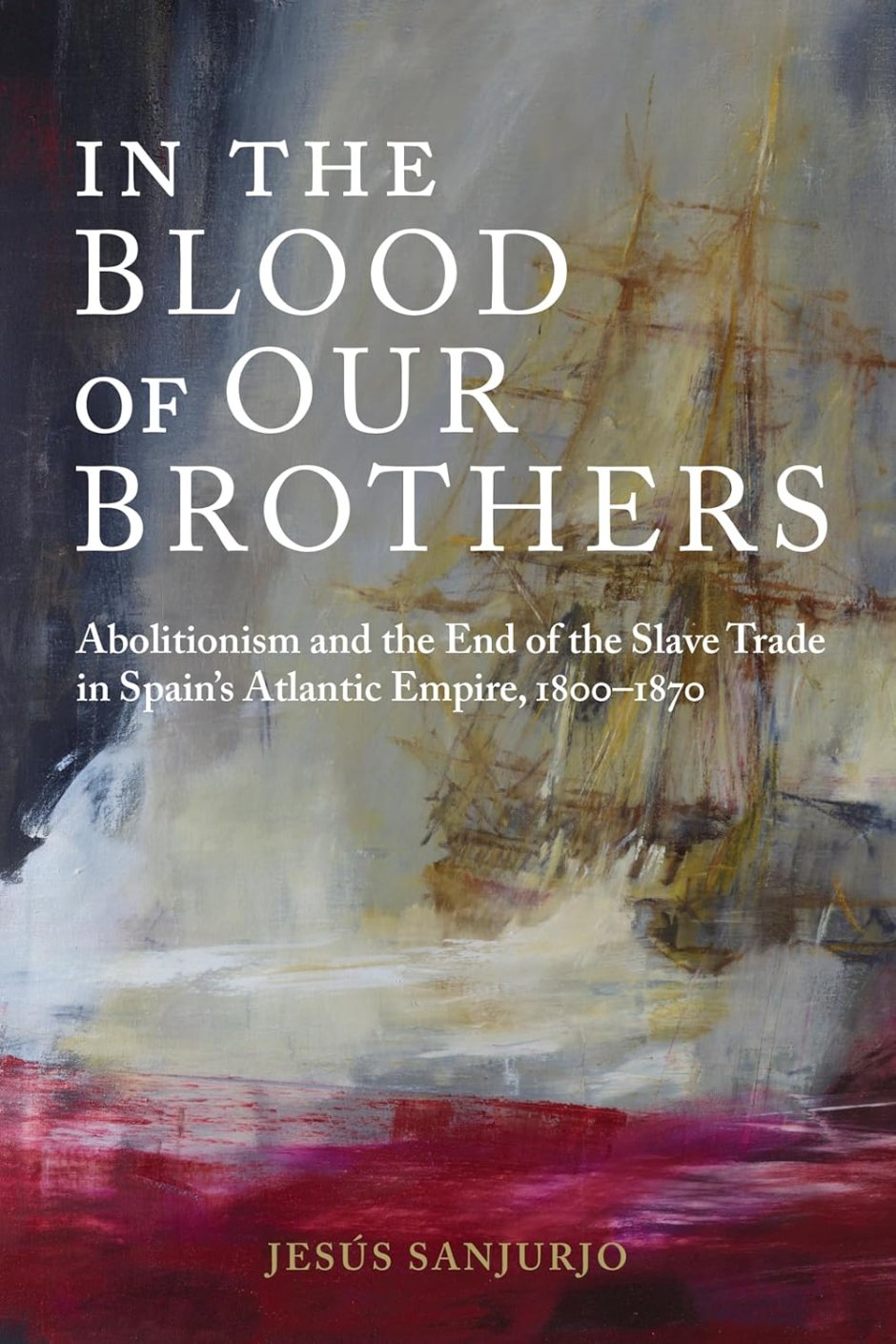
In the Blood of Our Brothers: Abolitionism and the End of the Slave Trade in Spain’s Atlantic Empire, 1800–1870 by Jesús Sanjurjo
Throughout the nineteenth century, very few people in Spain campaigned to stop the slave trade and did even less to abolish slavery. Even when some supported abolition, the reasons that moved them were not always humanitarian, liberal, or egalitarian. How abolitionist ideas were received, shaped, and transformed during this period has been ripe for study. Jesús Sanjurjo’s In the Blood of Our Brothers: Abolitionism and the End of the Slave Trade in Spain’s Atlantic Empire, 1800–1870 provides a comprehensive theory of the history, the politics, and the economics of the persistence and growth of the slave trade in the Spanish empire even as other countries moved toward abolition.
Sanjurjo privileges the central role that British activists and diplomats played in advancing the abolitionist cause in Spain. In so doing, he brings to attention the complex and uneven development of abolitionist and antiabolitionist discourses in Spain’s public life, from the beginning of the nineteenth century to the end of the transatlantic trade. His delineation of the ideological and political tension between Spanish liberalism and imperialism is crucial to formulating a fuller explanation of the reasons for the failure of anti–slave trade initiatives from 1811 to the 1860s. Slave trade was tied to the notion of inviolable property rights, and slavery persisted and peaked following three successful liberal revolutions in Spain.
https://www.uapress.ua.edu/9780817321055/in-the-blood-of-our-brothers/
Read the review by Lloyd Belton in the August 2024 issue of the IJMH
https://doi.org/10.1177/08438714241261801

Hunting the devil fish

Lynn B. Harris on “A dangerous and exhausting struggle’: Hunting the devil fish of coastal North and South Carolina from the colonial era to the early decades of the 1900s”

Scientists, hunters and business entrepreneurs in the Carolinas all had mutual interests in giant manta rays (Mobula birostris) during the early decades of the 1900s. Eastern-seaboard coastal communities called them devil fish, because of the horn-shaped fins on their head. Although the Ocean Leather Company in Morehead City primarily processed shark-skin leather, it also experimented with the skins of rays and other sea animals for the manufacture of a great variety of consumer products. Articles were written for scientific journals and ray specimens were contributed to national institutions like the American Museum of Natural History. Local fishermen, along with celebrities like the US president, Teddy Roosevelt, harpooned devil fish in Cape Lookout while marvelling at their grace and strength, breaching up to six feet above the water’s surface. Beaufort planter William Elliott presented many accounts of this fantastic sea creature, with vivid stories of enslaved African harpooners jumping off boats onto the backs of giant manta rays. This research combines historical accounts and images, newspaper advertisements and talks at local explorer clubs to illustrate case studies of the community’s obsession with collecting, cooking, hunting and conquering rays as an important component of maritime leisure and environmental history. It concludes by addressing international examples of subsistence, recreational and industrial fishing, and its impacts on manta rays.

Check it (requires subscription) at this link:

https://doi.org/10.1177/08438714241266441