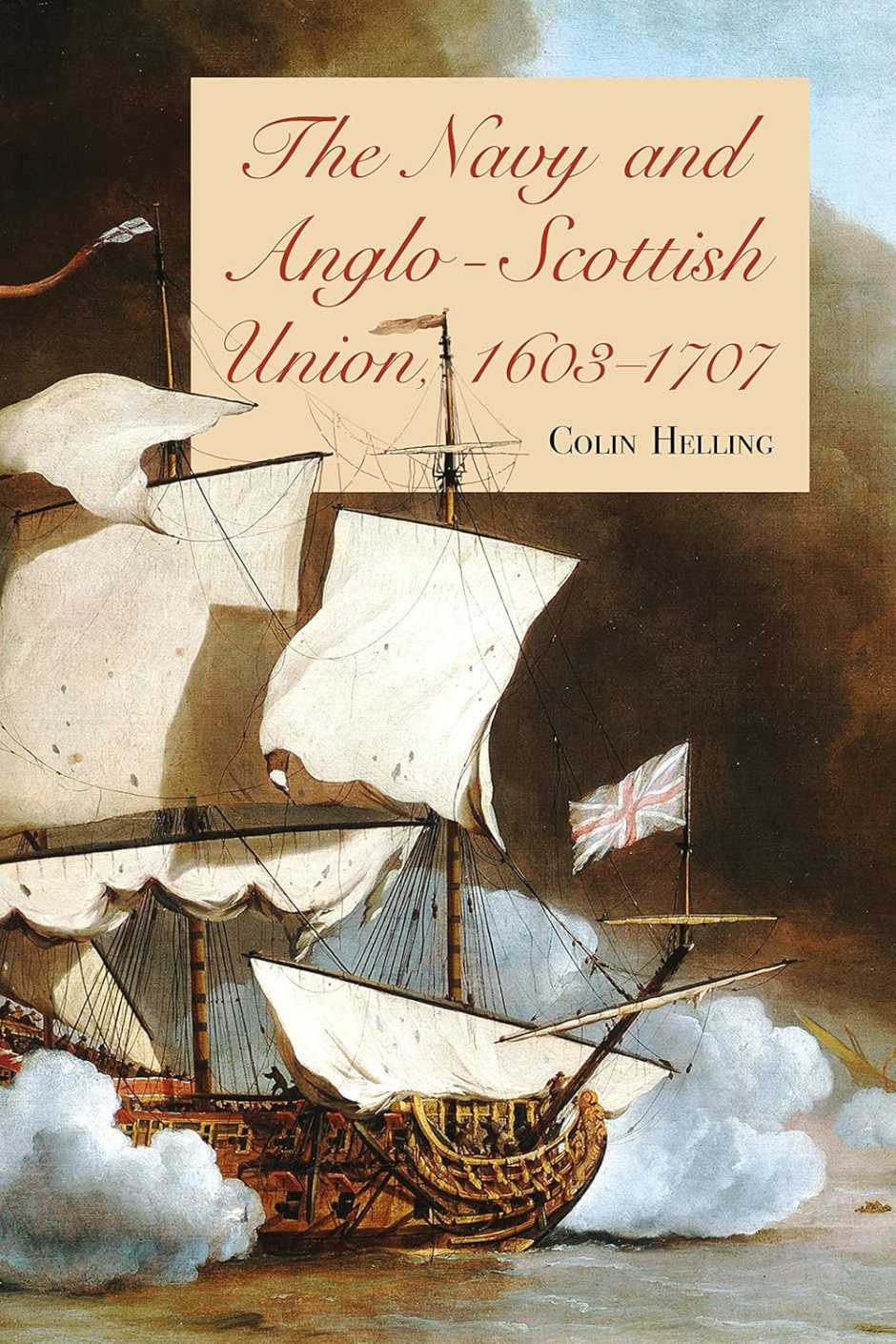
The Navy and Anglo-Scottish Union, 1603–1707 by Colin Helling

This book examines the union of England and Scotland by weaving the navy into a political narrative of events between the regal union in 1603 and the parliamentary union in 1707. For most of the century the Scottish crown had no separate naval force which made the Stuart monarchs’ navy, seen by them as a personal not a state force, unusual in being an institution which had a relationship with both kingdoms. This did not necessarily make the navy a shared organisation, as it continued to be financed from and based in England and was predominantly English. Nevertheless, the navy is an unusually good prism through which the nature of the regal union can be interrogated as English commanded ships interacted with Scottish authorities, and as Scots looked to the navy for protection from foreign invaders, such as the Dutch in the Forth in 1667, and for Scottish merchant ships trading with the Baltic and elsewhere. These interactions were often harmonious, but there were also many instances of tensions, particularly in the 1690s. The book illustrates both the ambiguous relationship between England and Scotland in the seventeenth century and also the navy’s under-appreciated role in creating the political union of Britain.

https://boydellandbrewer.com/9781783277049/the-navy-and-anglo-scottish-union-1603-1707/

Read the review by Steve Murdoch in the August 2024 issue of the IJMH
https://doi.org/10.1177/08438714241264934

Sound Toll records

“How do we measure the commodity flows of the Sound Toll records”,

Yrjö Kaukiainen on the recently published book by Werner Scheltjens. Read the piece in open access at this link: https://journals.sagepub.com/doi/full/10.1177/08438714241238076

Werner Scheltjens has estimated the commodity flows through the Sound by converting the original measures of the Sound Toll records into metric tons. The note discusses the merits and problems of this approach. It points out that weight units are not the best parameters from the viewpoint of shipping since the weight of the goods is poorly related to the actual requirement of shipping space.

The burden of complexity: Dealing with measurement and taxation in the Sound Toll registers – a response to Yrjö Kaukiainen

Werner Scheltjens replies to a research note outlining a method for the conversion of weights and measures in the Danish Sound Toll registers. Whereas Yrjö Kaukiainen argues that the use of values for Danish units of measurement is sufficient, Werner Scheltjens highlights the complexity of pre-modern weights and measures, and raises concerns about the simplification of the measurement and taxation procedures at the customs office in the Danish Sound.

https://journals.sagepub.com/doi/full/10.1177/08438714241238660

The export of Egyptian antiquities

“Mercantile networks and the export of antiquities from Egypt in the mid nineteenth century: A case study of Menkaure’s sarcophagus and the Beatrice” by Nicky Nielsen, in open access in the May 2024 issue of the IJMH. Read it at this link:

https://journals.sagepub.com/doi/full/10.1177/08438714241226841

The export of antiquities from Egypt to the United Kingdom during the mid nineteenth century required an extensive network of cultural, diplomatic and mercantile actors, including private shipowners. While much previous research has focused on the political stakeholders in the process, as well as the archaeologists conducting excavations in Egypt, the attempted export of Menkaure’s sarcophagus from Giza to the British Museum in 1838 allows for a closer examination of one of the private shipowners who was involved in this process – namely, Captain Richard Mayle Whichelo of the merchant vessel Beatrice. This article investigates the diplomatic processes that were required for the export of the sarcophagus and provides an overview of the history of the Beatrice and of Captain Whichelo, placing this within the broader context of the transport of antiquities during the nineteenth century.

Barbary captives

https://cup.columbia.edu/book/barbary-captives/9780231175258

In the early modern period, hundreds of thousands of Europeans, both male and female, were abducted by pirates, sold on the slave market, and enslaved in North Africa. Between the sixteenth and the early nineteenth centuries, pirates from Algiers, Tunis, Tripoli, and Morocco not only attacked sailors and merchants in the Mediterranean but also roved as far as Iceland. A substantial number of the European captives who later returned home from the Barbary Coast, as maritime North Africa was then called, wrote and published accounts of their experiences. These popular narratives greatly influenced the development of the modern novel and autobiography, and they also shaped European perceptions of slavery as well as of the Muslim world.

Barbary Captives brings together a selection of early modern slave narratives in English translation for the first time. It features accounts written by men and women across three centuries and in nine different languages that recount the experience of capture and servitude in North Africa. These texts tell the stories of Christian pirates, Christian rowers on Muslim galleys, house slaves in the palaces of rulers, domestic servants, agricultural slaves, renegades, and social climbers in captivity. They also depict liberation through ransom, escape, or religious conversion. This book sheds new light on the social history of Mediterranean slavery and piracy, early modern concepts of unfree labor, and the evolution of the Barbary captivity narrative as a literary and historical genre.

Daniel J. C. Brooks publishes a review in the May 2024 issue of the IJMH (subscription needed). You can read it at this link: https://journals.sagepub.com/doi/abs/10.1177/08438714241230405

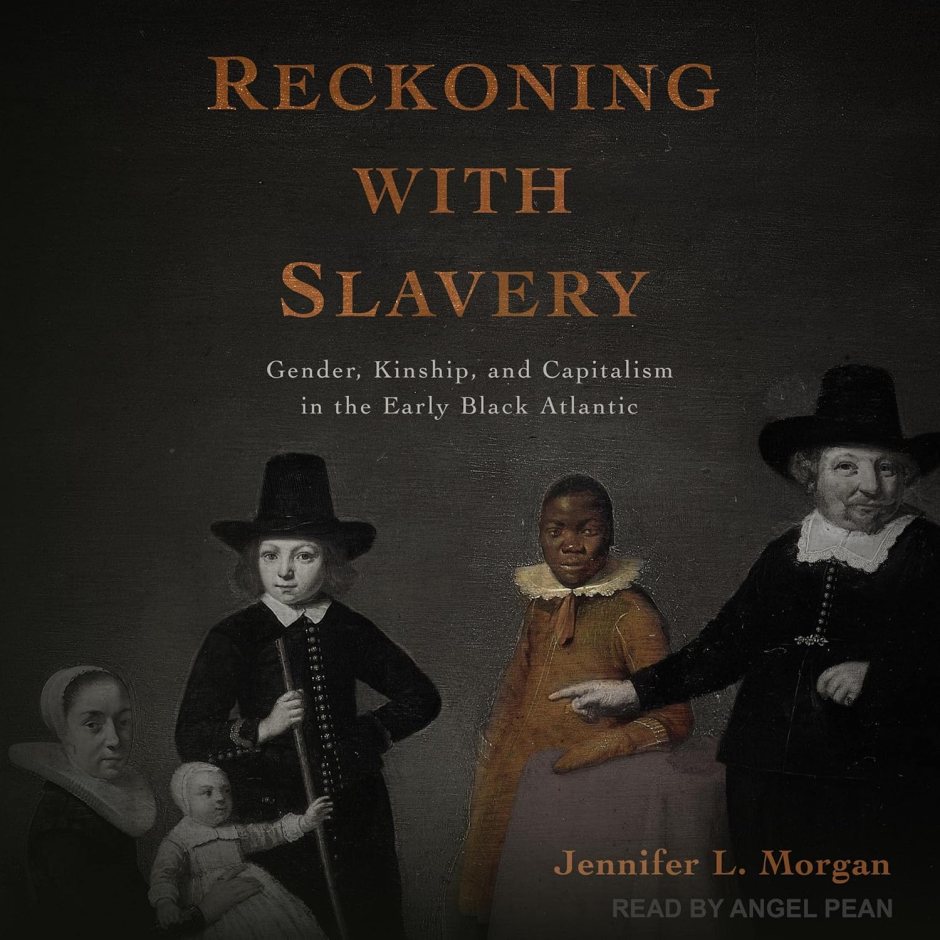
Reckoning with Slavery 

https://www.dukeupress.edu/reckoning-with-slavery

In Reckoning with Slavery Jennifer L. Morgan draws on the lived experiences of enslaved African women in the sixteenth and seventeenth centuries to reveal the contours of early modern notions of trade, race, and commodification in the Black Atlantic. From capture to transport to sale to childbirth, these women were demographically counted as commodities during the Middle Passage, vulnerable to rape, separated from their kin at slave markets, and subject to laws that enslaved their children upon birth. In this way, they were central to the binding of reproductive labor with kinship, racial hierarchy, and the economics of slavery. Throughout this groundbreaking study, Morgan demonstrates that the development of Western notions of value and race occurred simultaneously. In so doing, she illustrates how racial capitalism denied the enslaved their kinship and affective ties while simultaneously relying on kinship to reproduce and enforce slavery through enslaved female bodies.

Graham Kerr publishes a review in the May 2024 issue of the IJMH (subscription needed). You can read it at this link: https://journals.sagepub.com/doi/abs/10.1177/08438714241230399

Entrepôt of Revolutions

The Age of Revolutions has been celebrated for the momentous transition from absolute monarchies to representative governments and the creation of nation-states in the Atlantic world. Much less recognized than the spread of democratic ideals was the period’s growing traffic of goods, capital, and people across imperial borders and reforming states’ attempts to control this mobility.

Analyzing the American, French, and Haitian revolutions in an interconnected narrative, Manuel Covo centers imperial trade as a driving force, arguing that commercial factors preceded and conditioned political change across the revolutionary Atlantic. At the heart of these transformations was the “entrepôt,” the island known as the “Pearl of the Caribbean,” whose economy grew dramatically as a direct consequence of the American Revolution and the French-American alliance. Saint-Domingue was the single most profitable colony in the Americas in the second half of the eighteenth century, with its staggering production of sugar and coffee and the unpaid labor of enslaved people. The colony was so focused on its lucrative exports that it needed to import food and timber from North America, which generated enormous debate in France about the nature of its sovereignty over Saint-Domingue. At the same time, the newly independent United States had to come to terms with contradictory interests between the imperial ambitions of European powers, its connections with the Caribbean, and its own domestic debates over the future of slavery. This work sheds light on the three-way struggle among France, the United States, and Haiti to assert, define, and maintain “commercial” sovereignty.

Drawing on a wealth of archives in France, the United States, and the United Kingdom, Entrepôt of Revolutions offers an innovative perspective on the primacy of economic factors in this era, as politicians and theorists, planters and merchants, ship captains, smugglers, and the formerly enslaved all attempted to transform capitalism in the Atlantic world.

Tessa de Boer publishes a review in the May 2024 issue of the IJMH (subscription needed). You can read it at this link:

https://journals.sagepub.com/doi/abs/10.1177/08438714241230393

Interdisciplinary Studies in Human-Environment Interactions in Watery Spaces

https://www.barpublishing.com/down-by-the-water.html

Waterways have been key factors in the development of societies from prehistoric times, particularly due to their role as vectors for cultural interactions, material exchange, and transmission of knowledge. The fluidity of these highways of transport and communications is tightly linked to the presence of transit points: spaces with unique geographical characteristics that acted as nodal points between different communities. Transit points are thus defined as places of intense social contacts, putting objects of physical geography into the domain of social sciences and humanities. The subject is challenging, as activities that happen in aquatic spaces seldom leave substantial archaeological traces behind. Nevertheless, by focusing on the intersection between humans and their environment down by the water, this book demonstrates what can be achieved by changing the research paradigm to one that fully embraces the nuances of the aquatic world, and especially the intricate connection between society and waterscapes.

Morgan Breene publishes a review in the May 2024 issue of the IJMH (subscription needed). You can read it at this link:

https://journals.sagepub.com/doi/abs/10.1177/08438714241241210

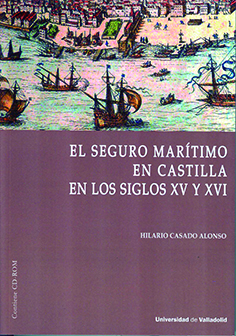
Maritime Insurance in Castile

The book studies trade and navigation at a global scale in the XV and XVI centuries based on an analysis of maritime insurance in Castile, a perspective which has hitherto scarcely been addressed by historiography. The author draws on research into numerous documents, prominent amongst which is the information contained in close to 20,000 insurance policies taken out in the aforementioned two centuries and which have been conserved in Spanish and foreign archives, particularly in the large Burgos exchange house. The various parts of the book examine the legal characteristics of maritime insurance, together with those related to reinsurance and life insurance. In addition, an analysis is provided of the various types of ships, as well as both the main and secondary routes, the volume and value of the cargo transported, the names and origin of those involved (ship-owners, merchants, shipping agents, commission agents…), the events and conflicts to emerge and how these were dealt with, the financial world of insurance and how insurance prices evolved. What results is a description of a vast maritime landscape revolving around the Iberian Peninsula, stretching from the Baltic to the Island of Chios, through Newfoundland, Latin-America, Africa and Asia, and which helps us to reconstruct the trade and port networks of the time. It also enables us to study another aspect of the finances of the Spanish Monarchy. In sum, it provides further insights into the economic and maritime history of Europe.

Montserrat Cachero publishes a review in the May 2024 issue of the IJMH (subscription needed). You can read it at this link:

https://journals.sagepub.com/doi/abs/10.1177/08438714241230402

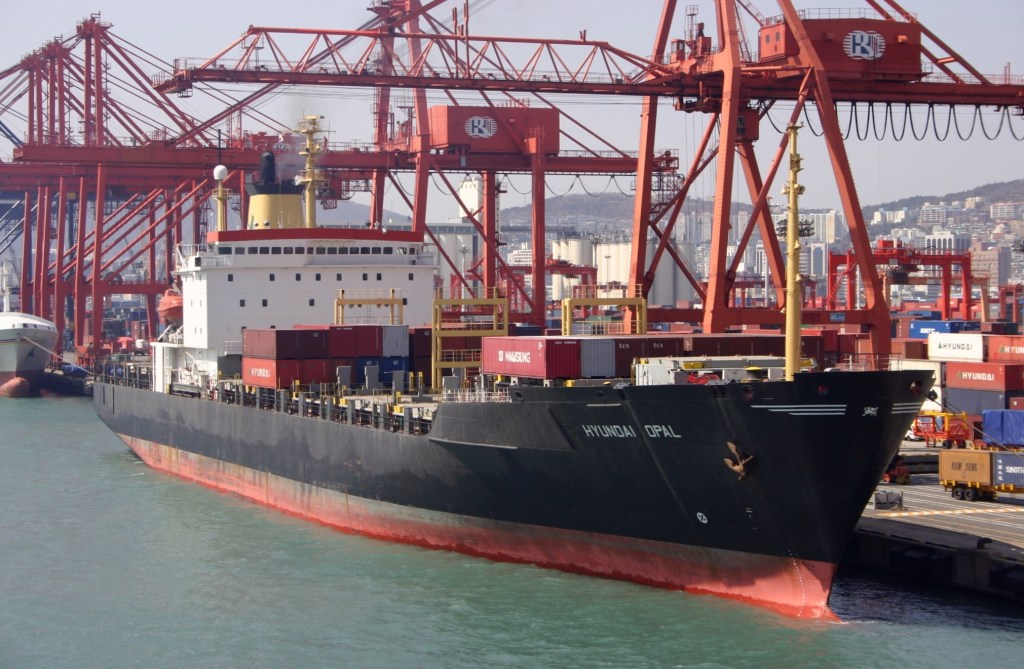
Korea’s shipping industry

“Overcoming the crisis in Korea’s shipping industry, 1980–1988” by S. June Kim was published in the May 2024 issue of the IJMH

Read it here (requires subscription): https://journals.sagepub.com/…/10.1177/08438714241236252

Korea’s shipping industry, which began to grow rapidly during the 1970s, faced a crisis in the early 1980s. The leading cause of the crisis was the significant slump in the shipping market caused by the second oil shock and the overcapacity of tonnages through the acquisition of second-hand vessels at a high price during the shipping boom in the early 1980s. The crisis in the shipping industry could have spread directly to the entire banking sector and led to a catastrophe in the national economy. The military government implemented the Shipping Industry Rationalization policy from 1983 to 1988 to prevent such a collapse of the national economy. This article reviews the cause of the shipping industry crisis in Korea in the 1980s and the achievements and limitations of the Shipping Industry Rationalization policy as a way of overcoming the crisis.

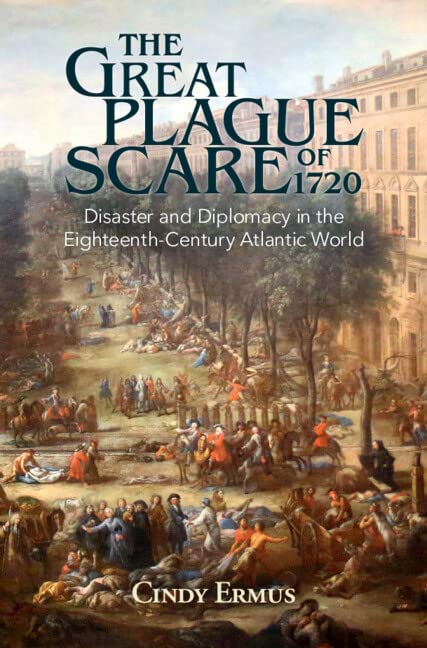
The Great Plague Scare

https://www.cambridge.org/…/56DFD428F80D070D6ACEEADD792…

The Great Plague Scare of 1720. Disaster and Diplomacy in the Eighteenth-Century Atlantic World, by Cindy Ermus

From 1720 to 1722, the French region of Provence and surrounding areas experienced one of the last major epidemics of plague to strike Western Europe. The Plague of Provence was a major disaster that left in its wake as many as 126,000 deaths, as well as new understandings about the nature of contagion and the best ways to manage its threat. In this transnational study, Cindy Ermus focuses on the social, commercial, and diplomatic impact of the epidemic beyond French borders, examining reactions to this public health crisis from Italy to Great Britain to Spain and the overseas colonies. She reveals how a crisis in one part of the globe can transcend geographic boundaries and influence society, politics, and public health policy in regions far from the epicentre of disaster.

Version 1.0.0

Marina Inì publishes a review in the May 2024 issue of the IJMH. Read it here (subscription needed):

https://journals.sagepub.com/…/10.1177/08438714241230392