Port Cities of the Atlantic World: Sea-Facing Histories of the US South

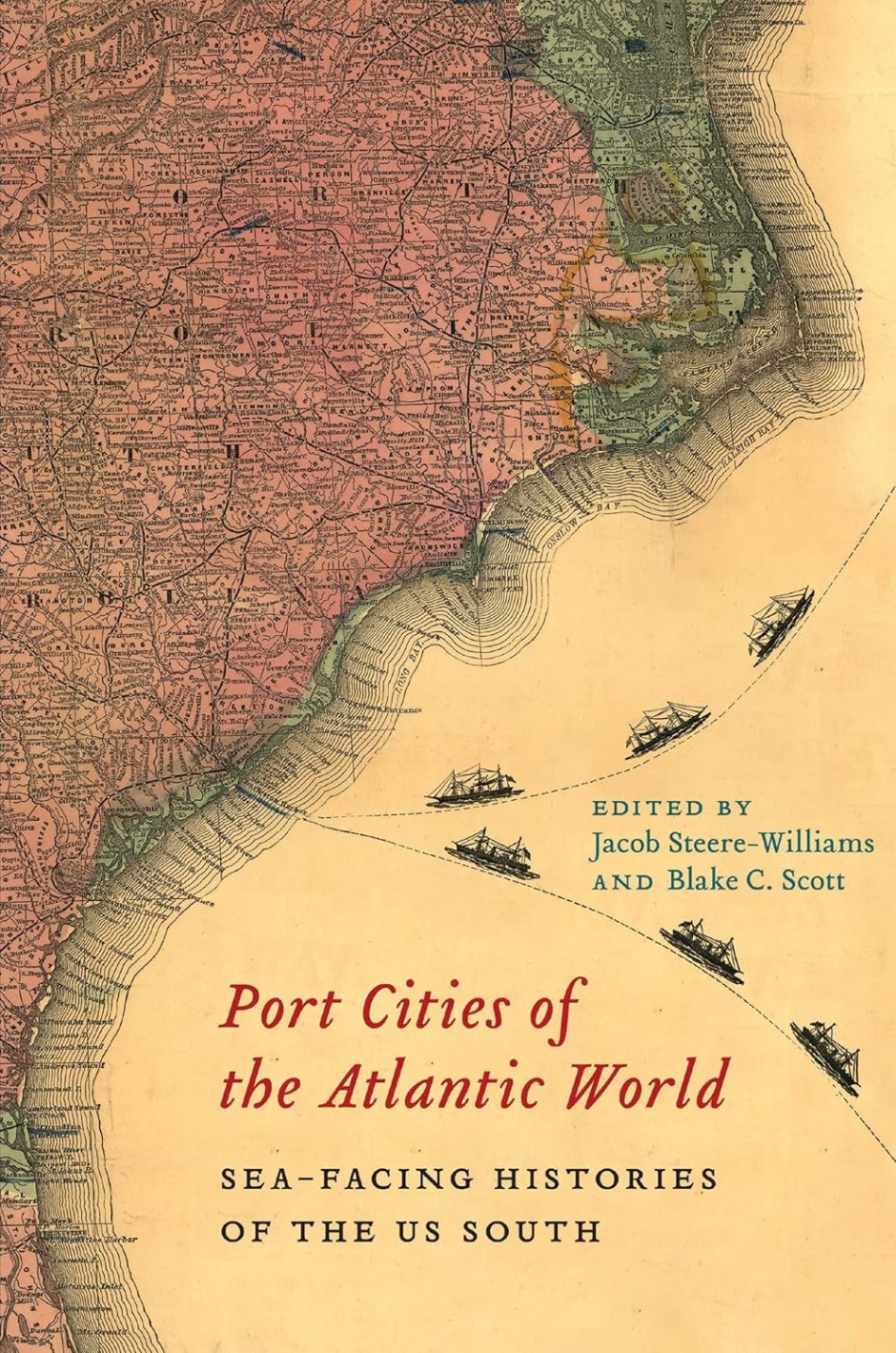
Read in the August issue of the IJMH (requires subscription) the review by Thomas M. Truxes of Port Cities of the Atlantic World: Sea-Facing Histories of the US South by Jacob Steere-Williams and Blake C. Scott, eds.

Port Cities of the Atlantic World brings together a collection of essays that examine the centuries-long transatlantic transportation of people, goods, and ideas with a focus on the impact of that trade on what would become the American South. Employing a wide temporal range and broad geographic scope, the scholars contributing to this volume call for a sea-facing history of the South, one that connects that terrestrial region to this expansive maritime history. By bringing the study up to the 20th century in the collection’s final section, the editors Jacob Steere-Williams and Blake C. Scott make the case for the lasting influence of these port cities—and Atlantic world history—on the economy, society, and culture of the contemporary South.

https://uscpress.com/Port-Cities-of-the-Atlantic-World

https://journals.sagepub.com/doi/abs/10.1177/08438714251355552
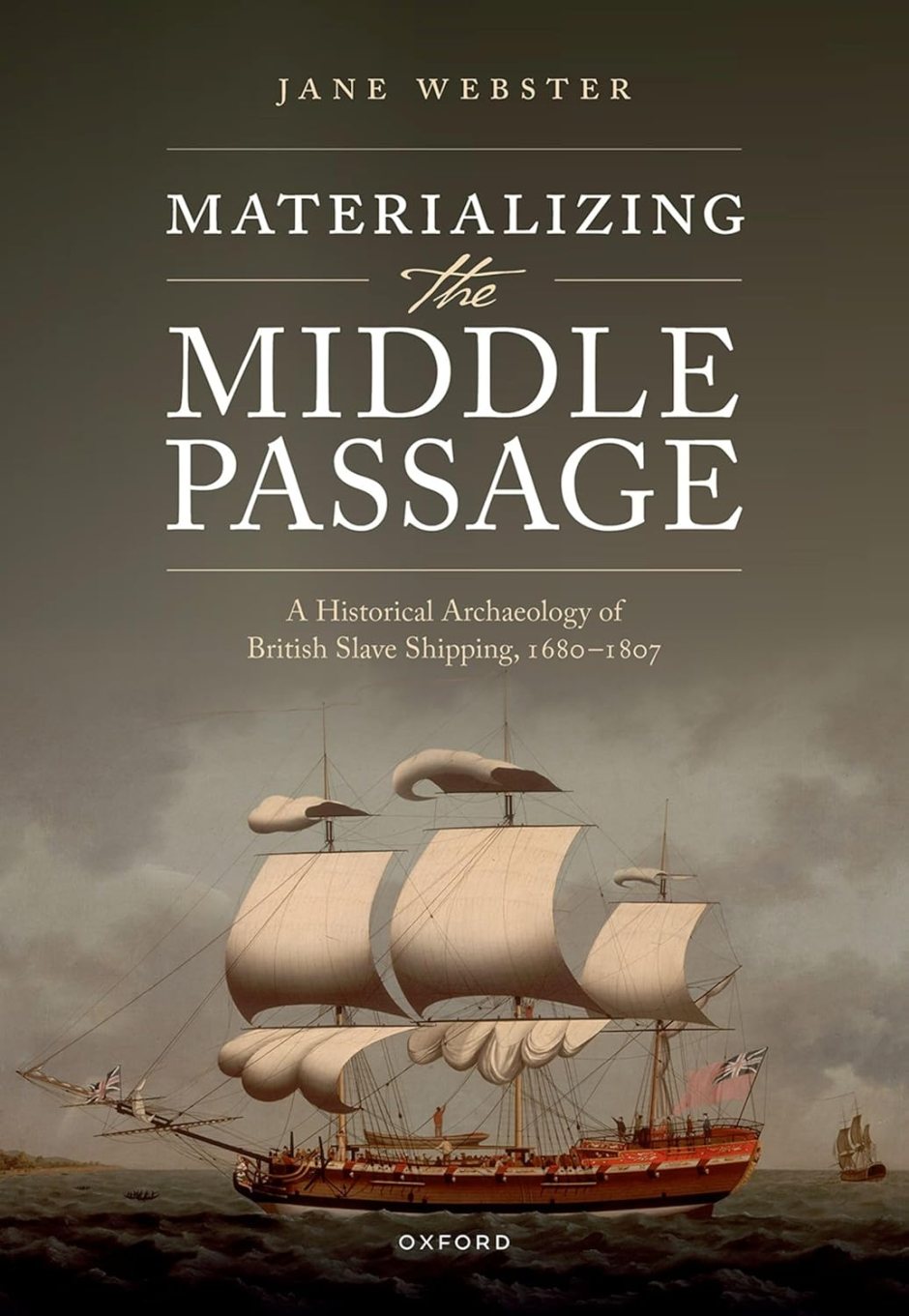
Materializing the Middle Passage: A Historical Archaeology of British Slave Shipping, 1680–1807

Read in the August issue of the IJMH (requires subscription) the review by Nicholas Radburn of Materializing the Middle Passage: A Historical Archaeology of British Slave Shipping, 1680–1807 by Jane Webster

An estimated 2.8 million Africans made a forced crossing of the Atlantic on British slave ships: a journey known as the ‘Middle Passage’. This book focuses on the ship itself: the largest artefact of the transatlantic slave trade, but one rarely studied by archaeologists, because so few examples of wrecked slaving vessels have been located. This book argues that there are other ways for archaeologists to materialize the slave ship. It employs a pioneering interdisciplinary methodology combining primary documentary sources, underwater and terrestrial archaeological data, paintings, and museum collections, to ‘rebuild’ British slaving vessels and identify changes to them over time. The book then considers the reception of the slave ship and its trade goods in coastal West Africa, and goes on to detail the range, and uses, of the many African materials (such as ivory) entering Britain on slave ships. The third section considers the Middle Passage experiences of captives and crews, arguing that greater attention needs to be paid to the coping mechanisms through which Africans survived, yet also challenged, their captive passage. Finally, the book asks why the African Middle Passage experience remains so elusive and considers when, how, and why the crossing was remembered by ‘saltwater’ Africans in the Caribbean and North America. The marriage of words and things attempted in this richly illustrated book is underpinned throughout by a theoretical perspective combining creolization and postcolonial theory, and by a central focus on the materiality of the slave ship and its regimes

Materializing the Middle Passage: A Historical Archaeology of British Slave Shipping, 1680-1807 | Oxford Academic

https://academic.oup.com/book/55188

https://journals.sagepub.com/doi/abs/10.1177/08438714251355558

Colonial Ports, Global Trade, and the Roots of the American Revolution (1700–1776)

Read in the August issue of the IJMH (requires subscription) the review by Helena Yoo-Roth of Colonial Ports, Global Trade, and the Roots of the American Revolution (1700–1776) by Jeremy Land

This book takes a long-run view of the global maritime trade of Boston, New York, and Philadelphia from 1700 to American Independence in 1776. Land argues that the three cities developed large, global networks of maritime commerce and exchange that created tension between merchants and the British Empire which sought to enforce mercantilist policies to constrain American trade to within the British Empire. Colonial merchants created and then expanded their mercantile networks well beyond the confines of the British Empire. This trans-imperial trade (often considered smuggling by British authorities) formed the roots of what became known as the American Revolution.

Colonial Ports, Global Trade, and the Roots of the American Revolution (1700 — 1776) | Brill

https://journals.sagepub.com/doi/abs/10.1177/08438714251355564

SS Albatross: An unfortunate steamship

Read (in open-access) in the August issue of the IJMH the article by James P. Delgado: “SS Albatross: An unfortunate steamship”

The short career of the Philadelphia-built coastal steamship Albatross (1850–1853) offers an instructive look at speculation, financing and operating a steamer in the mid-nineteenth-century United States. This was a period of rapid change, financial booms and busts, and business failures. Albatross was built for a short-lived route between Philadelphia and Charleston, South Carolina, which failed. With a change in ownership and a new home port of New York, it did not last long in its next venture, connecting New York with Halifax, Charlottetown and Quebec. Its final service in a speculative steamship line that proposed to open a competitive route across Mexico’s ‘Isthmus of Tehuantepec’ ended in disaster. That shipwreck may have been a deliberate accident to capitalize on insurance. Albatross’s career exemplifies not only the vagaries of speculative steamship ownership and operation, but also the often shady nature of mid-nineteenth-century speculation and business practices.

https://journals.sagepub.com/doi/full/10.1177/08438714251349348

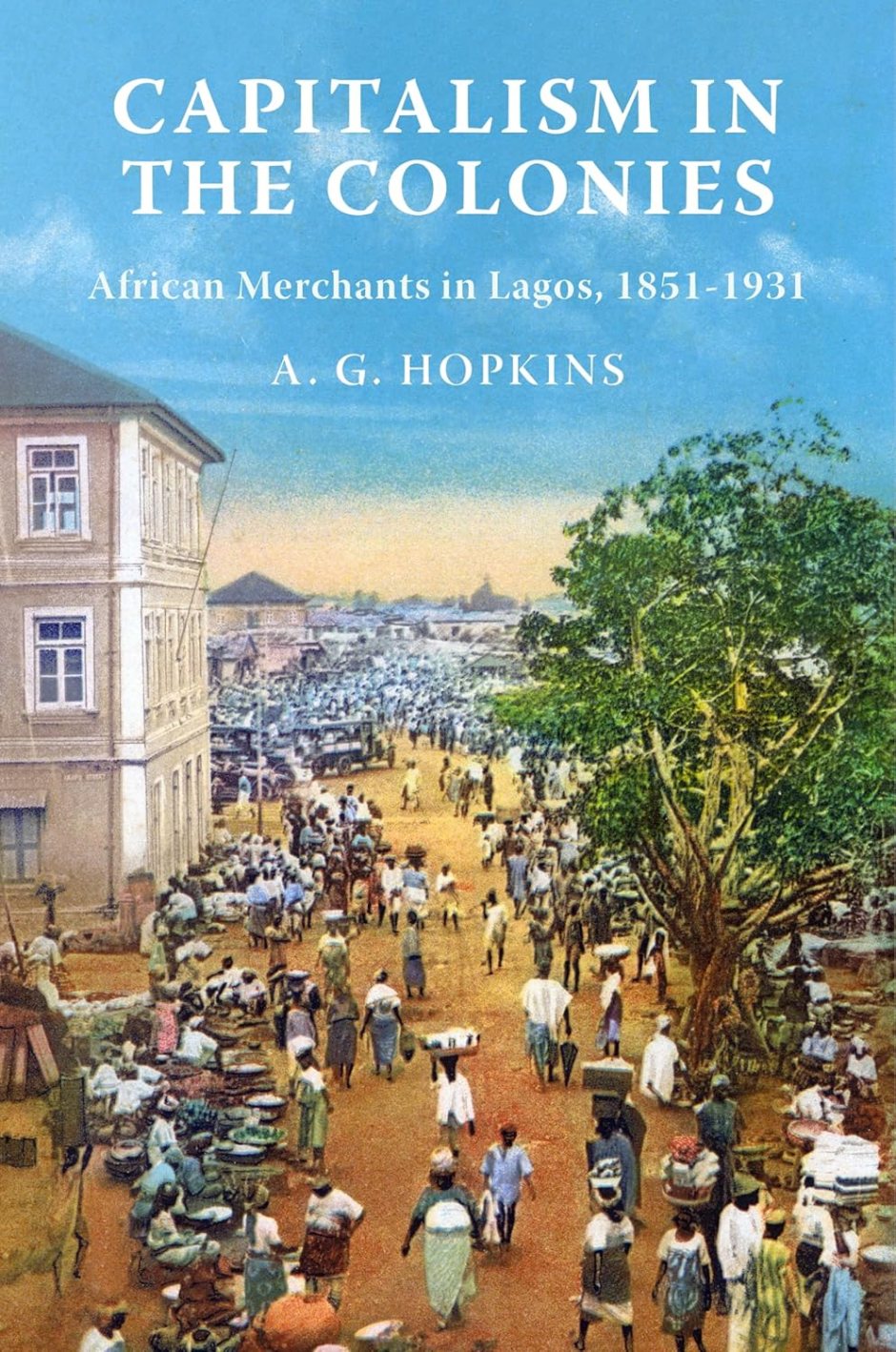
Capitalism in the Colonies: African Merchants in Lagos, 1851–1931

Read in the August issue of the IJMH (requires subscription) the review by Gijs Dreijer of Capitalism in the Colonies: African Merchants in Lagos, 1851–1931 by A. G. Hopkins

In Capitalism in the Colonies, A. G. Hopkins provides the first substantial assessment of the fortunes of African entrepreneurs under colonial rule. Examining the lives and careers of 100 merchants in Lagos, Nigeria, between 1850 and 1931, Hopkins challenges conventional views of the contribution made by indigenous entrepreneurs to the long-run economic development of Nigeria. He argues that African merchants in Lagos not only survived, but were also responsible for key innovations in trade, construction, farming, and finance that are essential for understanding the development of Nigeria’s economy.

The book is based on a large, representative sample and covers a time span that traces mercantile fortunes over two and three generations. Drawing on a wide range of sources, Hopkins shows that indigenous entrepreneurs were far more adventurous than expatriate firms. African merchants in Lagos pioneered motor vehicles, sewing machines, publishing, tanneries, and new types of internal trade. They founded the construction industry that built Lagos into a major port city, moved inland to start the cocoa-farming industry, and developed the finance sector that is still vital to Nigeria’s economy. They also took the lead in changing single-owned businesses into limited liability companies, creating freehold property rights and promoting wage labour. In short, Hopkins argues, they were the capitalists who introduced the institutions of capitalism into Nigeria. The story of African merchants in Nigeria reminds us, he writes, that economic structures have no life of their own until they are animated by the actions of creative individuals.

https://press.princeton.edu/books/hardcover/9780691258843/capitalism-in-the-colonies?srsltid=AfmBOoq7-y6eGjw-FZlsG7pWJxmeBe6LkqdzYnoP2LLz14x20Iw31iQe

https://journals.sagepub.com/doi/abs/10.1177/08438714251355559

Marine resource procurement as everyday resistance in Ireland

Read (in open-access) in the August issue of the IJMH the text by Emily Schwalbe, Rory Connolly, Sophia Chapple, Poul Holm: “Marine resource procurement as everyday resistance in Ireland during the Great Hunger (1845–1852)”

This article seeks to challenge dominant narratives surrounding the Great Hunger in Ireland (An Gorta Mór, 1845–1852) by focusing on the often-overlooked aspect of marine resource exploitation. Traditional historiography of the famine typically centres on the failure of the potato crop, British colonial policies and the resulting socio-economic devastations. However, this narrative largely omits the daily survival strategies and forms of resistance employed by the Irish populace, particularly in their interaction with the marine environment. This study explores how coastal communities turned towards the sea as a resource for sustenance, autonomy and resistance against oppressive conditions imposed by the crop failures and British colonial rule. By critically engaging with the role of colonial control, external aid efforts and local resistance in primary accounts, the authors argue that marine resources played an important role in the everyday survival of Irish communities in the face of systemic failures.

https://journals.sagepub.com/doi/full/10.1177/08438714251356343

Tea: Consumption, Politics, and Revolution, 1773–1776

Read in the August issue of the IJMH (requires subscription) the review by Chris Nierstrasz of Tea: Consumption, Politics, and Revolution, 1773–1776 by James R. Fichter

In Tea, James R. Fichter reveals that despite the so-called Boston Tea Party in 1773, two large shipments of tea from the East India Company survived and were ultimately drunk in North America. Their survival shaped the politics of the years ahead, impeded efforts to reimburse the company for the tea lost in Boston Harbor, and hinted at the enduring potency of consumerism in revolutionary politics.

Tea protests were widespread in 1774, but so were tea advertisements and tea sales, Fichter argues. The protests were noisy and sometimes misleading performances, not clear signs that tea consumption was unpopular. Revolutionaries vilified tea in their propaganda and prohibited the importation and consumption of tea and British goods. Yet merchant ledgers reveal these goods were still widely sold and consumed in 1775. Colonists supported Patriots more than they abided by non-consumption. When Congress ended its prohibition against tea in 1776, it reasoned that the ban was too widely violated to enforce. War was a more effective means than boycott for resisting Parliament, after all, and as rebel arms advanced, Patriots seized tea and other goods Britons left behind. By 1776, protesters sought tea and, objecting to its high price, redistributed rather than destroyed it. Yet as Fichter demonstrates in Tea, by then the commodity was not a symbol of the British state, but of American consumerism.

https://journals.sagepub.com/doi/abs/10.1177/08438714251355547

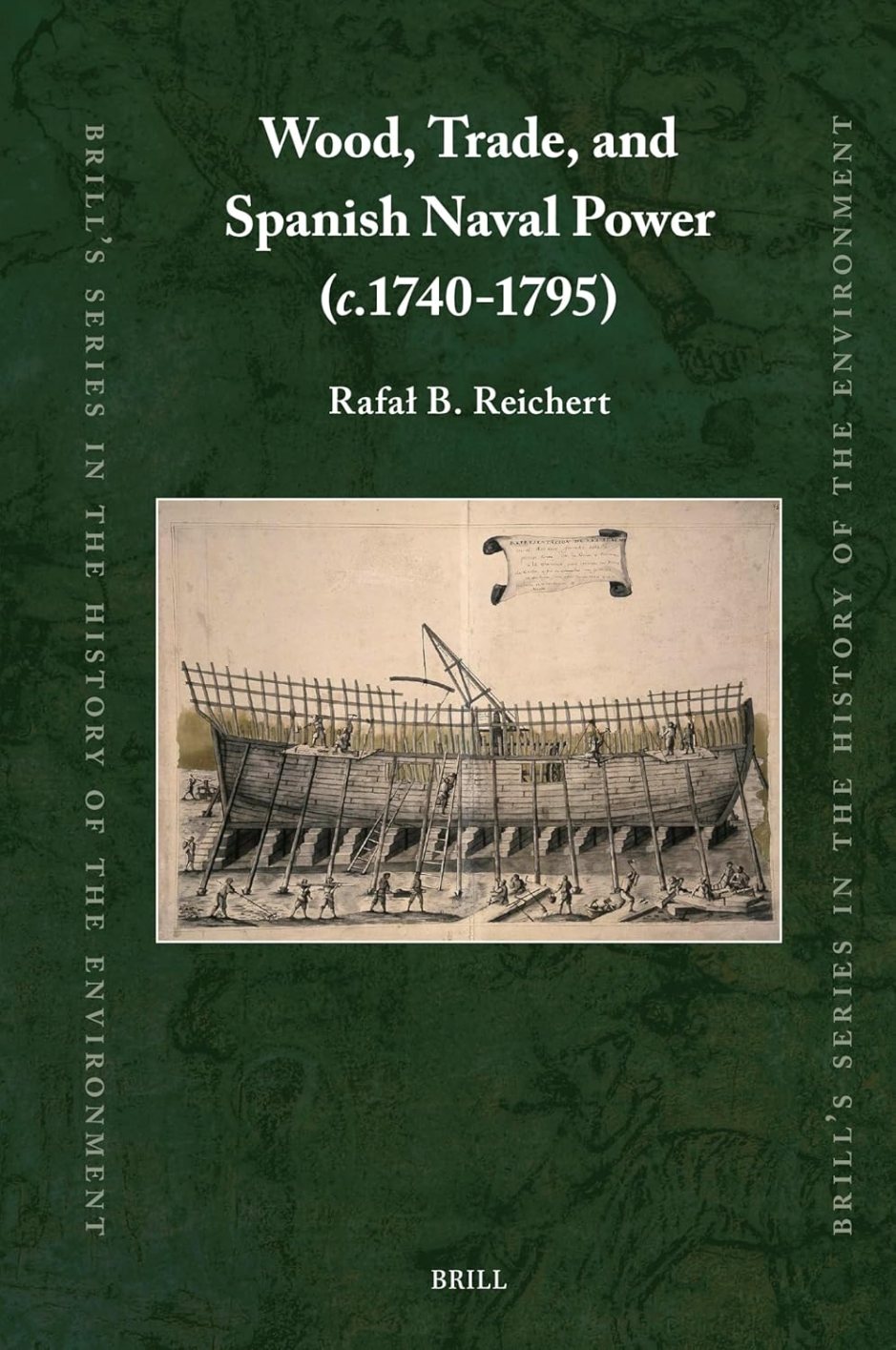
Wood, Trade, and Spanish Naval Power (c.1740–1795)

Read in the August issue of the IJMH (requires subscription) the review by Vicente Pajuelo Moreno of Wood, Trade, and Spanish Naval Power (c.1740–1795) by Rafał B. Reichert

By focussing on timber sourcing, this book sheds light on the exploitation of forests in settings outside the Iberian Peninsula, including foreign states in the southern Baltic region and the colonial territory of New Spain between the c.1740-1795.

Analysis of contracts, projects, and their implementation by the Spanish crown in the 18th century allow for a better understanding of the position of the Spanish monarchy’s nearly global efforts to sustain its naval commitments in the Atlantic World.

Wood, Trade, and Spanish Naval Power (c.1740-1795) | Brill

https://journals.sagepub.com/doi/abs/10.1177/08438714251355553

New Earth Histories: Geo-Cosmologies and the Making of the Modern World

Read in the August issue of the IJMH (requires subscription) the review by Jonathan Galka of New Earth Histories: Geo-Cosmologies and the Making of the Modern World by Alison Bashford, Emily M. Kern and Adam Bobbette, eds.

This book brings the history of the geosciences and world cosmologies together, exploring many traditions, including Chinese, Pacific, Islamic, South and Southeast Asian conceptions of the earth’s origin and makeup. Together the chapters ask: How have different ideas about the sacred, animate, and earthly changed modern environmental sciences? How have different world traditions understood human and geological origins? How does the inclusion of multiple cosmologies change the meaning of the Anthropocene and the global climate crisis? By carefully examining these questions, New Earth Histories sets an ambitious agenda for how we think about the earth.

The chapters consider debates about the age and structure of the earth, how humans and earth systems interact, and how empire has been conceived in multiple traditions. The methods the authors deploy are diverse—from cultural history and visual and material studies to ethnography, geography, and Indigenous studies—and the effect is to highlight how earth knowledge emerged from historically specific situations. New Earth Histories provides both a framework for studying science at a global scale and fascinating examples to educate as well as inspire future work. Essential reading for students and scholars of earth science history, environmental humanities, history of science and religion, and science and empire.

https://press.uchicago.edu/ucp/books/book/chicago/N/bo205315847.html

https://journals.sagepub.com/doi/abs/10.1177/08438714251355540

Half models from the Dutch Navy: Production and function

Read in the August issue of the IJMH (requires subscription) the text by Tirza Mol, Jeroen ter Brugge, Marta Domínguez-Delmás and Paul van Duin: “Half models from the Dutch Navy: Production and function”

This study investigates the function of bracket models within the maritime collection of the Rijksmuseum, Amsterdam. These half models, depicting the frames and ribbands of ship hulls, were transferred from the Navy Model Room in the 1880s. While bracket models are believed to have played a role in eighteenth- and nineteenth-century Dutch shipbuilding, their exact purpose remains uncertain. To elucidate their function, the authors examined the tool marks and construction features of individual models and compared them with historical ship-design drawings. The reconstruction of a bracket model was undertaken, and historical Navy Archives were consulted. The findings suggest that these models may have served multiple purposes, such as checking two-dimensional designs, facilitating the translation of drawings into three-dimensional forms, and representing technological advancements in shipbuilding. This research underscores the value of combining object-based analysis with historical documentation, and highlights the importance of reconstructions in understanding the production processes of historical objects.

https://journals.sagepub.com/doi/abs/10.1177/08438714251356834