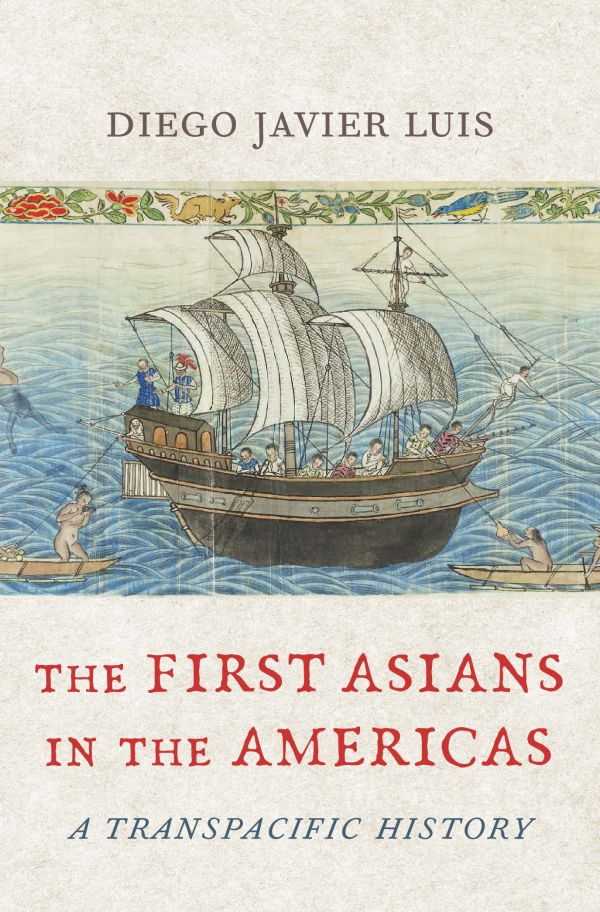
The First Asians in the Americas: A Transpacific History

“The First Asians in the Americas: A Transpacific History” by Diego Javier Luis was reviewed by Ricardo Padrón in the International Journal of Maritime History.

Read the review (requires subscription) at this link:

https://journals.sagepub.com/…/10.1177/08438714251333991

The definitive account of transpacific Asian movement through the Spanish empire—from Manila to Acapulco and beyond—and its implications for the history of race and colonization in the Americas.

Between 1565 and 1815, the so-called Manila galleons enjoyed a near-complete monopoly on transpacific trade between Spain’s Asian and American colonies. Sailing from the Philippines to Mexico and back, these Spanish trading ships also facilitated the earliest migrations and displacements of Asian peoples to the Americas. Hailing from Gujarat, Nagasaki, and many places in between, both free and enslaved Asians boarded the galleons and made the treacherous transpacific journey each year. Once in Mexico, they became “chinos” within the New Spanish caste system.

Diego Javier Luis chronicles this first sustained wave of Asian mobility to the early Americas. Uncovering how and why Asian peoples crossed the Pacific, he sheds new light on the daily lives of those who disembarked at Acapulco. There, the term “chino” officially racialized diverse ethnolinguistic populations into a single caste, vulnerable to New Spanish policies of colonial control. Yet Asians resisted these strictures, often by forging new connections across ethnic groups. Social adaptation and cultural convergence, Luis argues, defined Asian experiences in the Spanish Americas from the colonial invasions of the sixteenth century to the first cries for Mexican independence in the nineteenth.

The First Asians in the Americas speaks to an important era in the construction of race, vividly unfolding what it meant to be “chino” in the early modern Spanish empire. In so doing, it demonstrates the significance of colonial Latin America to Asian diasporic history and reveals the fundamental role of transpacific connections to the development of colonial societies in the Americas.

https://www.hup.harvard.edu/books/9780674271784

The United States, manganese nodules and the remaking of the deep seabed

Read in open access the recent article by Yoram Carboex, “An ocean of possibilities: The United States, manganese nodules and the remaking of the deep seabed”

https://doi.org/10.1177/08438714251334212

Abstract

This article follows US senator Lee Metcalf in his role as a promoter of deep-sea mining in the 1970s. By analysing his embrace of the deep sea as a new frontier for mineral resources, the author highlights a broader post-war development of the emergence of an imagination of the deep ocean as a potential solution for terrestrial problems. In the imagination of Metcalf and others, the deep sea came to be seen as a new and exciting space that could form an alternative to land-based mining. However, to make this possible, a clear legal framework regulating this unruly space was necessary. By the late 1970s, it had become clear that dreams of swiftly mining the deep seabed were futile. Nevertheless, as recent developments show, notions of the deep sea as a mineral-rich space have not disappeared but instead been temporarily dormant, to reappear now.

The Irish in Eighteenth-century Bordeaux

Read the review by Siobhan Talbott of the recent book “The Irish in Eighteenth-century Bordeaux: Contexts, Relations, and Commodities” by Charles C. Ludington

https://journals.sagepub.com/doi/abs/10.1177/08438714251331869

The Irish in Eighteenth-Century Bordeaux is a collection of ten essays by internationally known scholars of Irish, British, French, and Atlantic History that covers the entire period in which there was a substantial Irish colony in Bordeaux (1689–1815). Among the topics discussed are the growth and decline of the community and the reasons for both, the daily lives and assimilation of the Irish in Bordeaux, the numerous activities and institutions in which the Irish were involved, and the patterns of trade and the major commodities that were traded.

This volume argues that the Irish community in Bordeaux was a product of contingent factors including religious bigotry and war, but mostly because of commercial and educational opportunities that were not available in Ireland itself. This confessionally mixed Irish community made remarkable contributions to Atlantic, European, and global production, consumption, and trade, especially in Bordeaux wine.

The book will enlarge, complicate, and challenge our understanding of the eighteenth-century European and Atlantic worlds.

Students and scholars who are interested in early modern immigrant and trading communities, the impact of religious tolerance and intolerance, the development of international trade networks, and the production and meaning of commodities will find it invaluable.

https://www.routledge.com/The-Irish-in-Eighteenth-Century-Bordeaux-Contexts-Relations-and-Commodities/Ludington/p/book/9781032228082?srsltid=AfmBOoprNvITrhRnTU8hXb_zIgHwSWPoB78ZtXV-3Ko05eZJySVs4jUq

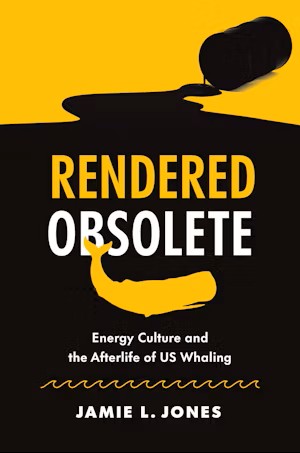
Rendered Obsolete: Energy Culture and the Afterlife of US Whaling

Jimmy Packham writes a review of “Rendered Obsolete: Energy Culture and the Afterlife of US Whaling” by Jamie L. Jones

Read it at this link (requires subscription):

https://journals.sagepub.com/doi/abs/10.1177/08438714251332120

Through the mid-nineteenth century, the US whaling industry helped drive industrialization and urbanization, providing whale oil to lubricate and illuminate the country. The Pennsylvania petroleum boom of the 1860s brought cheap and plentiful petroleum into the market, decimating whale oil’s popularity. Here, from our modern age of fossil fuels, Jamie L. Jones uses literary and cultural history to show how the whaling industry held firm in US popular culture even as it slid into obsolescence. Jones shows just how instrumental whaling was to the very idea of “energy” in American culture and how it came to mean a fusion of labor, production, and the circulation of power. She argues that dying industries exert real force on environmental perceptions and cultural imaginations.

Analyzing a vast archive that includes novels, periodicals, artifacts from whaling ships, tourist attractions, and even whale carcasses, Jones explores the histories of race, labor, and energy consumption in the nineteenth-century United States through the lens of the whaling industry’s legacy. In terms of how they view power, Americans are, she argues, still living in the shadow of the whale.

The Batavia disaster

Read the recent article by Jaco Koehler in the IJMH (requires subscription): “The Batavia disaster: A new scenario to explain the massacre after the shipwreck”

https://doi.org/10.1177/08438714251326015

Abstract

On 4 June 1629, the Batavia was wrecked at the Houtman Abrolhos. After the shipwreck, more than 100 survivors were murdered. The senior merchant Francisco Pelsaert prosecuted the murderers and presented evidence that the murders were planned before the shipwreck. In this article, the trial against the murderers is re-examined using a scenario approach, which provides a framework for rational thinking about evidence and proof in a criminal case. Based on insights from this approach and findings on the impact of waterboarding, the reader learns that another scenario provides a better explanation for what happened. In that scenario, there was no premeditated mutiny. Instead, famine and water scarcity served as catalysts for mass murder. The collapse of existing forms of authority and social organization allowed a group of survivors to seize power and start a massacre. In the final section of the article, the potential of the scenario approach for analysing historical trial records is discussed.

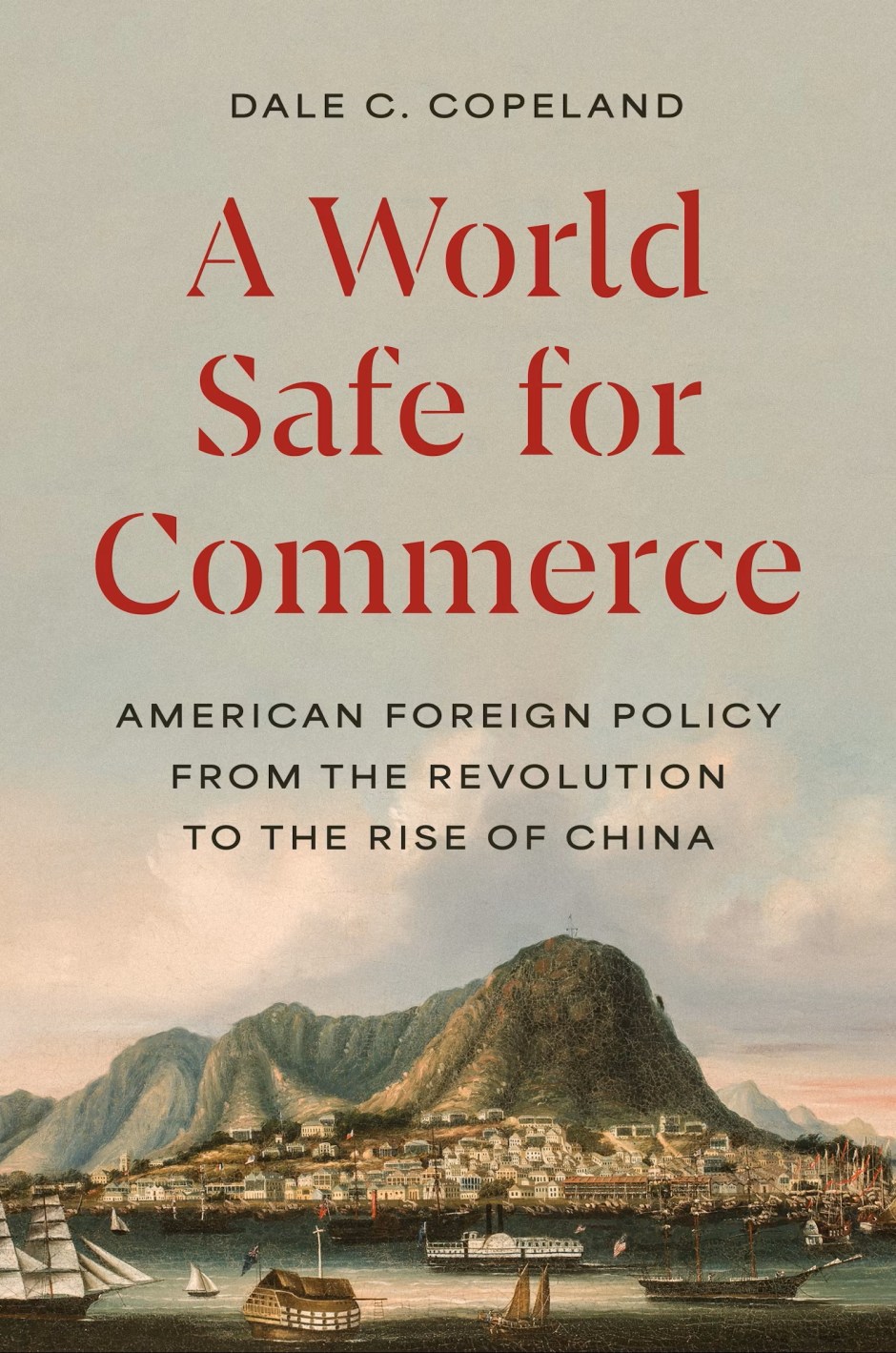
A World Safe for Commerce

Read a review by Joyce P. Kaufman of the recent book “A World Safe for Commerce: American Foreign Policy from the Revolution to the Rise of China” by Dale C. Copeland.

The text is available at this link (requires subscription):

https://journals.sagepub.com/doi/abs/10.1177/08438714251332121

When the Cold War ended, many believed that expanding trade would usher in an era of peace. Yet today the United States finds itself confronting not just Russia in Europe but China in the Indo-Pacific, Africa, and Latin America. Shedding new light on how trade both reduces and increases the risks of international crisis, A World Safe for Commerce traces how, since the nation’s founding, the United States has consistently moved from peace to conflict when the commerce needed for national security is under threat.

Dale Copeland shows how commerce pushes the United States and its rivals to expand their spheres of influence for access to goods even as they worry about provoking a breakdown in trade relations that could spiral into military conflict. Taking readers from the wars with Britain in 1776 and 1812 to World War II and the Cold War, he describes how America’s leaders have grappled with this inherent tension, and why they have shifted, sometimes dramatically, from peaceful, mutually beneficial policies to coercion and force in order to increase control over vital trade and prevent economic decline.

A World Safe for Commerce reveals how trade competition could lead the United States and China into full-scale confrontation. But it also offers hope that both sides can work to improve their overall trade expectations and foster the confidence needed for long-term peace and stability.

https://press.princeton.edu/books/hardcover/9780691172552/a-world-safe-for-commerce?srsltid=AfmBOoo5ZqbatsQByYifF6hwPNLEHz39VoEUQO5eyXw_l-4mFIr8XHEG

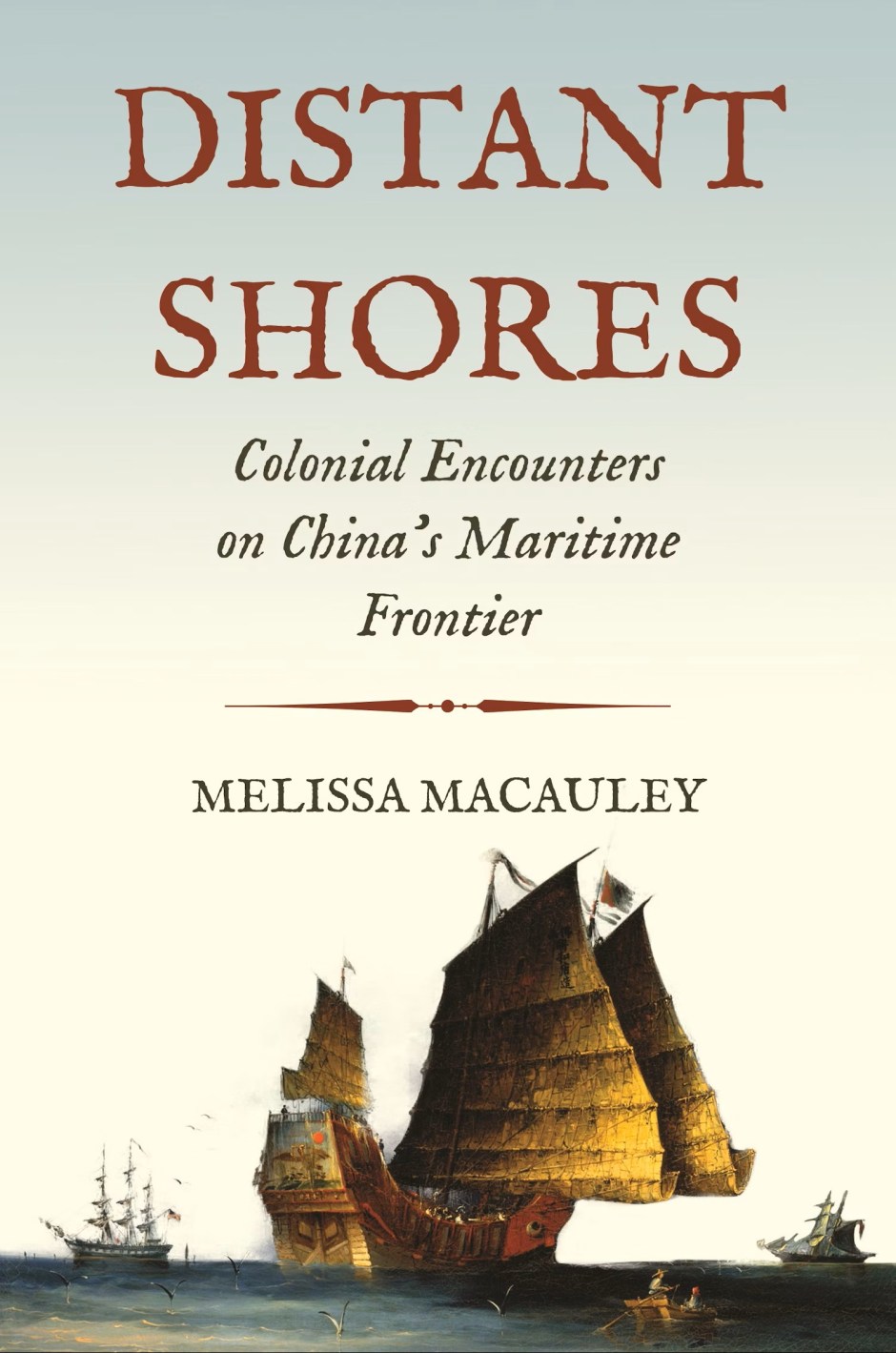
Distant Shores: Colonial Encounters on China’s Maritime Frontier

Daria Dahpon Ho publishes a review of the recent book by Melissa Macauley, Distant Shores: Colonial Encounters on China’s Maritime Frontier

Read it online (requires subscription) at https://journals.sagepub.com/doi/abs/10.1177/08438714251332122

China has conventionally been considered a land empire whose lack of maritime and colonial reach contributed to its economic decline after the mid-eighteenth century. Distant Shores challenges this view, showing that the economic expansion of southeastern Chinese rivaled the colonial ambitions of Europeans overseas.

In a story that dawns with the Industrial Revolution and culminates in the Great Depression, Melissa Macauley explains how sojourners from an ungovernable corner of China emerged among the commercial masters of the South China Sea. She focuses on Chaozhou, a region in the great maritime province of Guangdong, whose people shared a repertoire of ritual, cultural, and economic practices. Macauley traces how Chaozhouese at home and abroad reaped many of the benefits of an overseas colonial system without establishing formal governing authority. Their power was sustained instead through a mosaic of familial, fraternal, and commercial relationships spread across the ports of Bangkok, Singapore, Saigon, Hong Kong, Shanghai, and Swatow. The picture that emerges is not one of Chinese divergence from European modernity but rather of a convergence in colonial sites that were critical to modern development and accelerating levels of capital accumulation.

A magisterial work of scholarship, Distant Shores reveals how the transoceanic migration of Chaozhouese laborers and merchants across a far-flung maritime world linked the Chinese homeland to an ever-expanding frontier of settlement and economic extraction.

https://press.princeton.edu/books/hardcover/9780691213484/distant-shores?srsltid=AfmBOopbeEdklKyWemrKfssI4TZBSw8JZpuuNkvydrSD-aP3rhGcIgjQ

Transformation and adaptability in Greek shipowners’ collective representation

Ilias Bissias publishes in the forthcoming issue of the IJMH an article titled “Why do professional associations change their strategies? Transformation and adaptability in Greek shipowners’ collective representation after the fall of the Greek military dictatorship”

Read it in OnlineFirst at

https://doi.org/10.1177/08438714251330704

The 1970s was a decade when societies, especially in Europe, demanded more extroversion, transparency and social responsibility from state and private organisations. In this context, the Greek shipowning community’s strategic shift and willingness to cooperate with the state and trade unions in Greece reflected the collaborative spirit that prevailed globally at that time. This study aims to examine the reasons behind this negative sentiment expressed by the post-dictatorship Greek political system and the Athenian press, its impact on the collective representation bodies of Greek shipowners and the strategy the Union of Greek Shipowners chose to adopt in order to turn the tide.

https://journals.sagepub.com/…/10.1177/08438714251330704

Fukushima Futures: Survival Stories in a Repeatedly Ruined Seascape

Read (subscription needed) in the February 2025 issue of the IJMH Robert Winstanley-Chesters’s review of “Fukushima Futures: Survival Stories in a Repeatedly Ruined Seascape” by Satsuki Takahashi

Book Review: Fukushima Futures: Survival Stories in a Repeatedly Ruined Seascape by Satsuki Takahashi – Robert Winstanley-Chesters, 2025

A probe of the environmental and sociocultural effects of industrialization and nuclear disaster on coastal livelihoods

Both before and after the 2011 “Triple Disaster” of earthquake, tidal wave, and consequent meltdown at the Fukushima Daiichi nuclear power plant, anthropologist Satsuki Takahashi visited nearby communities, collecting accounts of life and livelihoods along the industrialized seascape. The resulting environmental ethnography examines the complex relationship between commercial fishing families and the Joban Sea—once known for premium-quality fish and now notorious as the location of the world’s worst nuclear catastrophe. Fukushima Futures follows postwar Japan’s maritime modernization from the perspectives of those most entangled with its successes and failures. In response to unrelenting setbacks, including an earlier nuclear accident at neighboring Tokaimura and the oil spills of stranded tankers during typhoons, these communities have developed survival strategies shaped by the precarity they share with their marine ecosystem. The collaborative resilience that emerges against this backdrop of vulnerability and uncertainty challenges the progress-bound logic of futurism, bringing more hopeful possibilities for the future into sharper focus.

Fukushima Futures