Roundtable on Seth Stein LeJacq’s Sexual and Gender Difference in the British Navy, 1690–1900

Read in open access the “Roundtable on Seth Stein LeJacq’s Sexual and Gender Difference in the British Navy, 1690–1900, organized by Jo Stanley, with a response by LeJacq”

Based on: LeJacq Seth Stein, ed., Sexual and Gender Difference in the British Navy, 1690–1900. Abingdon: Routledge, 2024. 420pp., appendix, bibliography, index. ISBN 978-1-0324-0990-0, £115 (hbk).

https://journals.sagepub.com/…/10.1177/08438714241303796

This review contributes to the roundtable from a perspective informed by social psychology and recent queer sexology at a time when mobility and transport studies have taken a turn to emotions. It sees the Royal Navy in Britain’s most thalassocratic period, struggling to insist on shipboard regimes based on heteronormative and cisgender values. Intimate human relations and individual agency were thus positioned as secondary to institutional macro-success in imperial enterprise. The regulatory attempt to maintain such a binary order was legitimated by Christian moral values about ‘abominable crimes’ and ‘unnatural practices’, including bestiality with ships’ animals. Simply put, an optimal unit of labour was a virtuous chap who only did it with his loyal wife, and to procreate. Sodomites were hanged.
Mollie Carlyle’s review of “Lost at Sea in Mysterious Circumstances: Vanishings and Undiscovered Shipwrecks” by M. Richard

Read (subscription needed) in the February 2025 issue of the IJMH Mollie Carlyle’s review of “Lost at Sea in Mysterious Circumstances: Vanishings and Undiscovered Shipwrecks” by M. Richard

https://journals.sagepub.com/doi/abs/10.1177/08438714241306495

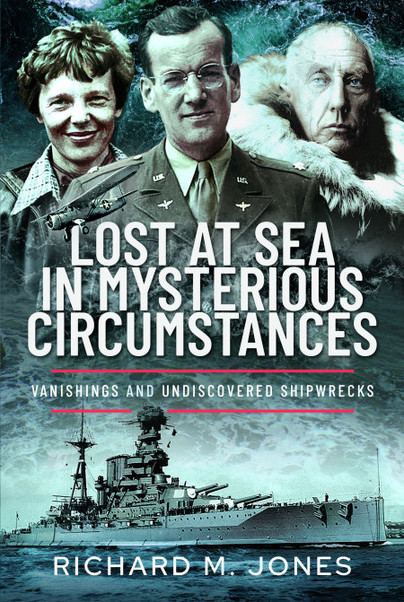
When you think of something being lost at sea, you imagine a ship sinking gracefully, the survivors being rescued or a tragedy being caught on camera. But what if a ship is lost at sea without trace? What if an aircraft takes off on a routine flight and is never seen again? This book details over fifty of the most mysterious vanishings, ships that have made headlines but have never been found, both famous and forgotten cases that have left an outward ripple of tragedy and mystique.

Most people have heard of the Mary Celeste crew vanishing, but how many knew that this was not the last case of an entire crew going missing? What about the three Scottish lighthouse keepers who were never seen again? Or the world famous aviation pioneers who took flight to never return?
This book will tell you that MH370 was not the first airliner to disappear over the sea, nor was the Bermuda Triangle actually the cause of so many disappearing ships. How could six airplanes disappear in one day? Why did a ship with over 300 people on board not send a single distress call? Which ships vanished and then later messages in a bottle suddenly turn up, not just once but two separate shipwrecks?
Lost at Sea in Mysterious Circumstances will cover all these and more as we reveal the stories of some of the most fascinating incidents above and below the waves.

https://www.pen-and-sword.co.uk/Lost-at-Sea-in-Mysterious-Circumstances-Hardback/p/23687

From the oceans, via Antarctica and the Moon, to deep space: Maritime history and its relevance for outer space exploration

Read “From the oceans, via Antarctica and the Moon, to deep space: Maritime history and its relevance for outer space exploration,” a research note by Ingo Heidbrink” at the link below (requires subscription)

https://journals.sagepub.com/doi/abs/10.1177/08438714241305600

Abstract

Space exploration is often compared with the historical exploration of the globe, and especially maritime and polar exploration. This exploration converted unknown spaces into known spaces, and with this knowledge came the question of ownership and control over the newly explored spaces and the development of regulatory mechanisms for access to these spaces. This research note examines the historical development of regulatory mechanisms for newly explored spaces such as the oceans, Antarctica and outer space, and analyses the conditions required for establishing international regulatory frameworks rather than simply assigning nation-state-based sovereignty to these areas. In addition, it aims to propose a new line of inquiry and interdisciplinary cooperation for maritime historians.

Lila O’Leary Chambers’s review of “Insignificant Things: Amulets and the Art of Survival in the Early Black Atlantic” by Matthew Francis Rarey

Read (subscription needed) in the February 2025 issue of the IJMH Lila O’Leary Chambers’s review of “Insignificant Things: Amulets and the Art of Survival in the Early Black Atlantic” by Matthew Francis Rarey

https://journals.sagepub.com/doi/abs/10.1177/08438714241306493

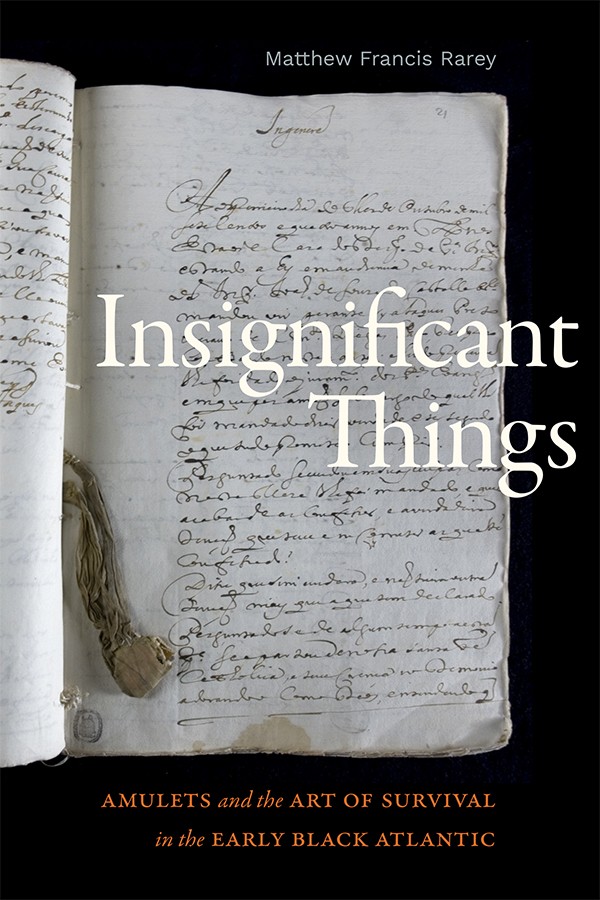
In Insignificant Things Matthew Francis Rarey traces the history of the African-associated amulets that enslaved and other marginalized people carried as tools of survival in the Black Atlantic world from the seventeenth to the nineteenth centuries. Often considered visually benign by white Europeans, these amulet pouches, commonly known as “mandingas,” were used across Africa, Brazil, and Portugal and contained myriad objects, from herbs and Islamic prayers to shells and coins. Drawing on Arabic-language narratives from the West African Sahel, the archives of the Portuguese Inquisition, sixteenth- and seventeenth-century European travel and merchant accounts of the West African Coast, and early nineteenth-century Brazilian police records, Rarey shows how mandingas functioned as portable archives of their makers’ experiences of enslavement, displacement, and diaspora. He presents them as examples of the visual culture of enslavement and critical to conceptualizing Black Atlantic art history. Ultimately, Rarey looks to the archives of transatlantic slavery, which were meant to erase Black life, for objects like the mandingas that were created to protect it.

https://www.dukeupress.edu/insignificant-things

“Maritime geographies and the borders of disease: Three historical precedents of quarantined vessels”

Chi Chi Huang and Alison Bashford write in the February 2025 issue of the IJMH about “Maritime geographies and the borders of disease: Three historical precedents of quarantined vessels”

Read it in open access at this link

https://journals.sagepub.com/doi/full/10.1177/08438714241306832

In the early months of the COVID-19 pandemic in 2020, vessels were suspended across the oceans, unable to dock and with passengers and crew denied local permission to disembark. These scenarios were another way in which the effects of this virus were understood to be ‘unprecedented’, seemingly disrupting existing protocols, regulations and lines of authority. However, this article historicizes the stranded cruise ship in examples from the late nineteenth and early twentieth centuries along Australia’s coastline. By focusing on the finer processes of maritime quarantine that have shaped this nation, the authors argue that maritime quarantine routinely worked across and between multiple authorities, almost always crossing jurisdictional boundaries. Furthermore, these processes engaged with rapidly changing information between domestic and international ports to effectively manage outbreaks of infectious diseases, frequently using the vessel’s mobility as part of the quarantine strategy.

Vineeta Sinha’s review of “Boats in a Storm: Law, Migration, and Decolonization in South and Southeast Asia, 1942–1962” by Kalyani Ramnath

Read (subscription needed) in the February 2025 issue of the IJMH Vineeta Sinha’s review of “Boats in a Storm: Law, Migration, and Decolonization in South and Southeast Asia, 1942–1962” by Kalyani Ramnath

https://journals.sagepub.com/doi/abs/10.1177/08438714241306479

For more than century before World War II, traders, merchants, financiers, and laborers steadily moved between places on the Indian Ocean, trading goods, supplying credit, and seeking work. This all changed with the war and as India, Burma, Ceylon, and Malaya wrested independence from the British empire. Set against the tumult of the postwar period, Boats in a Storm centers on the legal struggles of migrants to retain their traditional rhythms and patterns of life, illustrating how they experienced citizenship and decolonization. Even as nascent citizenship regimes and divergent political trajectories of decolonization papered over migrations between South and Southeast Asia, migrants continued to recount cross-border histories in encounters with the law. These accounts, often obscured by national and international political developments, unsettle the notion that static national identities and loyalties had emerged, fully formed and unblemished by migrant pasts, in the aftermath of empires.

Drawing on archival materials from India, Sri Lanka, Myanmar, London, and Singapore, Kalyani Ramnath narrates how former migrants battled legal requirements to revive prewar circulations of credit, capital, and labor, in a postwar context of rising ethno-nationalisms that accused migrants of stealing jobs and hoarding land. Ultimately, Ramnath shows how decolonization was marked not only by shipwrecked empires and nation-states assembled and ordered from the debris of imperial collapse, but also by these forgotten stories of wartime displacements, their unintended consequences, and long afterlives.

https://www.sup.org/books/asian-studies/boats-storm

Pictures of professionalism and pride: Portraits of ship crews, circa 1870–1910

Anne Tove Austbø writes in the February issue of IJMH about “Pictures of professionalism and pride: Portraits of ship crews, circa 1870–1910”

Read the text at the link below (requires subscription)

https://journals.sagepub.com/…/10.1177/08438714241307420

Photographic portraits of merchant ship crews became a popular phenomenon in western coastal communities in the last decades of the nineteenth century. This article examines how the working collectives on ships in the northern European merchant fleet expressed their professional identities and maritime culture in photographs produced by commercial harbour photographers circa 1870–1910. It explores recurrent visual conventions and themes, as well as the original contexts of use and later circulation of the portraits. The study argues that the reason for their popularity was that ordinary crew members could, for the first time, articulate their professional status in new projections of seamanship, which also resonated with a long-established European maritime image world.

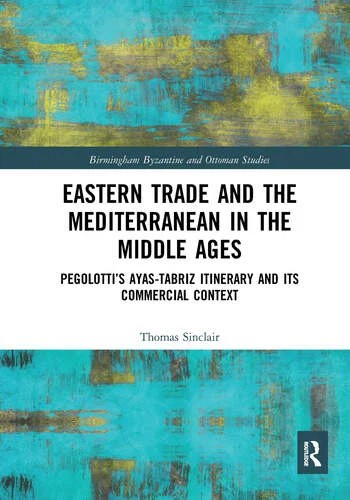
Maria Fusaro’s review of “Eastern Trade and the Mediterranean in the Middle Ages: Pegolotti’s Ayas–Tabriz Itinerary and Its Commercial Context” by Thomas Sinclair

Read (subscription needed) in the February 2025 issue of the IJMH Maria Fusaro’s review of “Eastern Trade and the Mediterranean in the Middle Ages: Pegolotti’s Ayas–Tabriz Itinerary and Its Commercial Context” by Thomas Sinclair

https://journals.sagepub.com/doi/abs/10.1177/08438714241306471

At the end of the High Middle Ages in Europe, with buying power and economic sophistication at a high, an itinerary detailing the toll stations along a commercial artery carrying eastern goods (from China, India and Iran) towards Europe was compiled, and later incorporated in the well-known trading manual of the Florentine bank official Pegolotti; Pegolotti was twice stationed in the city of Famagusta in Cyprus, which lay opposite the city of Ayas where the land route ended. The Il-Khanid capital, Tabriz in Iran, attracting expensive merchandise such as spices and silk from a variety of origins, was the road’s starting-point.

To demonstrate the importance of the route in its own time, parallel and contemporary routes in the Black Sea and the Levant are traced and the effect of trade on their cities noted. To compare the Ayas itinerary (1250s to 1330s) with previous periods the networks of commercial avenues in the previous period (1100-1250) and the subsequent one (1340s to 1500) are reconstructed. In each period the connection of east-west trade with the main movements of the European economy are fully drawn out, and the effects on the building history of the three main Italian cities concerned (Venice, Genoa and Florence) are sketched.

Attention then turns to the Pegolotti itinerary itself. The individual toll stations are identified employing a variety of means, such as names taken from the Roman itineraries (Peutinger Table and Antonine Itinerary) and archaeological data; this allows the course of the track to be followed through diverse topography to the city of Sivas, then across plains and through passes to Erzurum and finally to Tabriz. A picture is drawn of the urban history of each major city, including Sivas, Erzurum and Tabriz itself, and of the other towns along the route.

https://www.routledge.com/Eastern-Trade-and-the-Mediterranean-in-the-Middle-Ages-Pegolottis-Ayas-Tabriz-Itinerary-and-its-Commercial-Context/Sinclair/p/book/9781032083407?srsltid=AfmBOoqr07hG4Ii7bC_tqs3oNNi5X3Jx0BTd0s9nxTrGQBxLELkUEHMR

The Greenwich pensioners and Britain’s naval workforce, 1764–1869

Read in open access “The Greenwich pensioners and Britain’s naval workforce, 1764–1869” by Callum Easton in the February 2025 issue of the IJMH

https://journals.sagepub.com/…/10.1177/08438714241298350

The wealth of personal information recorded in the admissions books of Greenwich Hospital offers one of the most detailed portraits available of Britain’s essential naval workforce. This article uses a quinquennial sample of the men admitted to Greenwich Hospital between 1764 and 1864 to reconstruct the evolving composition of the Greenwich pensioners across this pivotal period of British naval ascendancy. Over this time, the prevailing features of the different cohorts of pensioners varied significantly, with differences between years of peace and war a driving factor. The characteristics of the admitted pensioners reflected the shifting fortunes and challenges encountered by the Royal Navy, and thereby offer a new perspective on important debates, such as the naval manning problem and the overall composition of naval manpower across this long period. The Greenwich Hospital population was far from static and its residents – experienced seamen – were among the decisive sinews of British power.

“Port Newark and the Origins of Container Shipping”

Ingo Heidbrink writes in the latest issue of the IJMH a review of “Port Newark and the Origins of Container Shipping” by Angus Kress Gillespie

Read it (requires subscription) at this link.

https://journals.sagepub.com/doi/abs/10.1177/08438714241306478

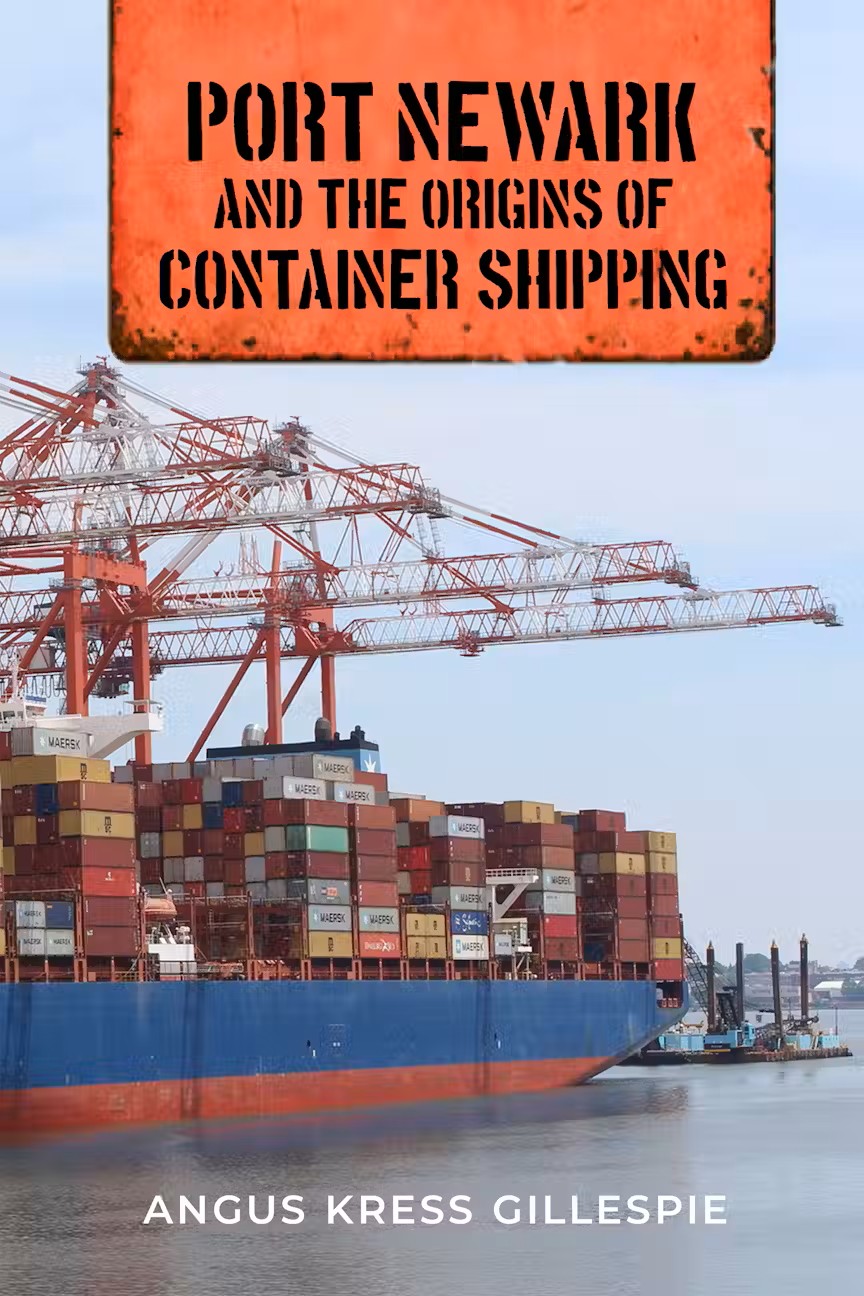
Port Newark and the Origins of Container Shipping, by Angus Kress Gillespie

Container shipping is a vital part of the global economy. Goods from all around the world, from vegetables to automobiles, are placed in large metal containers which are transported across the ocean in ships, then loaded onto tractor-trailers and railroad flatbeds. But when and where did this world-changing invention get started?

This fascinating study traces the birth of containerization to Port Newark, New Jersey, in 1956 when trucker Malcom McLean thought of a brilliant new way to transport cargo. It tells the story of how Port Newark grew rapidly as McLean’s idea was backed by both New York banks and the US military, who used containerization to ship supplies to troops in Vietnam. Angus Gillespie takes us behind the scenes of today’s active container shipping operations in Port Newark, talking to the pilots who guide the ships into port, the Coast Guard personnel who help manage the massive shipping traffic, the crews who unload the containers, and even the chaplains who counsel and support the mariners. Port Newark shines a spotlight on the unsung men and women who help this complex global shipping operation run smoothly.

Since McLean’s innovation, Port Newark has expanded with the addition of the nearby Elizabeth Marine Terminal. This New Jersey complex now makes up the busiest seaport on the East Coast of the United States. Some have even called it “America’s Front Door.” The book tells the story of the rapid growth of worldwide containerization, and how Port Newark has adapted to bigger ships with deeper channels and a raised bridge. In the end, there is speculation of the future of this port with ever-increasing automation, artificial intelligence, and automation.