“At the Baltic gate: Copenhagen’s role in international shipping in the latter half of the eighteenth century”

Yrjö Kaukiainen writes in the February 2025 issue of the IJMH an articles titled “At the Baltic gate: Copenhagen’s role in international shipping in the latter half of the eighteenth century”:

Check it out at this link (In open access)

https://journals.sagepub.com/doi/full/10.1177/08438714241298334

Abstract

In the late eighteenth century, Copenhagen was the second biggest urban centre in the Baltic Sea area. Its port was both an international terminal and the paramount shipping centre of the Danish–Norwegian monarchy. In the 1750s, over 80 per cent of arriving ships still came from the different parts of the monarchy, but this proportion diminished gradually to two-thirds and, in terms of tonnage, foreign vessels probably accounted for about 60 per cent of the incoming cargo at the beginning of the nineteenth century. Traffic in the port of Copenhagen grew slightly faster than overall shipping through the Danish Sound and, at the end of the period, Copenhagen was, on a par with St. Petersburg, one of the busiest ports in the Baltic Sea area. Its role in the commodity flows between eastern Baltic ports and western Europe remained modest, but in several other trades it became more closely integrated with international shipping.
The Liberty to Take Fish. Atlantic Fisheries and Federal Power in Nineteenth-Century America

Matthew McKenzie writes in the latest issue of the IJMH a review on this book.

Read it (requires subscription) at this link.

https://journals.sagepub.com/doi/abs/10.1177/08438714241306485

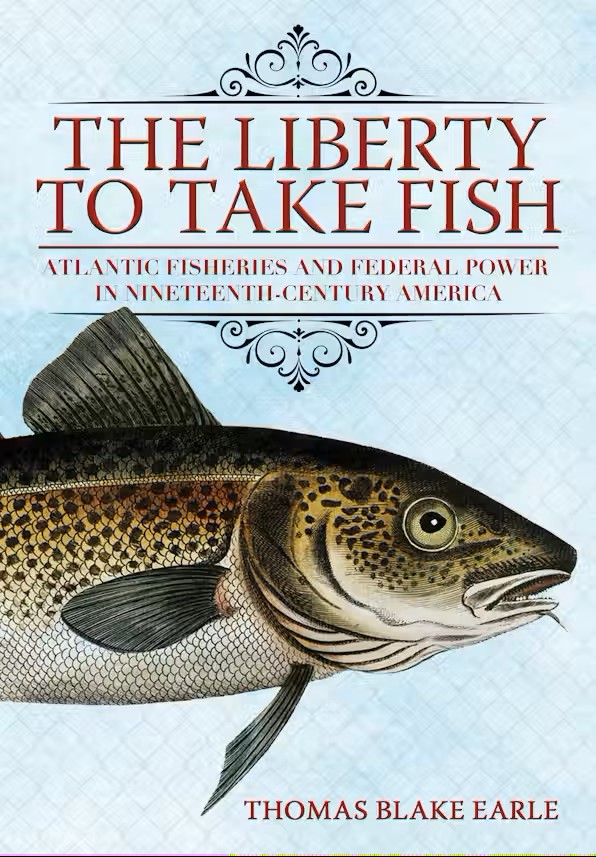
“The Liberty to Take Fish. Atlantic Fisheries and Federal Power in Nineteenth-Century America,” by Thomas Blake Earle

In The Liberty to Take Fish, Thomas Blake Earle offers an incisive and nuanced history of the long American Revolution, describing how aspirations to political freedom coupled with the economic imperatives of commercial fishing roiled relations between the young United States and powerful Great Britain.

The American Revolution left the United States with the “liberty to take fish” from the waters of the North Atlantic. Indispensable to the economic health of the new nation, the cod fisheries of the Grand Banks, the Bay of Fundy, and the Gulf of St. Lawrence quickly became symbols of American independence in an Atlantic world dominated by Great Britain.

The fisheries issue was a near-constant concern in American statecraft that impinged upon everything, from Anglo-American relations, to the operation of American federalism, and even to the nature of the marine environment. Earle explores the relationship between the fisheries and the state through the Civil War era when closer ties between the United States and Great Britain finally surpassed the contentious interests of the fishing industry on the nation’s agenda.

The Liberty to Take Fish is a rich story that moves from the staterooms of Washington and London to the decks of fishing schooners and into the Atlantic itself to understand how ordinary fishermen and the fish they pursued shaped and were, in turn, shaped by those far-off political and economic forces. Earle returns fishing to its once-central place in American history and shows that the nation of the nineteenth century was indeed a maritime one.

Editorial of IJMH 37/1

Check out, in open access, the Editorial by Cátia Antunes and Michiel van Groesen of the latest issue of the IJMH.

“Our journal continues to serve as a vital platform for fostering scholarship that explores the diverse and dynamic field of maritime history. We open this issue with a letter from the chair of the Executive Committee of the International Maritime History Association, Ingo Heidbrink.

In this issue, we are proud to present a collection of articles that highlight the richness of maritime studies, encompassing a range of geographies, time periods and thematic approaches. These contributions reflect the ongoing commitment of our global community of scholars to advancing our understanding of the maritime world’s pivotal role in shaping human history.”

Read more at this link: https://journals.sagepub.com/doi/full/10.1177/08438714241306500

The Global Role of Asia’s Great Archipelago

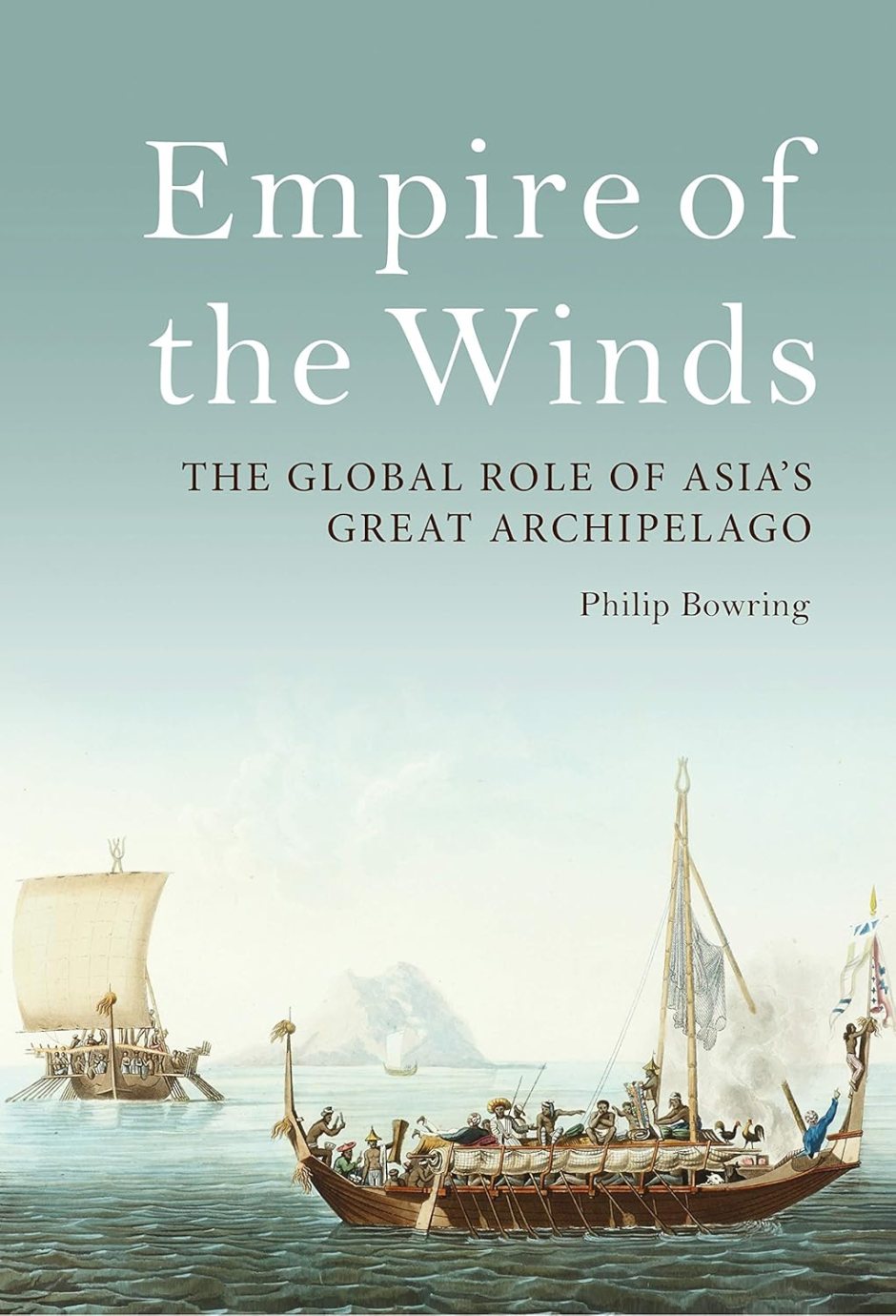
“Empire of the Winds: The Global Role of Asia’s Great Archipelago” by Philip Bowring

Read the review (requires subscription) by Tristan Mostert in the November 2024 issue of the IJMH

https://journals.sagepub.com/doi/abs/10.1177/08438714241274974

A description of the book is available here:

https://www.bloomsbury.com/uk/empire-of-the-winds-9781788314466/

Nusantaria – often referred to as ‘Maritime Southeast Asia’ – is the world’s largest archipelago and has, for centuries, been a vital cultural and trading hub. Nusantara, a Sanskrit, then Malay, word referring to an island realm, is here adapted to become Nusantaria – denoting a slightly wider world but one with a single linguistic, cultural and trading base. Nusantaria encompasses the lands and shores created by the melting of the ice following the last Ice Age. These have long been primarily the domain of the Austronesian-speaking peoples and their seafaring traditions. The surrounding waters have always been uniquely important as a corridor connecting East Asia to India, the Middle East, Europe and Africa. In this book, Philip Bowring provides a history of the world’s largest and most important archipelago and its adjacent coasts. He tells the story of the peoples and lands located at this crucial maritime and cultural crossroads, from its birth following the last Ice Age to today.

Moby-Dick; or, the Whale: Selections

“Moby-Dick; or, the Whale: Selections” by Nora Ruddock and Maxwell Uphaus, eds.

Read the review (requires subscription) by Mary K. Bercaw Edwards in the November 2024 issue of the IJMH

https://journals.sagepub.com/doi/abs/10.1177/08438714241275529

A description of the book is available here:

When Melville completed Moby-Dick, he wrote to Nathaniel Hawthorne that “I have written a wicked book, and feel spotless as a lamb.” While it took the world some time to appreciate the magnitude of Melville’s achievement, Moby-Dick is now widely considered one of the greatest works of American literature. It is, however, long, and students in semester-long courses will often not have a chance to read the novel in its entirety. The Broadview Moby-Dick: A Selection offers a robust sampling of chapters, chosen to give students a thorough initiation into the novel’s plot, as well as into the full range of its themes and stylistic experimentation. This edition also includes substantial, clear, and helpful annotations to help students successfully navigate Melville’s language and range of references.

This volume is one of a number of editions that have been drawn from the pages of the acclaimed Broadview Anthology of American Literature. The series is designed to make selections from the anthology available in a format convenient for use in a wide variety of contexts; each edition features an introduction and exaplanatory footnotes, and is designed to meet the needs of today’s students.

Tempest: The Royal Navy and the Age of Revolutions

“Tempest: The Royal Navy and the Age of Revolutions” by James Davey

Read the review (requires subscription) by J. Ross Dancy in the November 2024 issue of the IJMH

https://journals.sagepub.com/doi/abs/10.1177/08438714241275549

A description of the book is available here:

The French Revolutionary Wars catapulted Britain into a conflict against a new enemy: Republican France. Britain relied on the Royal Navy to protect its shores and empire, but as radical ideas about rights and liberty spread across the globe, it could not prevent the spirit of revolution from reaching its ships.

In this insightful history, James Davey tells the story of Britain’s Royal Navy across the turbulent 1790s. As resistance and rebellion swept through the fleets, the navy itself became a political battleground. This was a conflict fought for principles as well as power. Sailors organized riots, strikes, petitions, and mutinies to achieve their goals. These shocking events dominated public discussion, prompting cynical—and sometimes brutal—responses from the government.

Tempest uncovers the voices of ordinary sailors to shed new light on Britain’s war with France, as the age of revolution played out at every level of society.

Australia’s Cocos (Keeling) Islands and Christmas Island

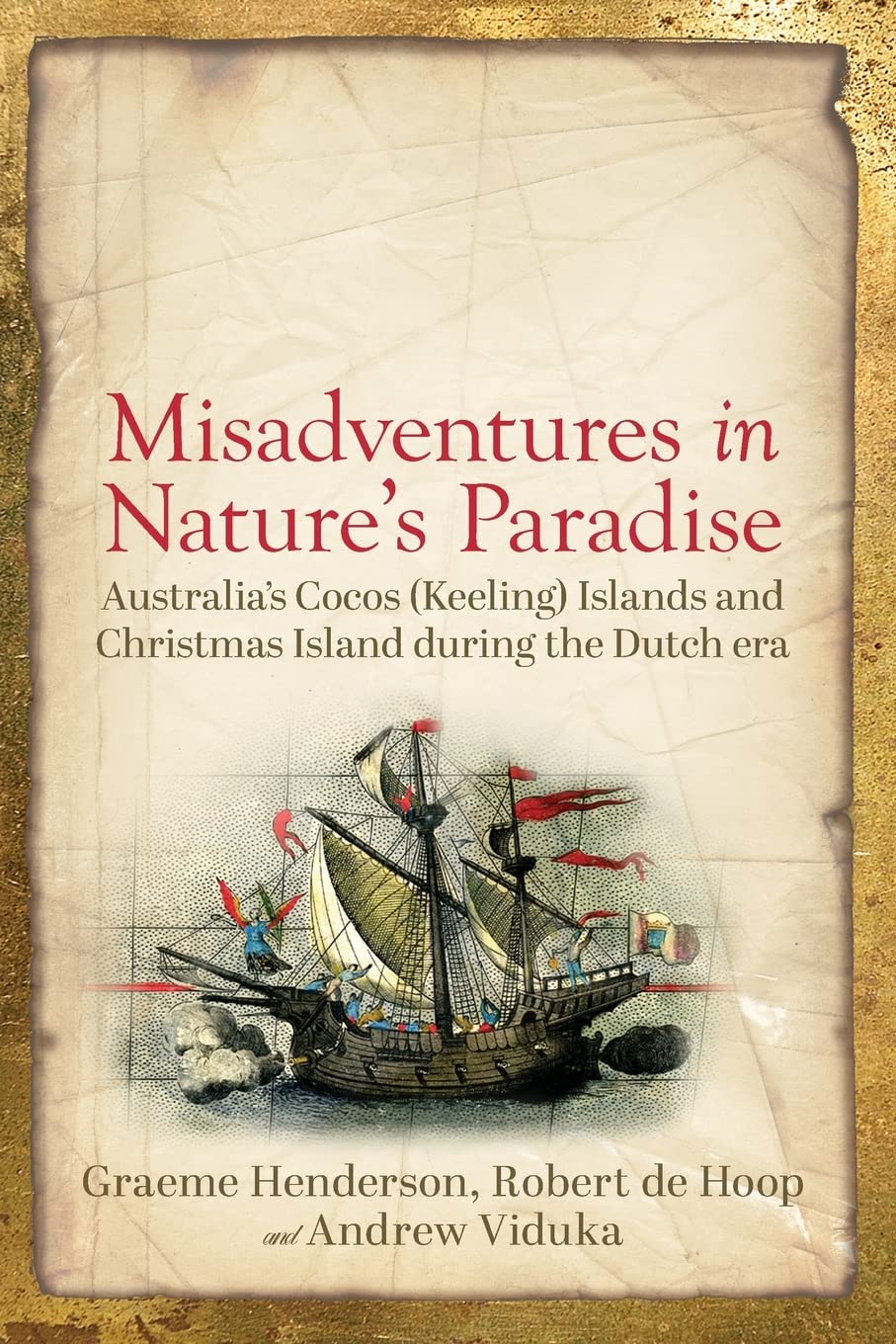
“Misadventures in Nature’s Paradise: Australia’s Cocos (Keeling) Islands and Christmas Island during the Dutch Era” by Graeme Henderson, Robert de Hoop and Andrew Viduka

Read the review (requires subscription) by Bruno E. J. S. Werz in the November 2024 issue of the IJMH

https://journals.sagepub.com/doi/abs/10.1177/08438714241272659

A description of the book is available here:

https://uwap.uwa.edu.au/products/misadventures-in-natures-paradise ?srsltid=AfmBOooX6usgSKuBenA-o3cPQHbNjZJXEmrNUm78jjTNAXOvVdyf92P1

Misadventures in Nature’s Paradise explores the earliest history of Australia’s Indian Ocean territories of the Cocos (Keeling) Islands and Christmas Island.

A time possibly coined the Dutch Era, saw Dutch cartographers voyaging eastward across the southern Indian Ocean to the East Indies, and occasionally falling victim to shipwreck disasters. On their journey, Dutch voyagers would rely upon trade routes established by seafarers from Africa, the Middle East and Asia. These local seafarers would speak of terrible dangers in the unknown waters of the south: strong ocean currents, dark shadows and giant birds of prey. The Dutch would later develop a shorter trade route between South Africa and Indonesia which would take their vessels southward and then toward the Christmas and Cocos (Keeling) islands as we know them today.

The authors of this volume, historical maritime archaeologists Graeme Henderson, Robert de Hoop and Andrew Viduka, tease out some of the real-life ramifications of the Indian Ocean and European myths upon the destiny of the Cocos (Keeling) and Christmas islands and provide evidence that indicates several eighteenth-century Dutch ships foundered close to these beautiful islands. Their wrecks still await discovery.

The Extraordinary Journey of David Ingram

“The Extraordinary Journey of David Ingram: An Elizabethan Sailor in Native North America” by Dean Snow

Read the review (requires subscription) by Cheryl Butler in the November 2024 issue of the IJMH

https://journals.sagepub.com/doi/abs/10.1177/08438714241272605

A description of the book is available here:

In The Extraordinary Journey of David Ingram, author Dean Snow rights the record on a shipwrecked sailor who traversed the length of the North American continent only to be maligned as deceitful storyteller.

In the autumn of 1569, a French ship rescued David Ingram and two other English sailors from the shore of the Gulf of Maine. The men had walked over 3000 miles in less than a year after being marooned near Tampico, Mexico. They were the only three men to escape alive and uncaptured, out of a hundred put ashore at the close of John Hawkins’s disastrous third slaving expedition. A dozen years later, Ingram was called in for questioning by Francis Walsingham, Queen Elizabeth’s spymaster. In 1589, the historian Richard Hakluyt published his version of Ingram’s story based on the records of that interrogation. For four centuries historians have used that publication as evidence that Ingram was an egregious travel liar, an unreliable early source for information about the people of interior eastern North America before severe historic epidemics devastated them.

In The Extraordinary Journey of David Ingram,author and recognized archaeologist Dean Snow shows that Ingram was not a fraud, contradicting the longstanding narrative of his life. Snow’s careful examination of three long-neglected surviving records of Ingram’s interrogation reveals that the confusion in the 1589 publication was the result of disorganization by court recorders and poor editing by Richard Hakluyt. Restoration of Ingram’s testimony has reinstated him as a trustworthy source on the peoples of West Africa, the Caribbean, and eastern North America in the middle sixteenth century. Ingram’s life story, with his long traverse through North America at its core, can now finally be understood and appreciated for what it was: the tale of a unique, bold adventurer.

Maritime Trade in the Low Countries

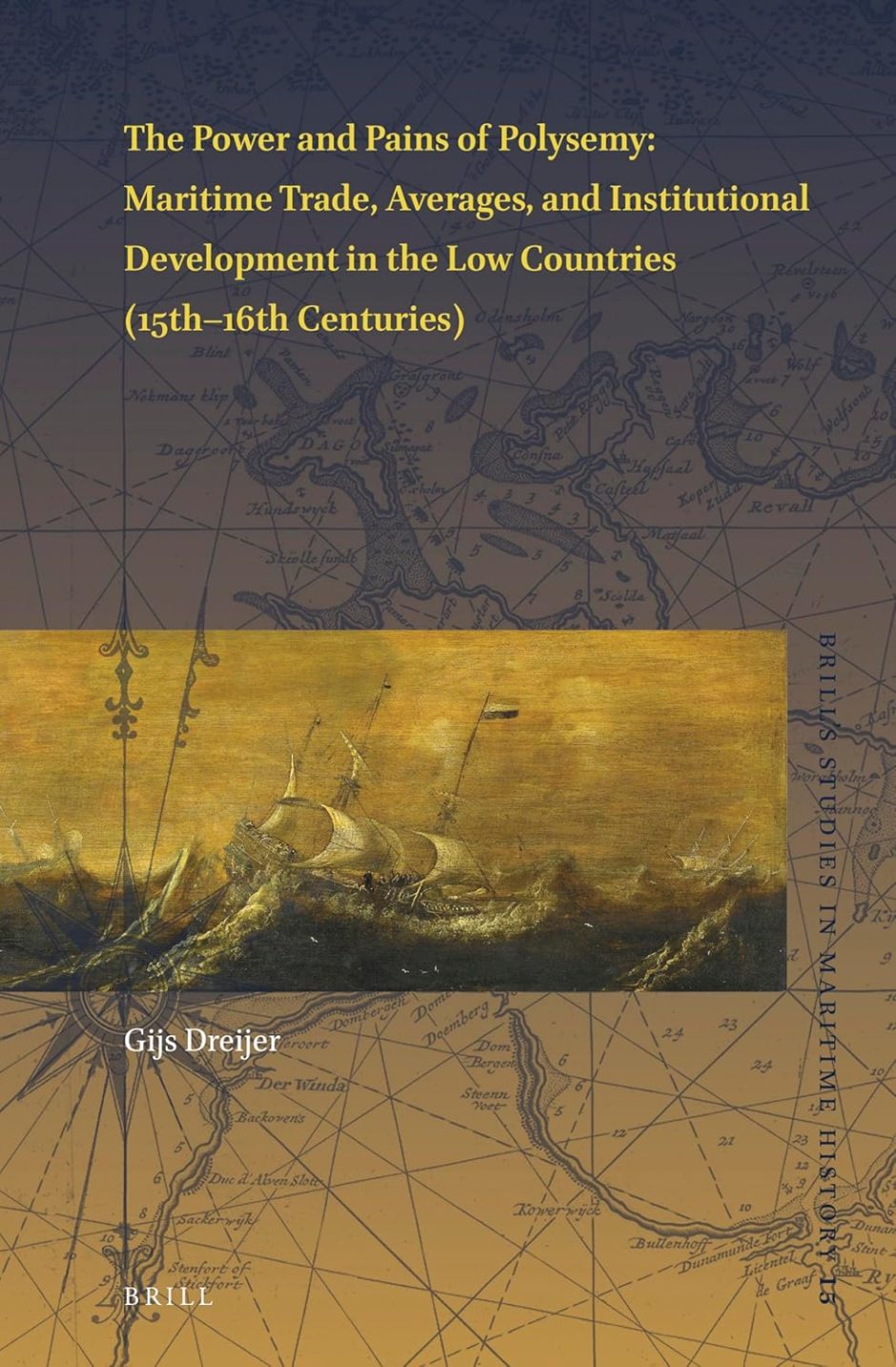
The Power and Pains of Polysemy: Maritime Trade, Averages, and Institutional Development in the Low Countries (15th–16th Centuries) by Gijs Dreijer

Read the review (requires subscription) by Jeremy Land in the November 2024 issue of the IJMH

https://journals.sagepub.com/doi/abs/10.1177/08438714241274990

A description of the book is available here:

https://brill.com/display/title/64431

As the fall-out of the Ever Given Suez canal blockage shows, an ancient instrument like General Average (GA) is still highly relevant in redistributing risks and costs in maritime trade. However, bar marine insurance, not much is known about the development of tools of maritime risk management like GA, which redistributes extraordinary costs incurred for the common safety of maritime ventures.

This book investigates the development of General Average and other so-called Averages in the Low Countries on the eve of the early modern period, showing how the various varieties of Averages played a significant role in the development of maritime risk management and the broader institutional development in the Low Countries.

“In Memoriam: Trevor Burnard” by Lou Roper

Many IJMH readers will have learned of the untimely death of Trevor Burnard, Director of the Wilberforce Institute of the Study of Slavery and Emancipation and Professor of History at the University of Hull, last July. The wide awareness of Professor Burnard’s passing in and of itself reflects his prolific scholarship as well as the profound influence of this remarkably generous colleague. A preeminent historian of early modern trafficking of enslaved Africans and of enslavement in Anglo-America, especially the British West Indies, as well as a leading authority on British colonization, he occupied the vanguard in effecting a shift in understanding that has made the histories of European overseas empire and of enslavement—and the violence, especially sexual, that was central to enslavement—inseparable.

Read more at https://journals.sagepub.com/doi/full/10.1177/08438714241291704