Unfree labour in the Indian Ocean

Margaret E. Schotte writes in the latest issue of the IJMH on “‘Belonging to the Company’: Transporting and documenting unfree labour in the Indian Ocean, 1719–1790”

Read it in open access at https://doi.org/10.1177/08438714241272583

Over the course of the eighteenth century, French East India Company ships carried numerous sailors, soldiers, passengers and unfree labourers to and from various ports of trade in the Indian Ocean. Although European merchant companies developed extensive documenting systems, certain elements received little attention in the records. When it came to tracking unfree labourers, Company employees used terminology with ambiguous meanings and categories that were codified in the Atlantic context and therefore not initially applicable in the Indian Ocean. In order for historians to interpret these records more accurately, this article reviews specific terminology and pertinent French legislation about racialized labourers. This contextual information helps to uncover previously overlooked groups of unfree labourers working for – and, at times, trying to escape from – the French East India Company in the Indian Ocean and beyond.

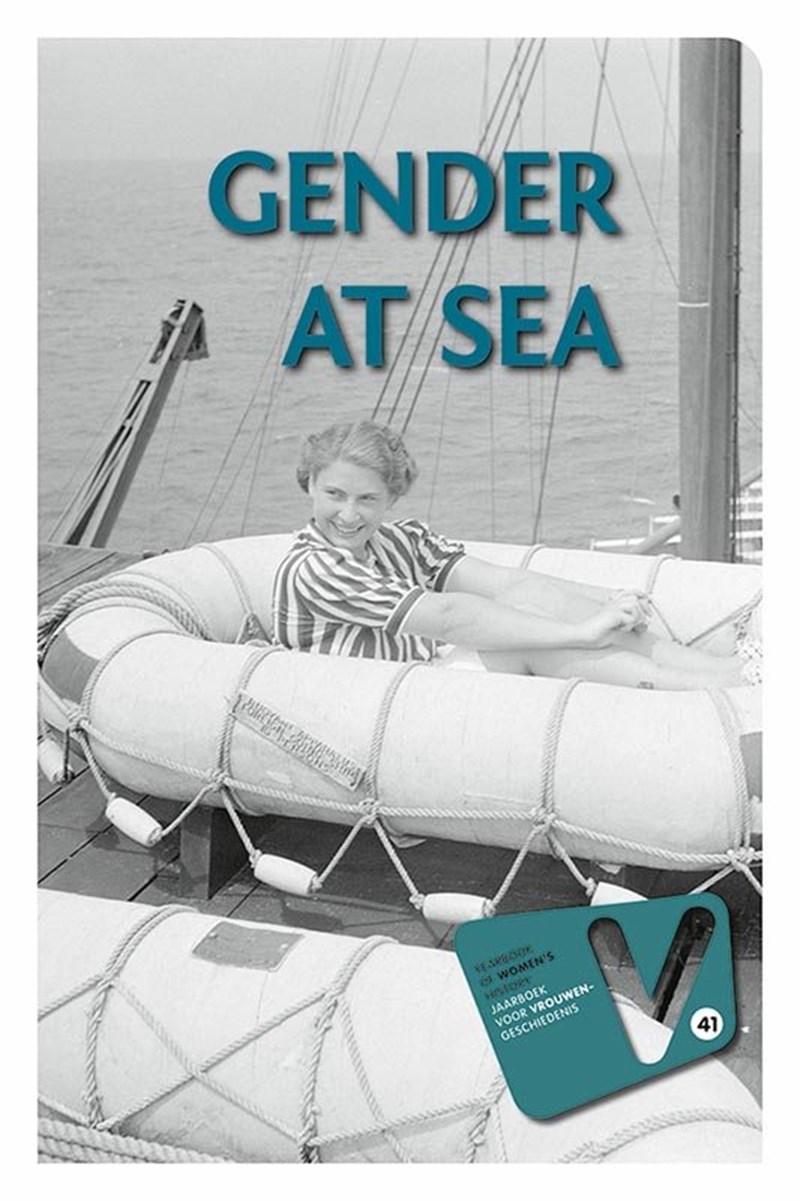
Gender at Sea 

Gender at Sea by Djoeke van Netten et al., eds.

Read the review (requires subscription) by Valerie Burton in the November 2024 issue of the IJMH

https://journals.sagepub.com/doi/abs/10.1177/08438714241272691

A description of the book is available here:

https://verloren.nl/Webshop/Detail/catid/204/eid/58732/gender-at-sea

For centuries seafaring people thought that the presence of women on board would mean bad luck: rough weather, shipwreck, and other disasters were sure to follow. Because of these beliefs and prejudices women were supposedly excluded from the maritime domain. In the field of maritime history too, the ship and the sea have predominantly been perceived as a space for men. This volume of the Yearbook of Women’s History challenges these notions. It asks: to what extent were the sea and the ship ever male-dominated and masculine spaces? How have women been part of seafaring communities, maritime undertakings, and maritime culture? How did gender notions impact life on board and vice versa? From a multidisciplinary perspective, this volume moves from Indonesia to the Faroe Islands, from the Mediterranean to Newfoundland; bringing to light the presence of women and the workings of gender on sailing, whaling, steam, cruise, passenger, pirate, and navy ships. As a whole it demonstrates the diversity and the agency of women at sea from ancient times to the present day.

SlaveVoyages database and the Indian Ocean

Read “Is the SlaveVoyages database useful for scholars of slave trading in the wider Indian Ocean World?” by David Eltis in the latest issue of the IJMH (requires subscription)

https://doi.org/10.1177/08438714241272611

Abstract

Assessing the differences between scholarly collaboration on slave trading in the Atlantic World, on the one hand, and similar activities in the wider Indian Ocean, on the other, needs to begin with an assessment of the relative importance of slave trading in the two oceans. Both oceans saw a maritime slave trade that drew heavily on sub–Saharan Africa. But while almost all captives arriving in the Americas came from Africa, in the Indian Ocean World there was a significant, probably majority, traffic in non-Africans, especially if one includes the South China Sea, as indeed most assessments of the Indian Ocean World slave trade do. Focusing on Africa alone initially, scholars who have made their name in the Atlantic World have tended to support the idea that the combined numbers of the Sahara Desert and Indian Ocean slave trade over two millennia were about the same as the volume of the transatlantic slave trade in its 360 years of existence.

Letters of the Lost Franklin Arctic Expedition

“May We Be Spared to Meet on Earth: Letters of the Lost Franklin Arctic Expedition” by Russell A. Potter, Regina Koellner, Peter Carney and Mary Williamson, eds.

Read the review (requires subscription) by Edward Armston-Sheret in the November 2024 issue of the IJMH

https://journals.sagepub.com/doi/abs/10.1177/08438714241272691

A description of the book is available here:

https://www.mqup.ca/may-we-be-spared-to-meet-on-earth-products-9780228011392.php

May We Be Spared to Meet on Earth is a privileged glimpse into the private correspondence of the officers and sailors who set out in May 1845 on the Erebus and Terror for Sir John Franklin’s fateful expedition to the Arctic.

The letters of the crew and their correspondents begin with the journey’s inception and early planning, going on to recount the ships’ departure from the river Thames, their progress up the eastern coast of Great Britain to Stromness in Orkney, and the crew’s exploits as far as the Whalefish Islands off the western coast of Greenland, from where the ships forever departed the society that sent them forth. As the realization dawned that something was amiss, heartfelt letters to the missing were sent with search expeditions; those letters, returned unread, tell poignant stories of hope. Assembled completely and conclusively from extensive archival research, including in far-flung family and private collections, the correspondence allows the reader to peer over the shoulders of these men, to experience their excitement and anticipation, their foolhardiness, and their fears.

The Franklin expedition continues to excite enthusiasts and scholars worldwide. May We Be Spared to Meet on Earth provides new insights into the personalities of those on board, the significance of the voyage as they saw it, and the dawning awareness of the possibility that they would never return to British shores or their families.

Shipbuilding in the Indian Ocean

“Melding technologies? Shipbuilding around the Indian Ocean after the arrival of European ships” by Richard W. Unger in the November 2024 issue of the IJMH

https://doi.org/10.1177/08438714241272548

When Portuguese sailors confirmed that there was an all-sea route to South Asia from Europe, they introduced new ship designs and building methods to the Indian Ocean World. They found sophisticated maritime skills and a long history of trade over water, both local and long distance. The meeting of the two successful technologies led to some borrowing of different methods and materials, and European use of vessels of Asian design. There were cases of borrowing specific design features, mostly by Asian shipbuilders, but there was surprisingly little melding of aspects of construction. There was some specialization, with Europeans concentrating on building and using larger seagoing cargo carriers. The arrival of steam propulsion for ships after 1800 changed all maritime technologies beyond recognition.

The Magnetism of Antarctica

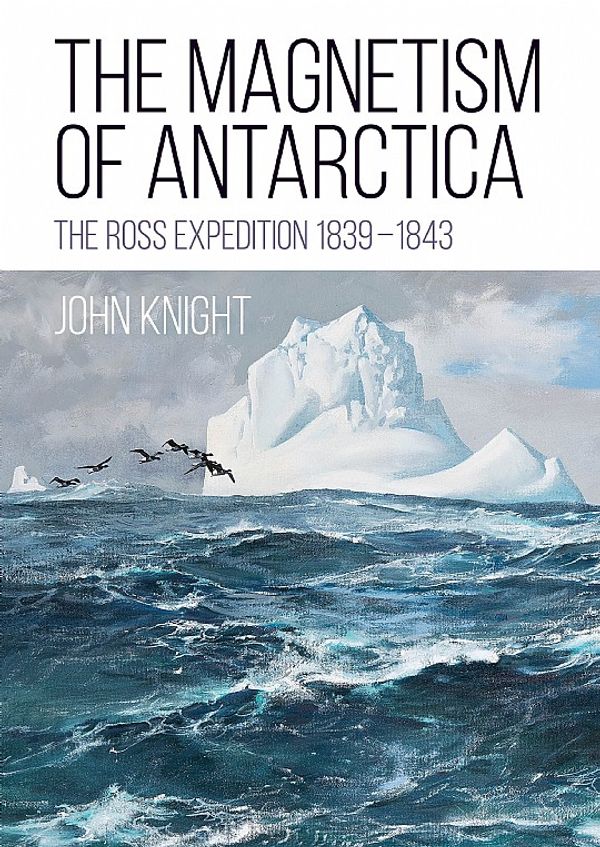
The Magnetism of Antarctica: The Ross Expedition 1839–1843 by John Knight

Read the review (requires subscription) by Christian Drury in the November 2024 issue of the IJMH

https://journals.sagepub.com/doi/abs/10.1177/08438714241272714

A description of the book is available here:

https://www.whittlespublishing.com/The_Magnetism_of_Antarctica

This under-documented expedition was a pivotal moment in the annals of polar exploration and was the starting point, in historical terms, of revealing the great unknown continent of Antarctica. It was the first time in nearly 70 years since Captain James Cook had circumnavigated Antarctica, that a Royal Naval voyage of discovery had ventured so far South. They set a new ‘furthest south’ record in the process beating the one set up by James Weddell in a whaling ship in 1823.

The expedition set sail from Greenwich in 1839. It consisted of two wooden sailing ships commanded by Captain James Clark Ross and Commander Francis Crozier. The ships were manned exclusively by Royal Naval personnel and each ship had a complement of 64 men and officers. Their primary task was of a scientific nature to study the Earth’s magnetic field and build up a set of results that could provide a greater understanding of the effects of magnetism on compasses and their use in navigating the world’s oceans. This voyage had a set of planned targets and all were accomplished. In the process a vast amount of scientific information was collected.  

Many exotic places were visited during the voyage amongst them Madeira, St. Helena, Cape Town, Kerguelen Island, New Zealand, Australia and the Falkland Islands but the pinnacle was the discovery of the Ross Sea, the Ross Ice Shelf and the mighty volcanoes of Erebus and Terror (named after the two ships). The crews experienced the dangers of navigating in ice-strewn waters and narrowly escaping being crushed by icebergs. Illness was kept at bay although several lives were lost due to accidents.

It would be another 60 years before the scenes of their greatest discoveries were visited again and then the Golden Age of Discovery was ushered in with the likes of Scott, Shackleton and Amundsen.

Calicut in 17th century Indian Ocean trade

Archa Neelakandan Girija writes in the latest issue of the IJMH on “Stories of resistance and resilience: The role of the port city of Calicut in the seventeenth-century Indian Ocean trade”

Read the text (open access) at https://doi.org/10.1177/08438714241272506

The Dutch East India Company attempted to control the pepper trade in the seventeenth-century Indian Ocean trade. Attempting to control pepper-growing areas such as the Malabar Coast (south-western coast of India) was part of this plan. Calicut was an important port city in Malabar and a vital player in the Indian Ocean trade. Unlike many port cities that were controlled by the European companies, the rulers and merchants of Calicut attempted to sustain a free trading port on their own instead of accepting a European company monopoly. In short, Calicut offered an alternative emporium for Indian Ocean trade in Malabar by resisting imperial endeavours. This article explores the ways in which Calicut participated in the Indian Ocean pepper trade despite the Dutch attempts to control it.

Boundaries of Belonging: English Jamaica and the Spanish Caribbean

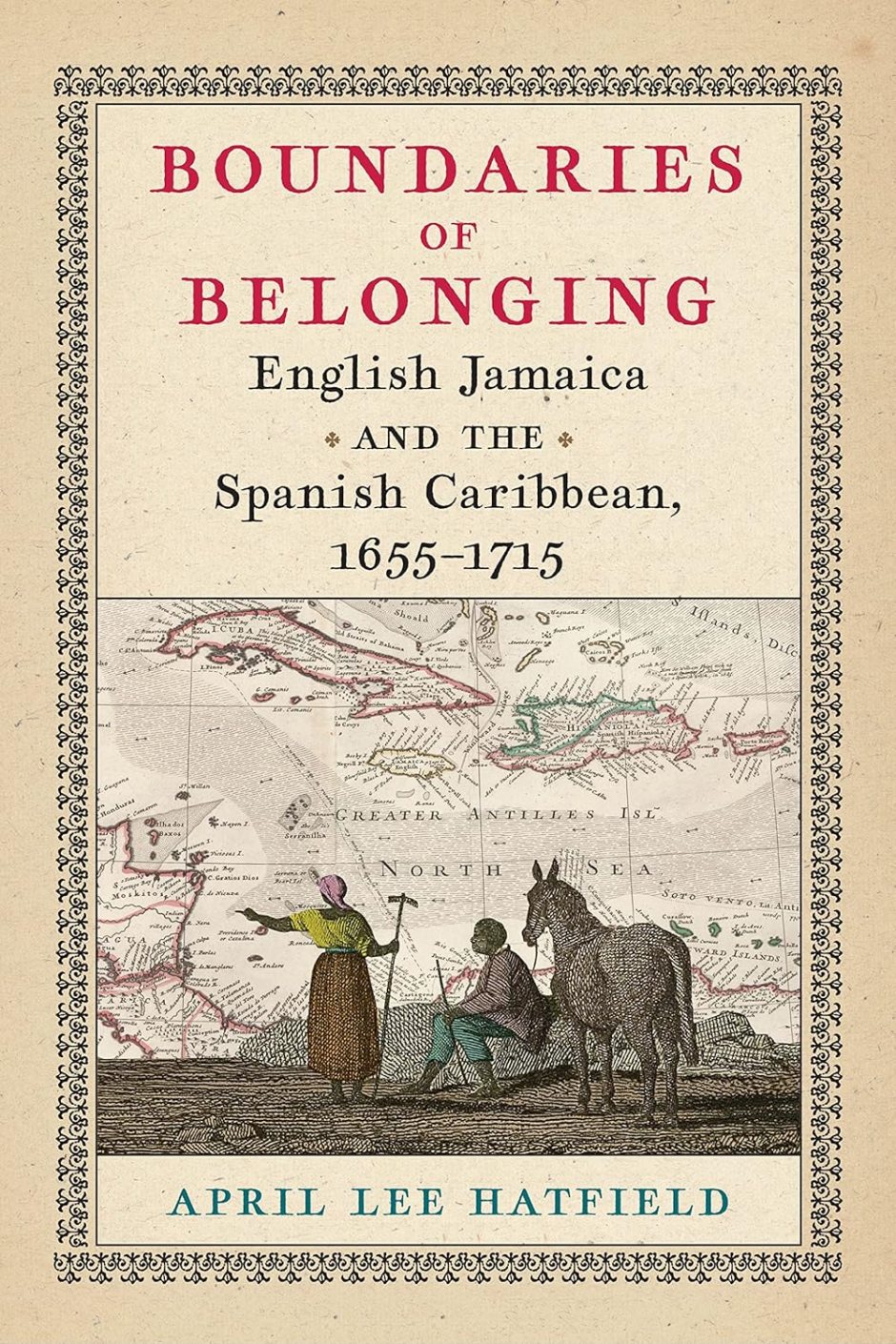
Boundaries of Belonging: English Jamaica and the Spanish Caribbean, 1655–1715 by April Lee Hatfield

Read the review (requires subscription) by Christos Giannatos in the November 2024 issue of the IJMH

https://journals.sagepub.com/doi/abs/10.1177/08438714241272559

A description of the book is available here:

In the decades following England’s 1655 conquest of Spanish Jamaica, the western Caribbean became the site of overlapping and competing claims—to land, maritime spaces, and people. English Jamaica, located in the midst of Spanish American port towns and shipping lanes, was central to numerous projects of varying legality, aimed at acquiring Spanish American wealth. Those projects were backdrop to a wide-ranging movement of people who made their own claims to political membership in developing colonial societies, and by extension, in Atlantic empires.

Boundaries of Belonging follows the stories of these individuals—licensed traders, smugglers, freedom seekers, religious refugees, pirates, and interlopers—who moved through the contested spaces of the western Caribbean. Though some were English and Spanish, many others were Sephardic, Tule, French, Kalabari, Scottish, Dutch, or Brandenberg. They also included creole people who identified themselves by their local place of origin or residence–as Jamaican, Cuban, or Panamanian.

As they crossed into and out of rival imperial jurisdictions, many either sought or rejected Spanish or English subjecthood, citing their place of birth, their nation or ethnicity, their religion, their loyalty, or their economic or military contributions to colony or empire. Colonial and metropolitan officials weighed those claims as they tried to impose sovereignty over diverse and mobile people in a region of disputed and shifting jurisdictions. These contests over who belonged in what empire and why, and over what protections such belonging conferred, in turn helped to determine who would be included within a developing law of nations.

Practices and representations of gender

Amélia Polónia and Rosa Capelão write in the latest issue of the IJMH on “Practices and representations of gender: Autochthone women in the Portuguese State of India, 1500s–1600s”

Read the text (open access) at https://doi.org/10.1177/08438714241272520

Interactions between Europeans and the societies and cultures of contact during the early modern process of empire-building depended on the agency of women. This seems particularly apparent in the Portuguese case. Even if many of these interactions were imposed, women were crucial elements in the dynamics and outcomes of European colonization. This affected Portuguese and autochthone women alike, even if on different scales and levels. This article focuses on the latter. Between resistance, conflict, cheating, defection, intermingling and assimilation, those women performed as intermediaries between different worlds. Their presence and agency were vital to economic flows, as they were essential in negotiation processes. They were influential in social organization, through their role in the family, and in the reconfiguration of colonial settings. The concept of intersectionality underlines this analysis by describing the ways by which systems of inequality based on gender, race, ethnicity and other forms of discrimination intersected to create unique historical dynamics.