The Pirates’ Code: Laws and Life Aboard Ship by Rebecca Simon

The Pirates’ Code: Laws and Life Aboard Ship by Rebecca Simon

Read the review (requires subscription) by Nathan Jopling in the November 2024 issue of the IJMH

https://journals.sagepub.com/doi/abs/10.1177/08438714241272623

A description of the book is available here:

https://press.uchicago.edu/ucp/books/book/distributed/P/bo199165757.html

Pirates have long captured our imaginations with images of cutlass-wielding swashbucklers, eye patches, and buried treasure. But what was life really like on a pirate ship? Piracy was a risky, sometimes deadly occupation, and strict orders were essential for everyone’s survival. These “Laws” were sets of rules that determined everything from how much each pirate earned from their plunder to compensation for injuries, punishments, and even the entertainment allowed on ships. These rules became known as the “Pirates’ Code,” which all pirates had to publicly swear by. Using primary sources like eyewitness accounts, trial proceedings, and maritime logs, this book explains how each one of the pirate codes was the key to pirates’ success in battle, on sea, and on land.

“Empire and economy in the premodern Indian Ocean, 1400–1800”

Richard W. Unger on “Empire and economy in the premodern Indian Ocean, 1400–1800” in the latest issue of the IJMH (November 2024)

Read the introduction to the “Forum: Indian Ocean 1400-1800: Empires and Economy” (in open access at) https://doi.org/10.1177/08438714241272597

The maritime history of the Indian Ocean in the years from 1400 to 1800 is very different from that of the Atlantic. Examining the two uncritically can, and does, lead to a misunderstanding of the practices and institutions – called empires generally, as if they were the same – that dominated in Asia and the Americas in the period. A group of six invited scholars examine different aspects of contact between Europeans and Asians, which stretched from cooperation to conflict.

Japan’s Ocean Borderlands: Nature and Sovereignty by Paul Kreitman

Japan’s Ocean Borderlands: Nature and Sovereignty by Paul Kreitman

Read the review (requires subscription) by Niki J. P. Alsford in the November 2024 issue of the IJMH

https://journals.sagepub.com/doi/abs/10.1177/08438714241272663

A description of the book is available here:

https://www.cambridge.org/core/books/japans-ocean-borderlands/64281F32932F694911B51BA0097AD1B9#fndtn-information

Desert islands are the focus of intense geopolitical tensions in East Asia today, but they are also sites of nature conservation. In this global environmental history, Paul Kreitman shows how the politics of conservation have entangled with the politics of sovereignty since the emergence of the modern Japanese state in the mid-nineteenth century. Using case studies ranging from Hawai’i to the Bonin Islands to the Senkaku (Ch: Diaoyu) Isles to the South China Sea, he explores how bird islands on the distant margins of the Japanese archipelago and beyond transformed from sites of resource extraction to outposts of empire and from wartime battlegrounds to nature reserves. This study examines how interactions between birds, bird products, bureaucrats, speculators, sailors, soldiers, scientists and conservationists shaped ongoing claims to sovereignty over oceanic spaces. It considers what the history of desert islands shows us about imperial and post-imperial power, the web of political, economic and ecological connections between islands and oceans, and about the relationship between sovereignty, territory and environment in the modern world.

Editorial

Read in the latest issue of the IJMH (November 2024) the Editorial by Cátia Antunes and Michiel van Groesen

Available in open access

https://doi.org/10.1177/08438714241278882

The final issue of the Journal this year opens with a forum that emerges from a conference at the University of British Columbia in Vancouver, organised in September 2023 by a team of scholars led by Richard W. Unger, on empires and economies in the early modern Indian Ocean world. After an introduction by Unger, the forum incorporates six research contributions, more or less in chronological order as per usual. The opening article, by Amélia Polónia, focusses on the agency of women as go-betweens and brokers in the Estado da Índia in the sixteenth and seventeenth centuries, and argues that women – Portuguese and autochtone alike – were very influential in the reconfiguration of colonial power relations. Archa Neelakandan Girija, writing on the cosmopolitan port of Calicut, reflects on the city’s position in oceanic trade in the seventeenth century. Richard Unger himself argues for the hybrid nature of ship construction in the age of colonialism, tracing the exchanges of knowledge, methods, designs and techniques between European and Asian shipbuilding traditions. The fourth contributor, David Eltis, examines the value of the Transatlantic Slave Trade Database (www.slavevoyages.org) he helped to set up and expand for research into Indian Ocean slavery. Margaret Schotte subsequently explores the practice of (not) documenting unfree labour by the French Compagnie des Indes in the eighteenth century. And finally, Noelle Richardson provides a close analysis of the Amfioensociëteit, the company established in 1745 to regulate the import and retail trade in opium under the wing of the Dutch East India Company.

More at https://doi.org/10.1177/08438714241278882

History of swimming

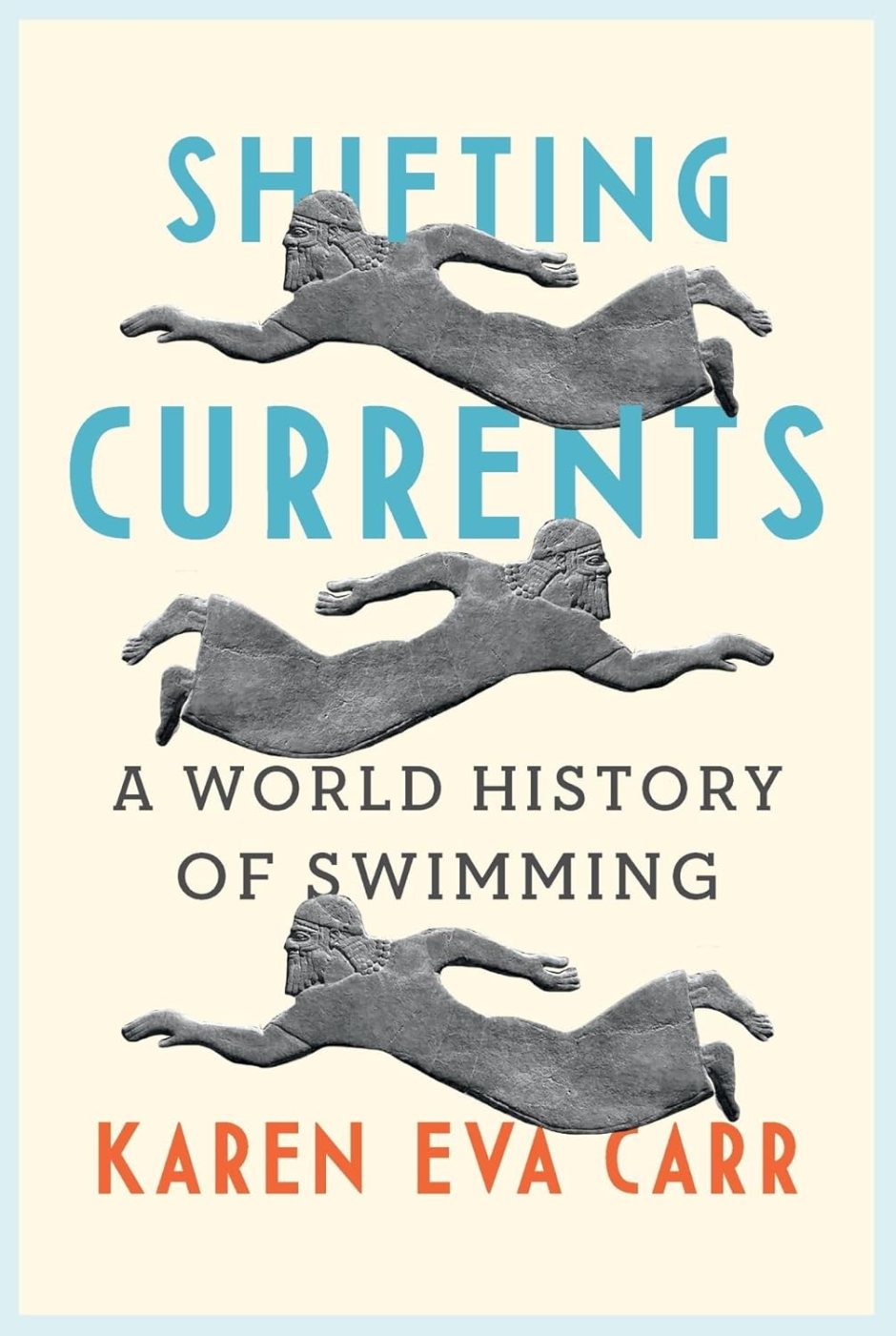
Shifting Currents: A World History of Swimming by Karen Eva Carr

https://press.uchicago.edu/ucp/books/book/distributed/S/bo157942759.html

Shifting Currents is an original and comprehensive history of swimming. It examines the tension that arose when non-swimming northerners met African and Southeast Asian swimmers. Using archaeological, textual, and art-historical sources, Karen Eva Carr shows how the water simultaneously attracted and repelled these northerners—swimming seemed uncanny, related to witchcraft and sin. Europeans used Africans’ and Native Americans’ swimming skills to justify enslaving them, but northerners also wanted to claim water’s power for themselves. They imagined that swimming would bring them health and demonstrate their scientific modernity. As Carr reveals, this unresolved tension still sexualizes women’s swimming and marginalizes Black and Indigenous swimmers today. Thus, the history of swimming offers a new lens through which to gain a clearer view of race, gender, and power on a centuries-long scale.

Read the review by Julia Stryker in the August 2024 issue of the IJMH (requires subscription)
https://doi.org/10.1177/08438714241261790

The opium business

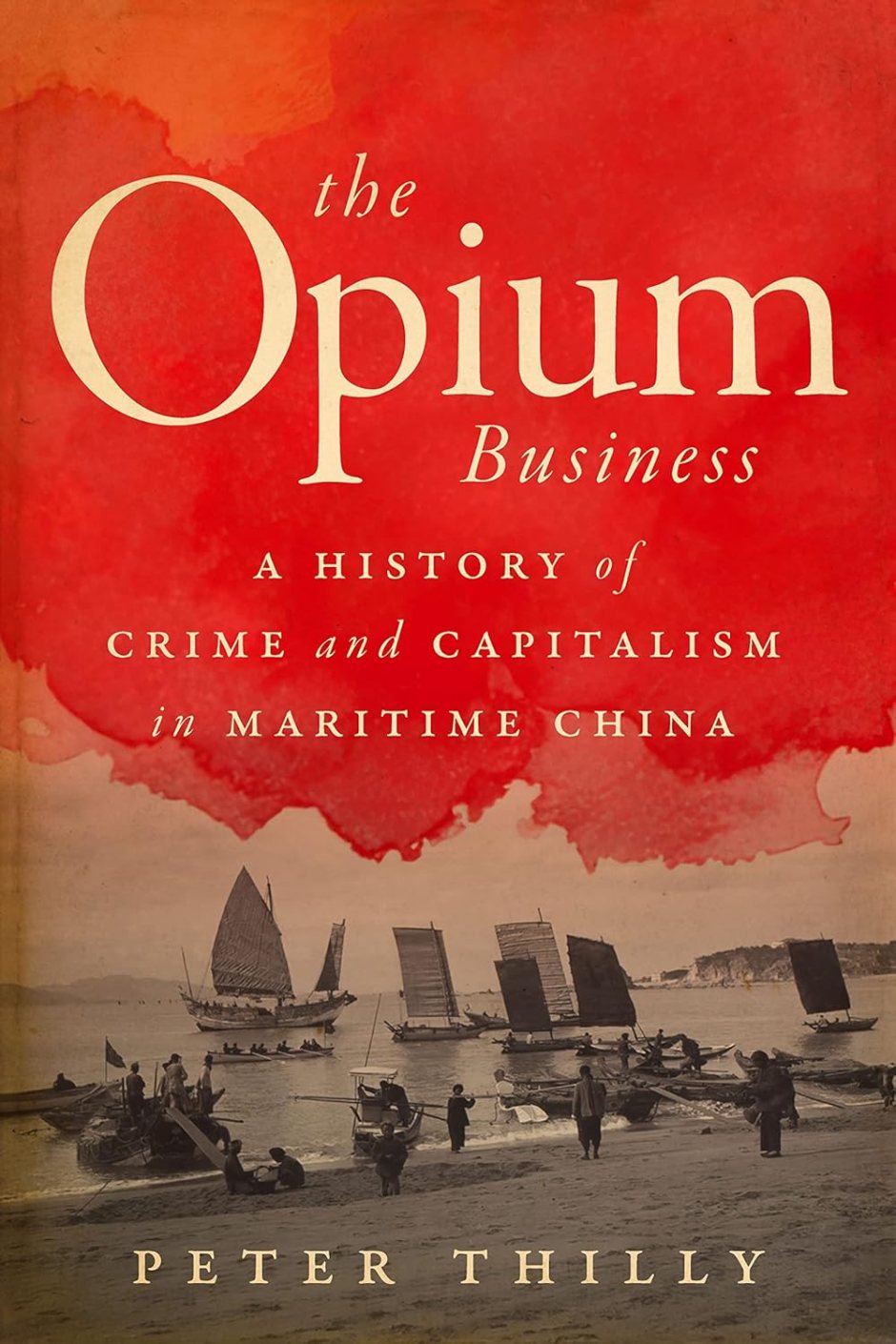
The Opium Business: A History of Crime and Capitalism in Maritime China by Peter Thilly

https://www.sup.org/books/asian-studies/opium-business

From its rise in the 1830s to its pinnacle in the 1930s, the opium trade was a guiding force in the Chinese political economy. Opium money was inextricably bound up in local, national, and imperial finances, and the people who piloted the trade were integral to the fabric of Chinese society. In this book, Peter Thilly narrates the dangerous lives and shrewd business operations of opium traffickers in southeast China, situating them within a global history of capitalism. By tracing the evolution of the opium trade from clandestine offshore agreements in the 1830s, to multi-million dollar prohibition bureau contracts in the 1930s, Thilly demonstrates how the modernizing Chinese state was infiltrated, manipulated, and profoundly transformed by opium profiteers.

Opium merchants carried the drug by sea, over mountains, and up rivers, with leading traders establishing monopolies over trade routes and territories and assembling “opium armies” to protect their businesses. Over time, and as their ranks grew, these organizations became more bureaucratized and militarized, mimicking—and then eventually influencing, infiltrating, or supplanting—the state. Through the chaos of revolution, warlordism, and foreign invasion, opium traders diligently expanded their power through corruption, bribery, and direct collaboration with the state. Drug traders mattered—not only in the seedy ways in which they have been caricatured but also crucially as shadowy architects of statecraft and China’s evolution on the world stage.

Read the review by Francois Gipouloux in the August 2024 issue of the IJMH (requires subscription)
https://doi.org/10.1177/08438714241261794

Cowrie shells

Cowrie Shells and Cowrie Money: A Global History by Bin Yang

https://www.routledge.com/Cowrie-Shells-and-Cowrie-Money-A-Global-History/Yang/p/book/9780367484316

Originating in the sea, especially in the waters surrounding the low-lying islands of the Maldives, Cypraea moneta (sometimes confused with Cypraea annulus) was transported to various parts of Afro-Eurasia in the prehistoric era, and in many cases, it was gradually transformed into a form of money in various societies for a long span of time. Yang provides a global examination of cowrie money within and beyond Afro-Eurasia from the archaeological period to the early twentieth century.

By focusing on cowrie money in Indian, Chinese, Southeast Asian and West African societies and shell money in Pacific and North American societies, Yang synthsises and illustrates the economic and cultural connections, networks and interactions over a longue durée and in a cross-regional context. Analysing locally varied experiences of cowrie money from a global perspective, Yang argued that cowrie money was the first global money that shaped Afro-Eurasian societies both individually and collectively. He proposes a paradigm of the cowrie money world that engages local, regional, transregional and global themes.

Read the review by Hu Xinyan in the August 2024 issue of the IJMH (requires subscription)
https://doi.org/10.1177/08438714241262668

Shipping in Camogli

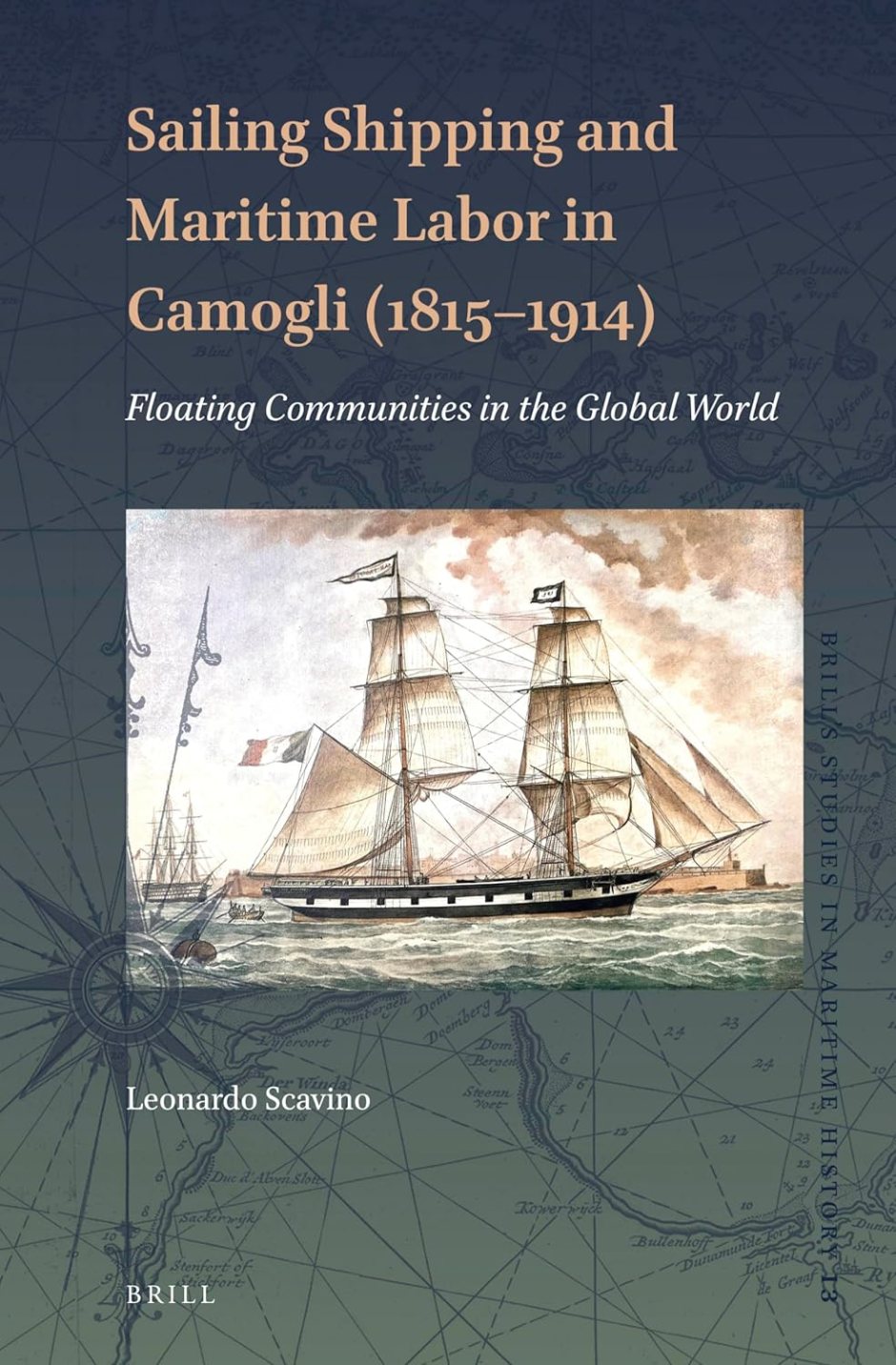
Sailing Shipping and Maritime Labor in Camogli (1815–1914): Floating Communities in the Global World by Leonardo Scavino

https://brill.com/display/title/62173

This book explores the historical evolution of a Mediterranean village that radically changed its core self-sustaining activities in less than a century, from fishing for anchovies in the Ligurian Sea to rounding Cape Horn. Drawing on a vast set of unpublished archival sources, this book addresses a micro-historical subject to investigate macro-historical processes, including the technological transition from sail to steam and globalization. At the core of the book lie Camogli’s rise in the world shipping industry and the transformations that occurred in its maritime labor system; seaborne trade, maritime routes, individual careers in seafaring represent the vivid elements that contribute to the book’s dive into the nineteenth-century maritime world.
Read the review by Andrea Zanini in the August 2024 issue of the IJMH (requires subscription)
https://doi.org/10.1177/08438714241261792

East India Company

Adventurers: The Improbable Rise of the East India Company by David Howarth

https://yalebooks.yale.edu/book/9780300276497/adventurers/

The East India Company was the largest commercial enterprise in British history, yet its roots in Tudor England are often overlooked. The Tudor revolution in commerce led ambitious merchants to search for new forms of investment, not least in risky overseas enterprises—and for these “adventurers” the most profitable bet of all would be on the Company.

Through a host of stories and fascinating details, David Howarth brings to life the Company’s way of doing business—from the leaky ships and petty seafarers of its embattled early days to later sweeping commercial success. While the Company’s efforts met with disappointment in Japan, they sowed the seeds of success in India, setting the outline for what would later become the Raj. Drawing on an abundance of sources, Howarth shows how competition from European powers was vital to success—and considers whether the Company was truly “English” at all, or rather part of a Europe-wide movement.

Read the review by Erik Odegard in the August 2024 issue of the IJMH (requires subscription)
https://doi.org/10.1177/08438714241261791

Naval technology and war

Innovating Victory: Naval Technology in Three Wars by Vincent P. O’Hara and Leonard R. Heinz

https://www.usni.org/press/books/innovating-victory

Innovating Victory: Naval Technology in Three Wars studies how the world’s navies incorporated new technologies into their ships, their practices, and their doctrine. It does this by examining six core technologies fundamental to twentieth-century naval warfare including new platforms (submarines and aircraft), new weapons (torpedoes and mines), and new tools (radar and radio). Each chapter considers the state of a subject technology when it was first used in war and what navies expected of it. It then looks at the way navies discovered and developed the technology’s best use, in many cases overcoming disappointed expectations. It considers how a new technology threatened its opponents, not to mention its users, and how those threats were managed.
Innovating Victory shows that the use of technology is more than introducing and mastering a new weapon or system. Differences in national resources, force mixtures, priorities, perceptions, and missions forced nations to approach the problems presented by new technologies in different ways. Navies that specialized in specific technologies often held advantages over enemies in some areas but found themselves disadvantaged in others. Vincent P. O’Hara and Leonard R. Heinz present new perspectives and explore the process of technological introduction and innovation in a way that is relevant to today’s navies, which face challenges and questions even greater than those of 1904, 1914, and 1939.

Read the review by Piotr Wawrzeniuk in the August 2024 issue of the IJMH (requires subscription)
https://doi.org/10.1177/08438714241264919