The voyage of Lusitania

Mark Howards published an article on “The voyage of the London whaler Lusitania, 1826–1829”

The British whaling ship Lusitania left London in 1826 on a three-year voyage to the South Seas. During the course of its long voyage, the vessel spent much of its time in the waters off the Indonesian archipelago and among the islands of western Melanesia. British whalers had been driven to this challenging region because sperm whales had been severely depleted in other less difficult whaling grounds. In those tropical waters, the hot climate, endemic diseases and high death rate among the crew, as well as the routine dangers of the trade, were to try the Lusitania and her crew to the utmost. One of them kept a journal during the voyage. It chronicles the many challenges faced by this and other vessels working this whaling ground, which until recent times has been poorly documented.

Check it out (requires subscription) at this link:
https://doi.org/10.1177/08438714241262671

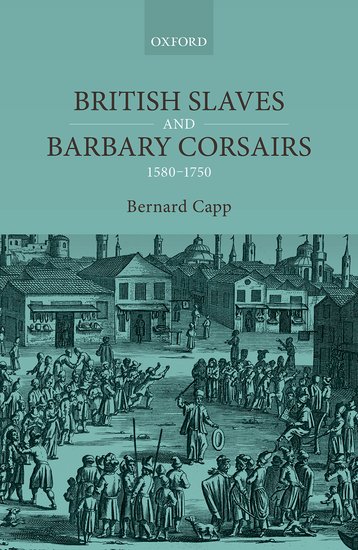
British Slaves and Barbary Corsairs, 1580–1750 by Bernard Capp

British Slaves and Barbary Corsairs is the first comprehensive study of the thousands of Britons captured and enslaved in North Africa in the early modern period, an issue of intense contemporary concern but almost wholly overlooked in modern histories of Britain. The study charts the course of victims’ lives from capture to eventual liberation, death in Barbary, or, for a lucky few, escape. After sketching the outlines of Barbary’s government and society, and the world of the corsairs, it describes the trauma of the slave-market, the lives of galley-slaves and labourers, and the fate of female captives. Most captives clung on to their Christian faith, but a significant minority apostatized and accepted Islam. For them, and for Britons who joined the corsairs voluntarily, identity became fluid and multi-layered. Bernard Capp also explores in depth how ransoms were raised by private and public initiatives, and how redemptions were organised by merchants, consuls, and other intermediaries. With most families too poor to raise any ransom, the state came under intense pressure to intervene. From the mid-seventeenth century, the navy played a significant role in ‘gunboat diplomacy’ that eventually helped end the corsair threat. The Barbary corsairs posed a challenge to most European powers, and the study places the British story within the wider context of Mediterranean slavery, which saw Moors and Christians as both captors and captives.

Read the review by Jake Dyble in the August 2024 issue of the IJMH
https://doi.org/10.1177/08438714241261822

Learning seamanship in Europe

Karel Davids writes about “Changing ways to learn seamanship in Europe circa 1600–1920: Books, institutions and sociopolitical contexts” in the August 2024 issue of the IJMH.

Seamanship is the art of handling and manoeuvring a ship. For centuries, seamanship skills were transmitted not in writing, but by hands-on instruction on board. However, between circa 1600 and 1920, this ‘tacit’ knowledge was increasingly made ‘explicit’ in printed literature. Why did this happen? To answer this question, this article analyses dozens of books on seamanship produced in Britain, France, Spain, the Netherlands and Italy. It discusses the different genres, the background of the authors and the intended reading publics. It shows that the transformation occurred almost simultaneously across Europe and that it was not triggered by technological change. The article argues that the explanation instead can be found in the rise of new institutions for the education and selection of seamen, which was linked with the growing aspirations of states and other organizations to gain more control over the quality of the personnel needed to man their ships.

Check it (requires subscription) at this link:
https://doi.org/10.1177/08438714241262174

Dutch skippers in colonial endeavours

“The roles of Dutch skippers as partners and principals in colonial endeavours: Lessons from Amsterdam to New Netherland (1639–1664)”, by Julie van den Hout in the August 2024 issue of the IJMH

Read it at this link (requires subscription):

https://doi.org/10.1177/08438714241262258

While Atlantic skippers were vital to seventeenth-century Dutch imperial expansion, few histories address the roles of skippers in colonial ventures. Drawing on archival records in Amsterdam and New York, this study examines the activities of skippers along roughly 200 voyages between Amsterdam and New Netherland from 1639 to 1664. In Amsterdam, skippers in relationships with voyage outfitters functioned as trusted partners who offered continuity for operations. As principals at sea, skippers navigated hazards and managed contingencies during inherently risky transatlantic passages. In the colony, skippers collaborated with local merchants to facilitate trade, and with colonial authorities to provide maritime support. With an impact on every stage of the endeavour, skippers were key players in the colonial complex, which depended on them for its functioning. Beyond New Netherland, these findings have applications for evaluating other European colonial undertakings, and for understanding the wider mechanisms of imperial expansion into the Atlantic.

Memory and whaling

“Memory and whaling: Commemorations of whale deaths in early modern Japan”, by Michelle Damian in August 2024 issue of the IJMH
Read it at this link (requires subscription)

https://doi.org/10.1177/08438714241260988

Encounters with whales in early modern (seventeenth- to nineteenth-century) Japan were often memorialized through artwork such as scrolls or woodblock prints, permanent monuments such as steles or grave sites, and even in ritual practices such as annual Buddhist memorial ceremonies. Whaling groups used the commemorations of their interactions with whales to teach hunting techniques, display their prowess to outsiders, and atone for the Buddhist sin of killing another living creature. Non-whaling communities, which usually encountered whales through limited beachings or strandings, also found those situations worthy of commemoration. Their memorials celebrated the spectacle of the whale from the observer’s viewpoint, or expressed gratitude for the financial windfall the dead whale brought to the community. This article examines how a community’s relationship to whaling determined how it memorialized the encounter. These early modern memorial practices inform commemorations of whales even to the present day.

The age of Atlantic revolution

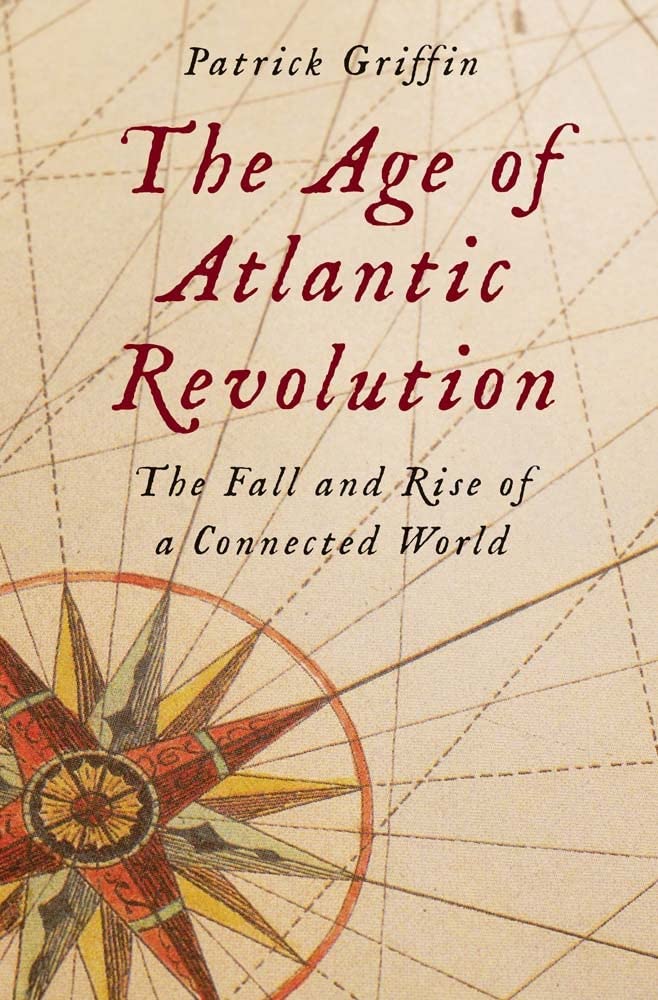
The Age of Atlantic Revolution: The Fall and Rise of a Connected World by Patrick Griffin

The Age of Atlantic Revolution was a defining moment in western history. Our understanding of rights, of what makes the individual an individual, of how to define a citizen versus a subject, of what states should or should not do, of how labor, politics, and trade would be organized, of the relationship between the church and the state, and of our attachment to the nation all derive from this period (c. 1750–1850).

Historian Patrick Griffin shows that the Age of Atlantic Revolution was rooted in how people in an interconnected world struggled through violence, liberation, and war to reimagine themselves and sovereignty. Tying together the revolutions, crises, and conflicts that undid British North America, transformed France, created Haiti, overturned Latin America, challenged Britain and Europe, vexed Ireland, and marginalized West Africa, Griffin tells a transnational tale of how empires became nations and how our world came into being.

Read the review by Brian Rouleau in the August 2024 issue of the IJMH

https://doi.org/10.1177/08438714241261784

Ship pictures on municipal seals

“Ship pictures on the municipal seals of medieval seaports: Ship seals show notices to mariners on tokens of municipal identity”, by Dolph Blussé in the August 2024 issue of the IJMH
Read it at this link (requires subscription)

https://doi.org/10.1177/08438714241260503

Many late-medieval western European seaports showed a ship in the central image of their municipal seal (a ship seal). Municipal seals to identify and authorize documents ranging from important supra-regional charters to local ephemera were widely used at the time, and probably also on trade contracts and (predecessors to) maritime bills of lading. This study of 115 ship seals from 80 seaports between AD 1200 and AD 1450 reveals that the central image of all ship seals contained striking details, strongly reminiscent of semiotic pictorial signals that conveyed information. The supposed signals were assigned a probable meaning by linking them to nautical aspects of the approach to each seaport and to the state of the harbour at the time. The results strongly suggest that the signals provided information about the risks and hazards in the approach to port, the water depth, and the facilities at the port in question. Compelling evidence comes from ports issuing successive ship seals over an extended period of time: updated images with properly adjusted signals were shown on subsequent seals when significant changes in the approach or port facilities had occurred, but the signals remained the same as long as the local situation stayed unchanged. These findings provide a clear explanation for the divergent ship portraits; ship seals served a dual purpose: first, to confirm the identity of the seaport and the authority of the council in its various actions and tasks, and, second, to provide up-to-date insight into the nautical challenges when approaching the port and in the local port facilities, in a manner similar to the current ‘notices to mariners’ from hydrographic offices. The rapidly increasing number of ports using ship seals in the thirteenth century and their continued use for two centuries supports the success of this late-medieval nautical information system. The study results also provide up-to-date impressions of the 80 seaports involved and of various nautical aspects of the hazardous maritime traffic in the thirteenth and fourteenth centuries, about which written archival information is scarce. The results may help to put the rare yield of maritime archaeology of this period into perspective. The ship seals lost their appeal as buoys and beacons made approaches safer, harbours became deeper and better equipped, and written information (‘rutters’) became widely available.

Spatial histories of occupation

“Spatial Histories of Occupation. Colonialism, Conquest and Foreign Control in Asia”, edited by David Baillargeon and Jeremy E. Taylor

Open access

https://www.bloomsbury.com/uk/spatial-histories-of-occupation-9781350252608/

This open access book explores how different spatial geographies emerged, adapted or were transformed in various occupied and colonial settings around Asia, showing how the experiences of those living under occupation shaped and was shaped by new interpretations and typologies of ‘space’. With case studies across South, Southeast and East Asia and through a variety of disciplinary perspectives, Spatial Histories of Occupation adopts a trans-Asian comparative approach to show how the experiences of occupation and colonialism shifted under particular spatial typologies, particularly in urban, maritime and rural settings.

Revealing the similarities, differences and connections that existed between and across different spaces of foreign occupation and colonialism in modern Asian history, this book shows how a focus on historical geography and ‘space’ can revise our broader categories and conceptualisations related to occupation; be it under colonial, wartime or Cold War powers.

Read the review by Catherine L. Phipps in the August 2024 issue of the IJMH

https://doi.org/10.1177/08438714241264552

Naval financing and supplies in Cartagena de Indias

“Naval financing and supplies in Cartagena de Indias during the eighteenth century”, by José Manuel Serrano Álvarez in the August 2024 issue of the IJMH

Read it at this link (requires subscription)

https://doi.org/10.1177/08438714241264519

This article analyses the role of the naval system of Cartagena de Indias during the eighteenth century, especially the elements related to its financing and supply needs. Cartagena was the most important naval base in the southern Caribbean, and this made it necessary to deploy a coastguard system that was capable of curbing smuggling and, at the same time, reinforcing coastal surveillance.

How insurance shaped the American founding

“Underwriters of the United States: How Insurance Shaped the American Founding”, by Hannah Farber

Underwriters of the United States | Hannah Farber | University of North Carolina Press


Unassuming but formidable, American maritime insurers used their position at the pinnacle of global trade to shape the new nation. The international information they gathered and the capital they generated enabled them to play central roles in state building and economic development. During the Revolution, they helped the U.S. negotiate foreign loans, sell state debts, and establish a single national bank. Afterward, they increased their influence by lending money to the federal government and to its citizens. Even as federal and state governments began to encroach on their domain, maritime insurers adapted, preserving their autonomy and authority through extensive involvement in the formation of commercial law. Leveraging their claims to unmatched expertise, they operated free from government interference while simultaneously embedding themselves into the nation’s institutional fabric. By the early nineteenth century, insurers were no longer just risk assessors. They were nation builders and market makers.
Deeply and imaginatively researched, Underwriters of the United States uses marine insurers to reveal a startlingly original story of risk, money, and power in the founding era.

Read the review by Mallory Hope in the August 2024 issue of the IJMH
https://doi.org/10.1177/08438714241264538