French Connections

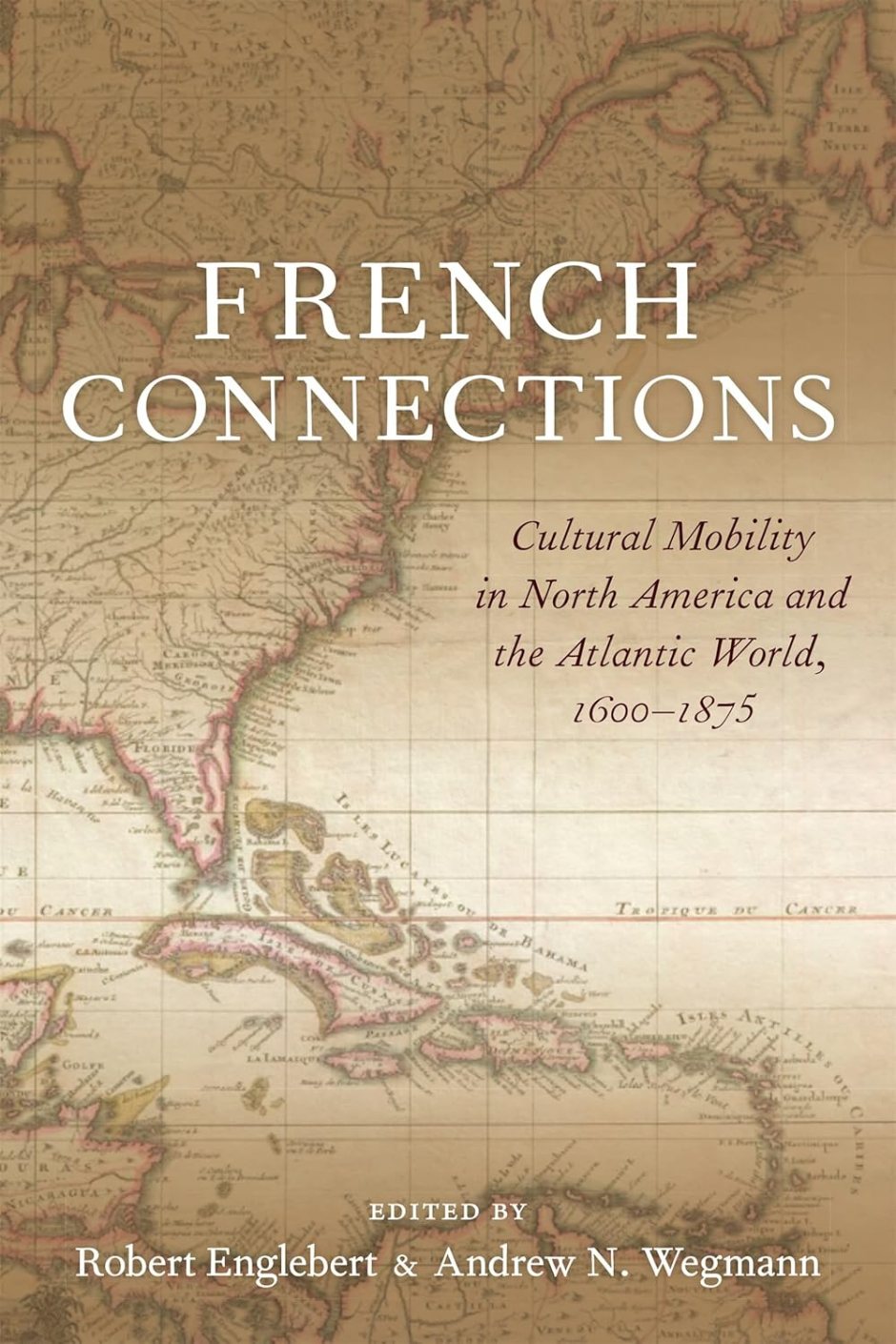
French Connections. Cultural Mobility in North America and the Atlantic World, 1600–1875, Edited by Andrew N. Wegmann and Robert Englebert

Contributions by Brett Rushforth, Ryan André Brasseaux, Jay Gitlin, Karen L. Marrero, Guillaume Teasdale, Robert D. Taber, Christopher Hodson, Gregory Kennedy, Leslie Choquette, William Brown, Mairi Cowan and Vincent Auffrey

French Connections examines how the movement of people, ideas, and social practices contributed to the complex processes and negotiations involved in being and becoming French in North America and the Atlantic World between the years 1600 and 1875. Engaging a wide range of topics, from religious and diplomatic performance to labor migration, racialization, and both imagined and real conceptualizations of “Frenchness” and “Frenchification,” this volume argues that cultural mobility was fundamental to the development of French colonial societies and the collective identities they housed. Cases of cultural formation and dislocation in places as diverse as Quebec, the Illinois Country, Detroit, Haiti, Acadia, New England, and France itself demonstrate the broad variability of French cultural mobility that took place throughout this massive geographical space. Nevertheless, these communities shared the same cultural root in the midst of socially and politically fluid landscapes, where cultural mobility came to define, and indeed sustain, communal and individual identities in French North America and the Atlantic World.

A review by Helen Dewar is published in the IJMH https://journals.sagepub.com/doi/10.1177/08438714241231412

Demarcating Japan

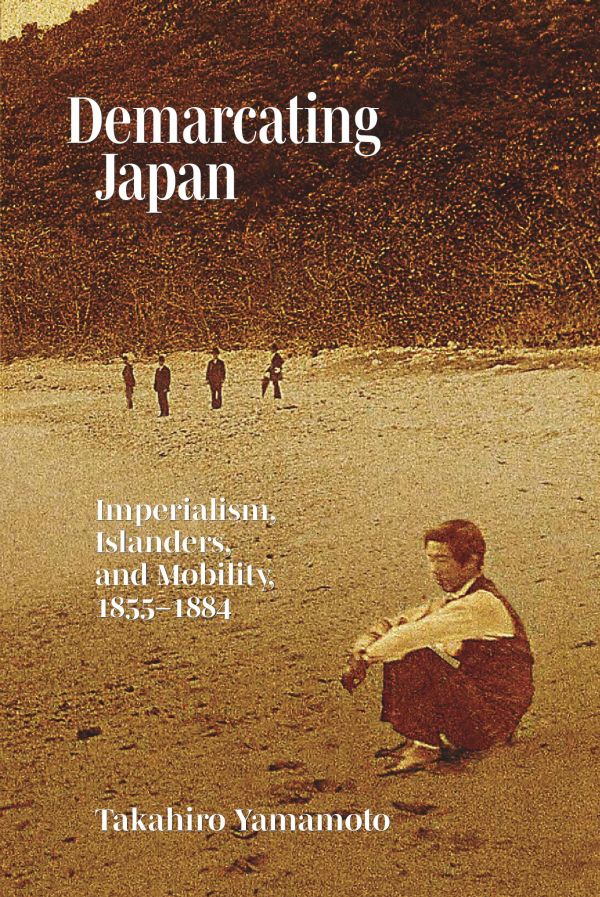
Imperialism, Islanders, and Mobility, 1855–1884 by Takahiro Yamamoto

https://www.hup.harvard.edu/books/9780674291386

Histories of remote islands around Japan are usually told through the prism of territorial disputes. In contrast, Takahiro Yamamoto contends that the transformation of the islands from ambiguous border zones to a territorialized space emerged out of multilateral power relations. Sakhalin, the Kuril Islands, Tsushima, the Bonin Islands, and the Ryukyu Islands became the subject of inter-imperial negotiations during the formative years of modern Japan as empires nudged each other to secure their status with minimal costs rather than fighting a territorial scramble. Based on multiarchival, multilingual research, Demarcating Japan argues that the transformation of border islands should be understood as an interconnected process, where inter-local referencing played a key role in the outcome: Japan’s geographical expansion in the face of domineering Extra-Asian empires.

Thomas Monaghan writes a review of this book in the May 2024 issue of the IJMH. Read it here (requires subscription):

https://journals.sagepub.com/…/10.1177/08438714241230411

New publication in the Research in Maritime History series

Gordon H. Boyce, History of British Tramp Shipping, 1870-1914 (Volume 1), Entry, Enterprise Formation, and Early Firm Growth

Celebrated in the novels of Joseph Conrad and vintage films, tramp ships – the precursor of bulk carriers – are not well understood today. Yet, these vessels transported in bulk essential minerals and ores, grains, timber, and other commodities and played a vital role in creating the modern global economy. While the histories of some individual tramp firms have been written, this book uses personal correspondence and surviving company records to chart the development of the entire industry – the largest in the world- during a period of transformational technical change. Who were the bold, risk-takers who founded tramp firms? How did they mobilise the resources needed to enter this dynamic sector, build immense companies, and accumulate vast fortunes? Why did others fail? This study reveals how executives learned ‘the art’ of managing tramps and developed strategic networking skills. Tramp shipping resonates with many of today’s high-growth industries: it was an information intensive, high stress operation that required rapid – sometimes instinctive – decision-making within a turbulent market. Building business networks was supported by a distinctive culture that streamlined communication. This innovative study places information, knowledge, learning, culture, and communication at the centre of the analysis in order to transport readers into the minds of those fascinating entrepreneurs who helped build the modern world.

More details at https://liverpooluniversitypress.co.uk/doi/10.3828/9781802074666

Call for bids to host the 2028 IMHA Congress

GUIDELINES FOR THE PREPARATION OF A BID TO HOST A QUADRENNIAL CONGRESS

The International Maritime History Association Executive Committee (IMHA EC) formally considers submissions from institutions wishing to host a Quadrennial Congress at their Quadrennial Meeting held during the International Congress of Maritime History.
Consideration of bids for hosting the 2028 Congress will be undertaken at the General Assembly of the IMHA held parallel to the International Congress of Maritime History taking place in August 2024 in Busan, Korea.
Bid institutions will be expected to submit their bids to the Chair and the Secretary of the EC through email. If approved by the EC, final bids are presented to the General Assembly of the IMHA in person. The General Assembly then decides by majority.
To ensure impartiality and objectivity the EC utilises a weighted matrix evaluation tool based on a set of defined evaluation criteria. It is important that bid institutions respond to the evaluation criteria as closely as possible to ensure their bids are considered thoroughly and fairly.
Institutions should develop their bids sufficiently to enable a comprehensive application to be submitted to the EC. The EC does not expect institutions to have all the hosting arrangements in place at the time of submitting the bid.
The EC expects comprehensive applications to be submitted not later than May 15, 2024, and is asking institutions who are considering a bid to inform the EC of their intent as soon as possible.
Once an institution has been awarded hosting rights, the Chair and Secretary of the EC must be immediately notified of any substantial changes or variations to the agreed bid that may arise during the organisation of the Congress.

General Guidelines for Hosting an International Maritime History Congress
• The host institution must be historically linked to maritime history research and/or maritime historical engagement with the broader public.
• The host institution should be prepared to take the lead role in the logistical preparations for the quadrennial Congress. With the agreement of the EC, it may use the services of a professional conference and/or event management agency provided this does not result in the delegate registration costs exceeding the agreed maximum.
• The development of the academic programme is co-led by the host team and the EC. Hosts will be expected to work closely with the Academic Committee in the development of the programme.
• Venues should be easily accessible to overseas and local delegates via good airport, railway, and road networks.
• Venues should be able to offer conference facilities for a minimum of 150 delegates: including conference accommodations, catering arrangements, and technical support services.
• By agreement with the Programme Committee, the host venue will provide an appropriate and attractive programme for accompanying partners at a registration cost to be agreed.
• Venues should be able to offer hotel accommodations capable of accommodating at least 200 delegates, including accompanying partners, within a reasonable distance, and at a range of affordable rates. The venue or its conference organisers are expected to administer the conference budget, including registration fees, and provide advice and suggestions for hotels where pre-negotiated conference rates have been agreed.
• The venue will provide a webpage for the Congress at least 18 months prior to the Congress date and will ensure that all relevant information regarding the Congress is updated on a regular basis. All development and hosting costs for the webpage should be covered by the host institution.
• The conference will be conducted in English.
• The venue is expected to provide reasonable conference technical facilities for presentations including sound systems, computer-generated PowerPoint, and video, with the necessary technical support. It is expected that the venue can provide internet access for the registered conference participants during the Congress.
• A minimum of five half days should be scheduled into the Congress programme to accommodate the academic programme and the General Assembly with the overall Congress being held over four to five full days. It is recognized that flexibility is key and precise arrangements might be dependent on local circumstances.
• The host is expected to provide an office/meeting room for the IMHA EC for the duration of the Congress including internet access and standard computer printing services.
• The Congress is expected to include a social programme including a formal Congress Dinner and may, for example, include receptions or similar events in local historic locations.
• Any excursions included in the programme should be aligned and consistent with the theme of the Congress.
• The host venue will have sole responsibility for the Congress budget which is expected to be self-financed from registration fees and any local funding.
• The Congress budget needs to include the travel, accommodations, and conference registration costs for three keynote speakers. The three keynote speakers will be mutually agreed upon by the host and IMHA EC, with the final decision resting with the EC.
• The Congress registration fee will be agreed between the host venue and the EC. In recent years it has been € 250 for career scholars and € 180 for graduates, or equivalent local currency. This should include all Congress administration and operation costs as well as catering during the Congress sessions. It is acceptable that the conference dinner, excursions etc. are an additional cost charged directly to participants that register to participate in these events.
• The host venue is encouraged to find local sources of funding, including sponsorship where possible, to offset the costs of the Congress and any supporting events. IMHA EC reserves the right to reject sponsorship arrangements that are considered non-desirable by the IMHA EC.
• The host venue will arrange a payment mechanism for Congress registration fees that is based on the use of standard, internationally accepted credit cards.

Bid Evaluation Criteria.
Bid institutions should prepare a presentation to the EC that responds to the information requested below. Sufficient detail should be provided to enable the EC to consider the bid fairly and thoroughly.

1.0 General
1.1 We would like to learn about your institution (max 500 words). Please provide us information about your institution including:
• The name of your institution
• Where it is located
• How your institution is governed
• How your institution is funded
• What is its Purpose, Mission, Vision, Values
2.0 Concept (max 500 words)
2.1 Tell us what motivates you to host the Congress.
2.2 Will the timing of the Congress coincide with any significant events or anniversaries and if so what event or anniversary will be celebrated during the Congress?
2.3 Tell us about your concept and plans for the non-academic programme for the Congress. Include broad details of the activities and social programme that you plan to offer at the Congress.
2.4 What will the cost per delegate be to attend the Congress?
3.0 Support (max 250 words)
3.1 Tell us about how you intend to fund the Congress. Do you have for example a solid reputable organisation underwriting the Congress for you? If so, tell us about who will be underwriting the Congress.
3.2 Tell us about any partners that will be supporting your institution in hosting the Congress.
3.3 Tell us about the organisation and structures you will have in place to deliver the Congress
4.0 Location (max 200 words)
4.1 Tell us more about the location of your institution. We are particularly interested to know how accessible your institution is to delegates, particularly from international locations.
4.2 Is the location served well by airlines and internal transportation systems? Please provide details of how delegates will be able to get to the Congress location and access transportation within the local area.
4.3 Please provide us with an assessment of travel costs for delegates to get to your location.
5.0 Facilities (max 150 words)
5.1 Tell us about where you intend to hold the Congress. We are particularly interested to know whether the Congress will be hosted in your institution, in other premises, or a combination of both.
5.2 If the Congress is to be hosted in a variety of venues, how do you plan to get delegates between venues?
5.3 How many delegates can your venues comfortably accommodate?
5.4 Will break out facilities be provided at the venue? How many will be available and how many delegates can be accommodated in the breakout venues?
5.5 Tell us about the quality of the venue in terms of comfort, seating, and environment for delegates.
6.0 Accommodations (max 150 words)
6.1 Tell us about the range of accommodation that will be offered to delegates at the Congress. We are interested to know:
• The range of prices for accommodations that that will be offered to delegates.
• The standard and quality of accommodations available at your location.
• What is the proximity of accommodations to the Congress venue?
• Provide details of how delegates will get from the accommodations to the venues.
7.0 Partners (max 200 words)
7.1 Tell us about your concept and plans for the partners programme for the Congress. Include broad details of the activities and social programme that you plan to offer.
7.2 What will be the cost to attend the partners programmes?
8.0 Sponsors (max 200 words) (only mention sponsors that are not also partners)
8.1. Tell us about the sponsors you are planning to bring in that are not also partners to the Congress, if any. Include information on how these sponsors will help the Congress beyond mere financial sponsorship.
8.2. Is the support of these sponsors a make-or-break situation for the Congress?

Contact
Should clarification of any aspect of the General Guidelines or the Bid Evaluation Criteria be required; institutions should in contact the IMHA Secretary (Constantin Ardeleanu, cardelanu@nec.ro) or the President (Ingo Heidbrink, iheidbri@odu.edu).
Notifications of intent to place a bid (as early as practical) and complete bids (no later than May 15, 2024) should be send to the IMHA Secretary and copied to the President.

Obiturary for Graydon Henning

Graydon Henning’s passing leaves the international scholarly community in the field of maritime history not only with the loss of an important scholar, academic instructor, and for many a friend to be missed dearly but also with the loss of an important co-architect of today’s landscape of international scholarly maritime history organizations. As the last President of the International Commission of Maritime History (ICMH) his work was critical for the amalgamation of ICMH and the former International Maritime Economic History Association (IMEHA) into today’s International Maritime History Association (IMHA).

I met Graydon first time at the 19th International Congress of Historical Sciences in Oslo in the year 2000. ICMH, at this time an affiliate of the International Congress of Historical Sciences (CISH/ICHS) had organized a conference to be held as part of the main congress and I was lucky enough to be invited to present a paper on the subject of my PhD thesis. Over 2000 historians gathered at one conference was overwhelming but meeting Graydon and other senior maritime history scholars felt immediately like coming to a group of welcoming mentors. Not sure how it happened, but despite of being a very junior scholar I became part of an informal meeting where Graydon together with the late Skip Fischer and some other silverbacks were chatting about potential publication venues for the maritime history papers presented at the congress. While I had expected a certain sort of parish-pump politics between the different maritime history associations, I needed immediately to realize that Graydon always strongly advocated for the best option for the respective paper/author regardless of if directly in the interest of the organization or not.

A couple of years later Graydon had become President of ICMH, and I had the honor of serving as Secretary General of this organization which was in fact an international umbrella organization for the various national umbrella organizations in the field of maritime history. IMEHA on the other hand was an organization always based on individual membership of maritime historians but de-facto the members being active in both organizations were a small group often simply changing hats to decide if they were representing one or the other group. Wearing many hats might be attractive to some but Graydon was definitely not interested in such a fashion but in the best organizational structure to achieve a certain goal. Consequently, he realized at a certain moment that the parallel structure of having one international maritime history organization that was an international umbrella of national umbrella organizations and another one that was based on individual membership made no real sense or was a structure that was overly complex for a comparable small academic discipline. Thus, Graydon developed the idea of an amalgamation of the two organizations into one. As always, such an idea was not easy to accept for everybody, especially as IMEHA was dealing exclusively with maritime economic history while ICMH was dealing with maritime history at large. As this was taking place before the advent of zoom, teams or any other easily available teleconferencing system, it is hard to believe how Graydon successfully managed to bring everybody on the ICMH side of the equation on board and that he was able doing so is just another witness for me on his qualities as an academic and organizational leader who always put achieving the best result for the discipline above everything else. When in 2016 the International Congress of Maritime History came to his home country Australia, the time was ripe for him to achieve his major goal and at the same time to personally give up all international offices without any hesitation. In Perth the General Assembly of IMEHA and representatives of ICMH decided not only for the amalgamation of the two institutions into one unified global organization for all maritime history scholars but also to drop the E(conomics) from the name of the organization and make the new organization the International Maritime History Association. Persistent organizational work had finally come to a conclusion that substantially simplified the landscape of international organizations within the field of international maritime history with Graydon being to a large extent being responsible for this development. Despite of him being the co-architect of the new organizational landscape and thus being a clear candidate for a leadership position in the new amalgamated organization, he decided that leadership should be handed over to a new generation and did not put in a candidacy for any of the new leadership positions. Malcolm Tull became the first president of IMHA and I was elected as secretary after having held the position of secretary of ICMH already since 2009.

Again, Graydon clearly showed that humbleness was a main part of his character and the legacy for Malcolm and me was clearly set as never putting an organizational structure or an association per se above the aims and goals of such an organization.

Having worked with Graydon for many years in the context of international scholarly associations and having co-organized with him a variety of international conferences organized by ICMH within the complex framework of CISH/ICHS I need to admit today that I am mourning the loss of a senior colleague, mentor and friend and am thankful for his leadership and showing by living example how to lead an international association. Many of today’s colleagues in the field of maritime history never had the opportunity to meet Graydon and might not even have heard his name but today’s landscape of international scholarly organizations with only one organization representing all maritime history research instead of a variety of organizations with doubled responsibilities goes clearly back to his efforts. I mentioned humbleness as one of Graydon’s main character traits and thinking that he had finally set sail for his last journey to the unknown makes me humble when remembering him and all the projects he had worked on in the context of restructuring international organizations in the field of maritime history. Let us hope that we can follow his example of always adjusting the structures of international organizations to contemporary and future needs and in understanding that such organizations are never an end in itself but a tool to support research in maritime history and to help a younger generation of maritime historians with their research and international scholarly cooperation.

Ingo Heidbrink

President

International Maritime

History Association (IMHA)

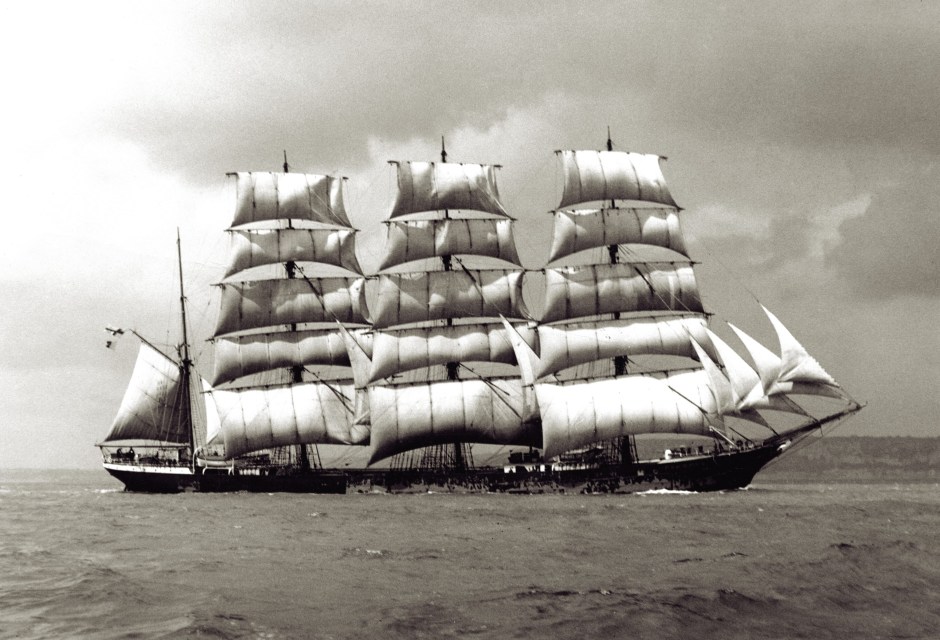
Åland’s first UNESCO honour: Gustaf Erikson’s shipping company archive included in UNESCO’s Memory of the World register

Autonomous island of Åland recieves its first UNESCO heritage honour as the Gustaf Erikson shipping archives were included in UNESCO’s World Heritage Register.

Inclusion in UNESCO’s Memory of the World Register is a fantastic recognition of the value and importance of the Gustaf Erikson Archive, strengthening Åland’s cultural heritage as a seafaring nation.”

The autonomous island province of Åland has today received its first UNESCO heritage honour as the Gustaf Erikson’s shipping archives were included in UNESCO’s World Heritage Register, thus joining the same echelon of invaluable cultural heritage as England’s Magna Carta, the French Declaration of Human Rights, the Gutenberg Bible and Isaac Newton’s manuscripts.

Read more at the link below:

https://www.einpresswire.com/article/635330144/land-s-first-unesco-honour-gustaf-erikson-s-shipping-company-archive-included-in-unesco-s-memory-of-the-world-register