Wood, Trade, and Spanish Naval Power (c.1740–1795)

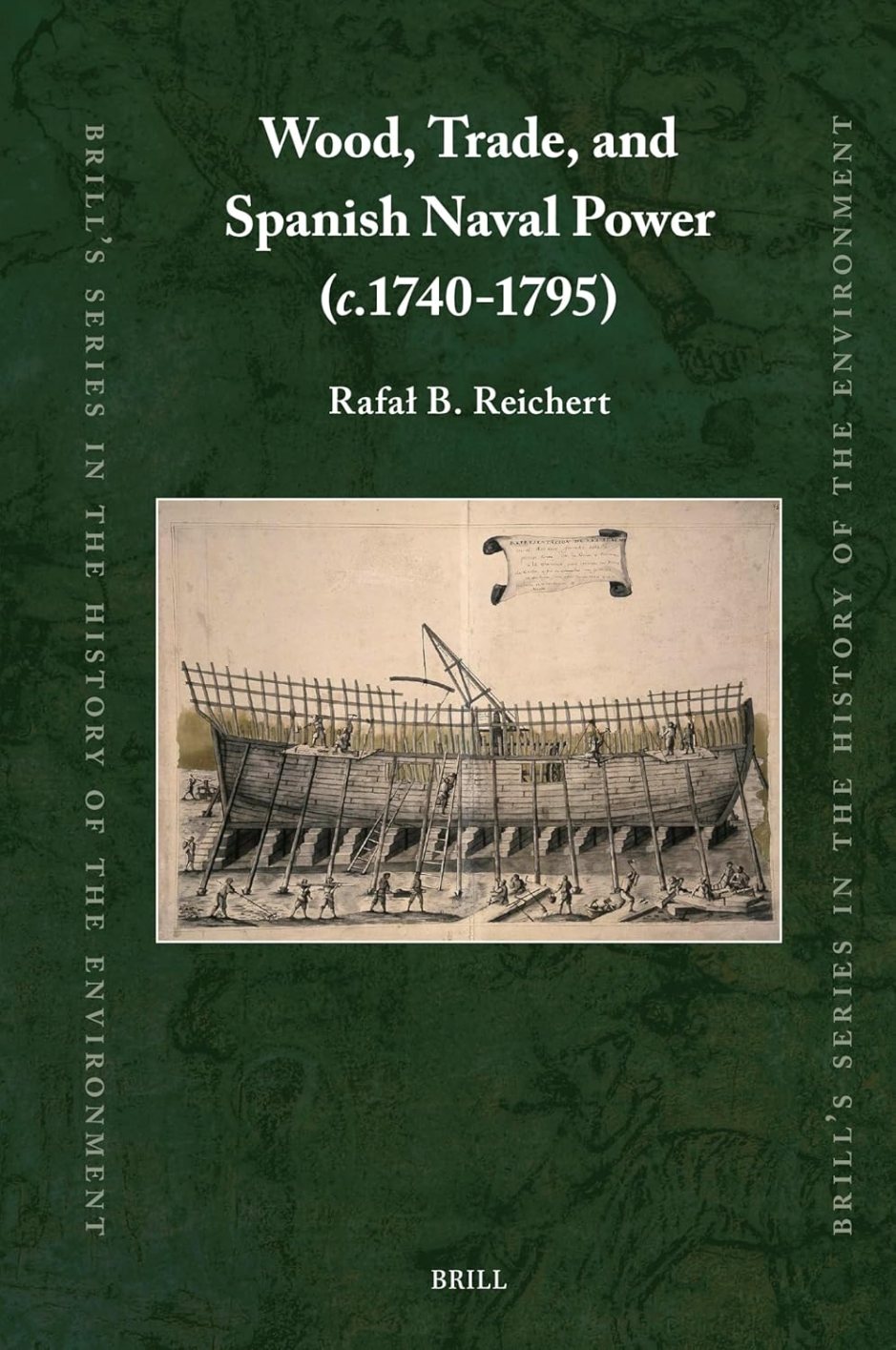
Read in the August issue of the IJMH (requires subscription) the review by Vicente Pajuelo Moreno of Wood, Trade, and Spanish Naval Power (c.1740–1795) by Rafał B. Reichert

By focussing on timber sourcing, this book sheds light on the exploitation of forests in settings outside the Iberian Peninsula, including foreign states in the southern Baltic region and the colonial territory of New Spain between the c.1740-1795.

Analysis of contracts, projects, and their implementation by the Spanish crown in the 18th century allow for a better understanding of the position of the Spanish monarchy’s nearly global efforts to sustain its naval commitments in the Atlantic World.

Wood, Trade, and Spanish Naval Power (c.1740-1795) | Brill

https://journals.sagepub.com/doi/abs/10.1177/08438714251355553

New Earth Histories: Geo-Cosmologies and the Making of the Modern World

Read in the August issue of the IJMH (requires subscription) the review by Jonathan Galka of New Earth Histories: Geo-Cosmologies and the Making of the Modern World by Alison Bashford, Emily M. Kern and Adam Bobbette, eds.

This book brings the history of the geosciences and world cosmologies together, exploring many traditions, including Chinese, Pacific, Islamic, South and Southeast Asian conceptions of the earth’s origin and makeup. Together the chapters ask: How have different ideas about the sacred, animate, and earthly changed modern environmental sciences? How have different world traditions understood human and geological origins? How does the inclusion of multiple cosmologies change the meaning of the Anthropocene and the global climate crisis? By carefully examining these questions, New Earth Histories sets an ambitious agenda for how we think about the earth.

The chapters consider debates about the age and structure of the earth, how humans and earth systems interact, and how empire has been conceived in multiple traditions. The methods the authors deploy are diverse—from cultural history and visual and material studies to ethnography, geography, and Indigenous studies—and the effect is to highlight how earth knowledge emerged from historically specific situations. New Earth Histories provides both a framework for studying science at a global scale and fascinating examples to educate as well as inspire future work. Essential reading for students and scholars of earth science history, environmental humanities, history of science and religion, and science and empire.

https://press.uchicago.edu/ucp/books/book/chicago/N/bo205315847.html

https://journals.sagepub.com/doi/abs/10.1177/08438714251355540

Half models from the Dutch Navy: Production and function

Read in the August issue of the IJMH (requires subscription) the text by Tirza Mol, Jeroen ter Brugge, Marta Domínguez-Delmás and Paul van Duin: “Half models from the Dutch Navy: Production and function”

This study investigates the function of bracket models within the maritime collection of the Rijksmuseum, Amsterdam. These half models, depicting the frames and ribbands of ship hulls, were transferred from the Navy Model Room in the 1880s. While bracket models are believed to have played a role in eighteenth- and nineteenth-century Dutch shipbuilding, their exact purpose remains uncertain. To elucidate their function, the authors examined the tool marks and construction features of individual models and compared them with historical ship-design drawings. The reconstruction of a bracket model was undertaken, and historical Navy Archives were consulted. The findings suggest that these models may have served multiple purposes, such as checking two-dimensional designs, facilitating the translation of drawings into three-dimensional forms, and representing technological advancements in shipbuilding. This research underscores the value of combining object-based analysis with historical documentation, and highlights the importance of reconstructions in understanding the production processes of historical objects.

https://journals.sagepub.com/doi/abs/10.1177/08438714251356834

Coalition Navies during the Korean War

Read in the August issue of the IJMH (requires subscription) the review by Adrian R. Lewis of Coalition Navies during the Korean War: Understanding Combined Naval Operations by Ian Bowers, ed.

This book presents a detailed assessment of the role of navies in the Korean War. It highlights that, despite being predominantly a land war, navies played a vital part. Moreover, the naval war was not solely a U.S. operation. Smaller navies from many countries made important contributions both in supporting the United States and carrying out independent and combined naval operations. This subject holds special importance since current Western strategic thinking and capabilities emphasise the necessity of combined naval operations involving multiple navies in any potential future naval conflict. The example set by the Korean War therefore offers valuable insights into the operational and strategic problems, and benefits and opportunities of contemporary and future combined coalition naval operations.

https://www.routledge.com/Coalition-Navies-during-the-Korean-War-Understanding-Combined-Naval-Operations/Bowers/p/book/9781032626550?srsltid=AfmBOoreUNHcqU2_PsuhwQ8Y4im4e4ujCZsnIITi9IdXq4qNBxE5Y42Y

https://journals.sagepub.com/doi/abs/10.1177/08438714251355543

An Empire of Magnetism

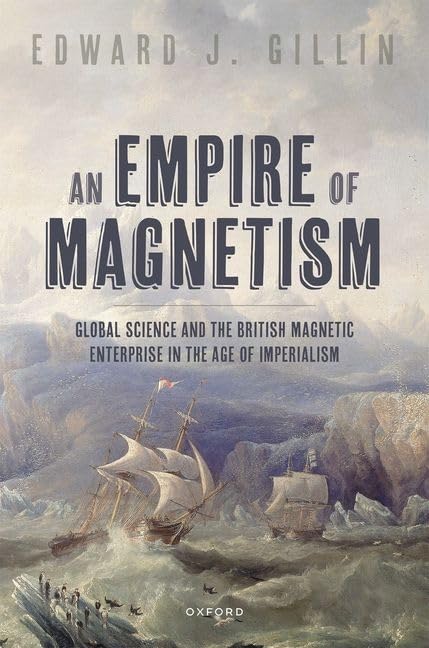
Read in the August issue of the IJMH (requires subscription) the review by John McAleer of An Empire of Magnetism: Global Science and the British Magnetic Enterprise in the Age of Imperialism by Edward J. Gillin

During the 1840s and 1850s, the British government financed a world-wide investigation into how the Earth’s magnetic phenomena operated, consisting of a network of naval expeditions and colonial observatories. Questions surrounding terrestrial magnetism were not just philosophical, but engendered urgent concerns over accurate navigation, on which Britain’s commercial and colonial power relied.

The British Magnetic Survey was celebrated at the time as the most extensive state-orchestrated scientific enterprise ever conducted. Yet although it was a fundamentally global endeavour, both in terms of its scale and its impact, the experimental instruments and techniques required were to be found amid Britain’s booming local industry, where the harnessing of coal and iron, and use of steam power, shaped a scientific culture prominently concerned with the relationship between heat, pressure, and motion. In particular, it was philosophical apparatus fashioned within the mines of Cornwall that the government was able to conscript within this world-wide magnetic investigation. These locally produced experimental techniques and technologies proved capable of transformation into a system for obtaining magnetic measurements from over great expanses of time and space.

As An Empire of Magnetism demonstrates, this not only sustained an immense world-wide scientific investigation, but became inseparable from the proliferation of empire, sustaining colonial expansion and unprecedented multi-cultural exchanges as British naval crews and natural philosophers surveyed previously unknown regions in the search for magnetic data. In so doing, Edward Gillin argues that the British Magnetic Survey had broader implications over the formation of the ‘modern state’, the expansion of nineteenth-century empire, and the development of global science.

https://academic.oup.com/book/55114

https://journals.sagepub.com/doi/abs/10.1177/08438714251355581

The three voyages of Black Eagle

Read in the August issue of the IJMH (requires subscription) the article by Abdelhakim Belhacel: “The three voyages of Black Eagle: Piracy, transnationality and the first French East India Company’s flagship”

This article explores the story of the French East India Company’s first flagship, originally a Dutch-built privateer vessel, from its inception in the 1660s through three significant voyages. Through an analysis of travel accounts, archival documents and secondary literature, the study explores how the ship’s transformation into a symbol of French ambition reflects the broader struggles of France’s imperial ventures under Louis XIV. Initially named Black Eagle and infamous for piracy, the vessel was repurposed as Saint-Paul and served in the nascent French East India Company. Its voyages highlight challenges such as disease, lack of maritime expertise and strained resources, which hindered the Company. By examining the ship’s role, this article sheds light on the transnational networks, political rivalries and economic aspirations that shaped France’s entry into the Indian Ocean trade. The study highlights the relationship between a ship’s tumultuous history and the French East India Company’s strategic ambitions and transnational entanglements.

https://journals.sagepub.com/doi/abs/10.1177/08438714251350572

An Empire of Laws: Legal Pluralism in British Colonial Policy

Read in the August issue of the IJMH (requires subscription) the review by Wouter Raaijmakers of An Empire of Laws: Legal Pluralism in British Colonial Policy by Christian R. Burset

For many years, Britain tried to impose its own laws on the peoples it conquered, and English common law usually followed the Union Jack. But the common law became less common after Britain emerged from the Seven Years’ War (1754–63) as the world’s most powerful empire. At that point, imperial policymakers adopted a strategy of legal pluralism: some colonies remained under English law, while others, including parts of India and former French territories in North America, retained much of their previous legal regimes.

As legal historian Christian R. Burset argues, determining how much English law a colony received depended on what kind of colony Britain wanted to create. Policymakers thought English law could turn any territory into an anglicized, commercial colony; legal pluralism, in contrast, would ensure a colony’s economic and political subordination. Britain’s turn to legal pluralism thus reflected the victory of a new vision of empire—authoritarian, extractive, and tolerant—over more assimilationist and egalitarian alternatives. Among other implications, this helps explain American colonists’ reverence for the common law: it expressed and preserved their equal status in the empire. This book, the first empire-wide overview of law as an instrument of policy in the eighteenth-century British Empire, offers an imaginative rethinking of the relationship between tolerance and empire.

Book Review: An Empire of Laws: Legal Pluralism in British Colonial Policy by Christian R. Burset – Wouter Raaijmakers, 2025

Reimagining the Globe and Cultural Exchange: The East Asian Legacies of Matteo Ricci’s World Map

Read in the August issue of the IJMH (requires subscription) the review by Gianamar Giovannetti-Singh of “Reimagining the Globe and Cultural Exchange: The East Asian Legacies of Matteo Ricci’s World Map” by Laura Hostetler, ed.

How did Asia come to be represented on European World maps? When and how did Asian Countries adopt a continental system for understanding the world? How did countries with disparate mapping traditions come to share a basic understanding and vision of the globe?

This series of essays organized into sections on Jesuit Circuits of Communication and Publication; Jesuit World Maps in Chinese; Reverberations of Matteo Ricci’s Maps in East Asia; and Reflections on the Curation of Cartographic Knowledge, go a long way toward answering these questions about the shaping of our modern understandings of the world.

https://brill.com/edcollbook-oa/title/68461

https://journals.sagepub.com/…/10.1177/08438714251355546

The varied career of Taqī al-Dīn al-Tibi on the Coromandel Coast

Read in the August issue of the IJMH (requires subscription) the text by T. Anas Babu: “When imārat and tijārat combined: The varied career of Taqī al-Dīn al-Tibi on the Coromandel Coast”

Arab and Persian merchants were actors in the lucrative Indian Ocean trade, at least from the twelfth century until their expulsion by the Portuguese in the sixteenth century. They did not remain as mere itinerant traders; instead, they incorporated themselves into state-building and faith-related networks. This article investigates Arab and Persian engagements on India’s Coromandel Coast, highlighting the varied career of a renowned expatriate Muslim merchant, Taqī al-Dīn al-Tibi, in ‘trade’ (tijārat) and ‘administration’ (imārat) during the early medieval period. It argues that the Muslim merchants who settled along the Coromandel Coast wielded substantial influence in the Indian Ocean trade, and that the notion of trade and administration was well established on the early medieval Coromandel Coast.

https://journals.sagepub.com/doi/abs/10.1177/08438714251353485

Ready to Dive: Five Decades of Adventure in the Abyss

Read in the May 2025 issue of the IJMH (requires subscription) the review by Nathan Richards of “Ready to Dive: Five Decades of Adventure in the Abyss” by Curt Newport

https://doi.org/10.1177/08438714251331864

In Ready to Dive, Curt Newport describes his role in some of the most daring and consequential deep ocean search and recovery operations of our time. Newport was there on the front lines and in the trenches, rigging lift lines, piloting underwater vehicles, and dealing with the carnage following both military and civilian plane crashes. Starting with his life as the son of a US Army aviator during various international postings before covering his conflicts with his father during the turbulent 1960s, the book details how he got into the subsea field. In a career lasting nearly fifty years, probing waters deeper than three miles, Newport describes unwinding passenger clothing from submersible propellers during the Air India salvage, recovering tons of volatile fuel–laden solid rocket motor parts from the Space Shuttle Challenger, thumbing through the wallet of a young girl lost during the crash of TWA Flight 800, and deciphering the navigational mystery of the USS IndianapolisReady to Dive is a gritty, blunt, and real firsthand subsea account unlike any other.