The Price of Empire: American Entrepreneurs and the Origins of America’s First Pacific Empire

Read in the May 2025 issue of the IJMH (requires subscription) the review by Thomas M. Larkin of “The Price of Empire: American Entrepreneurs and the Origins of America’s First Pacific Empire” by Miles M. Evers and Eric Grynaviski

https://journals.sagepub.com/doi/10.1177/08438714251331845

The United States was an upside-down British Empire. It had an agrarian economy, few large investors, and no territorial holdings outside of North America. However, decades before the Spanish-American War, the United States quietly began to establish an empire across thousands of miles of Pacific Ocean. While conventional wisdom suggests that large interests – the military and major business interests – drove American imperialism, The Price of Empire argues that early American imperialism was driven by small entrepreneurs. When commodity prices boomed, these small entrepreneurs took risks, racing ahead of the American state. Yet when profits were threatened, they clamoured for the US government to follow them into the Pacific. Through novel, intriguing stories of American small businessmen, this book shows how American entrepreneurs manipulated the United States into pursuing imperial projects in the Pacific. It explores their travels abroad and highlights the consequences of contemporary struggles for justice in the Pacific.

https://www.cambridge.org/core/books/price-of-empire/334E3A16EAB330D537DD6ADF0883C931

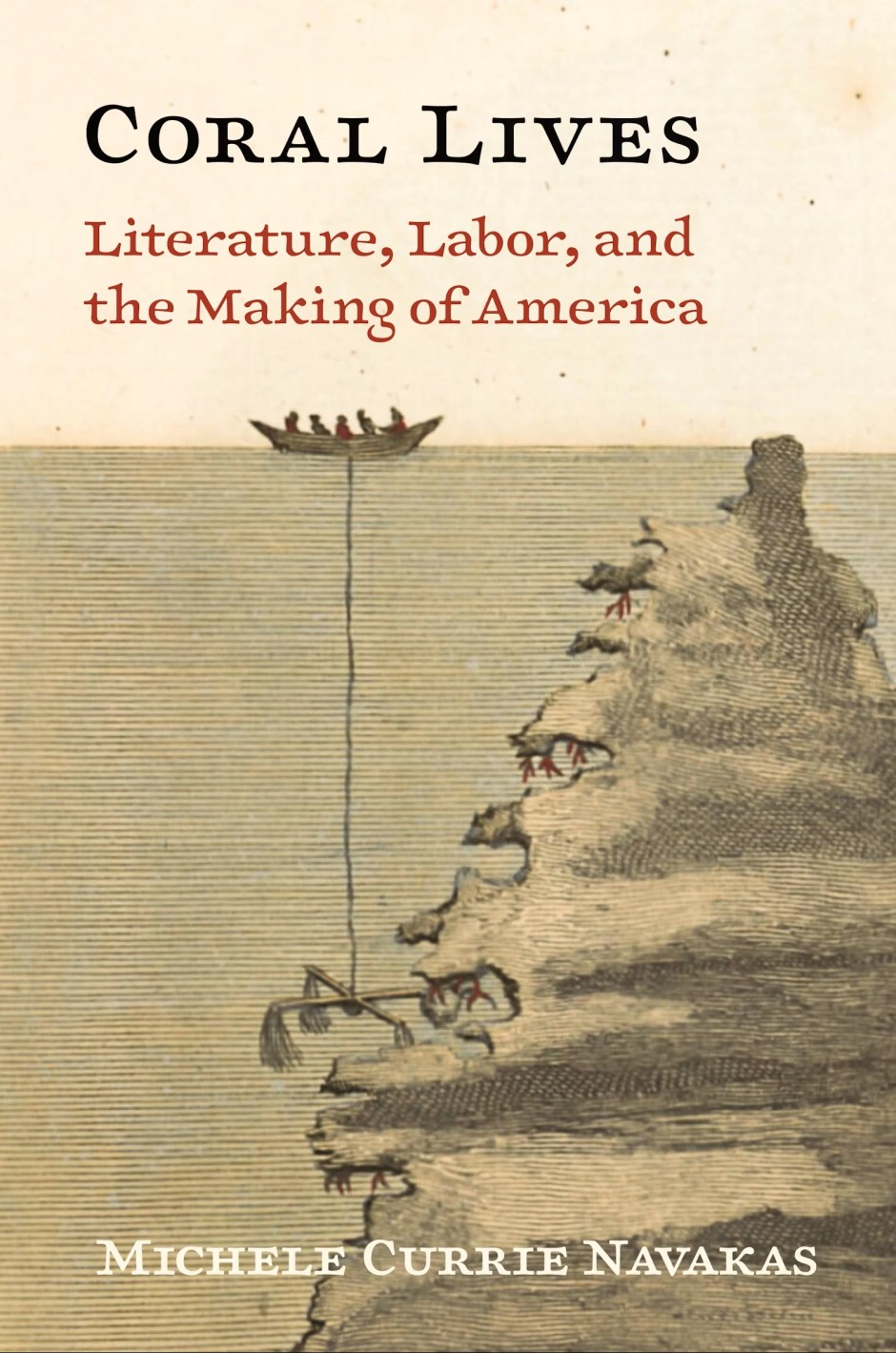
Coral Lives: Literature, Labor, and the Making of America

Read in the May 2025 issue of the IJMH (requires subscription) the review by Amy Parsons of “Coral Lives: Literature, Labor, and the Making of America” by Michele Currie Navakas

https://journals.sagepub.com/doi/abs/10.1177/08438714251331889

Today, coral and the human-caused threats to coral reef ecosystems symbolize our ongoing planetary crisis. In the nineteenth century, coral represented something else; as a recurring motif in American literature and culture, it shaped popular ideas about human society and politics. In Coral Lives, Michele Currie Navakas tells the story of coral as an essential element of the marine ecosystem, a cherished personal ornament, a global commodity, and a powerful political metaphor. Drawing on a wide range of sources, including works by such writers as Sarah Josepha Hale, Harriet Beecher Stowe, Frances Ellen Watkins Harper, and George Washington Cable, Navakas shows how coral once helped Americans to recognize both the potential and the limits of interdependence—to imagine that their society could grow, like a coral reef, by sustaining rather than displacing others.

Navakas shows how coral became deeply entwined with the histories of slavery, wage labor, and women’s reproductive and domestic work. If coral seemed to some nineteenth-century American writers to be a metaphor for a truly just collective society, it also showed them, by analogy, that society can seem most robust precisely when it is in fact most unfree for the laborers sustaining it. Navakas’s trailblazing cultural history reveals that coral has long been conceptually indispensable to humans, and its loss is more than biological. Without it, we lose some of our most complex political imaginings, recognitions, reckonings, and longings.

https://press.princeton.edu/books/hardcover/9780691240114/coral-lives

Spy Ships: One Hundred Years of Intelligence Collection by Ships and Submarines

Read in the May 2025 issue of the IJMH (requires subscription) the review by Joel J. Sokolsky of “Spy Ships: One Hundred Years of Intelligence Collection by Ships and Submarines” by Norman Polmar and Lee J. Mathers

https://journals.sagepub.com/doi/abs/10.1177/08438714251331891

Almost from the first days of seafaring, men have used ships for “spying” and intelligence collection. Since early in the twentieth century, with the technological advancements of radio and radar, the U.S. Navy and other government agencies and many other navies have used increasingly specialized ships and submarines to ferret out the secrets of other nations. The United States and the Soviet Union/Russia have been the leaders in those efforts, especially during the forty-five years of the Cold War. But, as Norman Polmar and Lee J. Mathers reveal, so has China, which has become a major maritime power in the twenty-first century, with special interests in the South China Sea and with increasing hostility toward the United States.

Through extensive, meticulous research and through the lens of such notorious spy ship events as the Israeli attack on the USS Liberty, the North Korean capture of the USS Pueblo, and the U.S. Central Intelligence Agency’s success in clandestinely salvaging part of a Soviet submarine with the Hughes Glomar ExplorerSpy Ships is a fascinating and valuable resource for understanding maritime intelligence collection and what we have learned from it.

https://www.harvard.com/book/9781640124752

The role and response of International Maritime Organization and classification societies in regulating maritime autonomous surface ships

Read in the May 2025 issue of the IJMH (requires subscription) the article by Sabrina Hasan on “An insight on the role and response of International Maritime Organization and classification societies in regulating maritime autonomous surface ships”

https://journals.sagepub.com/doi/abs/10.1177/08438714251325206

This paper explores the evolving dynamics between the International Maritime Organization (IMO) and classification societies in response to the challenges posed by Maritime Autonomous Surface Ships (MASS). The study highlights the IMO’s regulatory efforts, including the scoping exercises by the Maritime Safety Committee and Legal Committee, and navigates the complexities of amending conventions, particularly in response to Article 94 of the United Nations Convention on the Law of the Sea concerning the elimination of manning requirements for fully autonomous ships. Emphasising the adaptability of IMO regulations to MASS, the paper discusses potential conflicts and advocates for a comprehensive review to harmonise and comply with diverse impacts. In conclusion, the paper emphasises the crucial collaboration between IMO and Classification Societies in proactively regulating autonomous shipping.

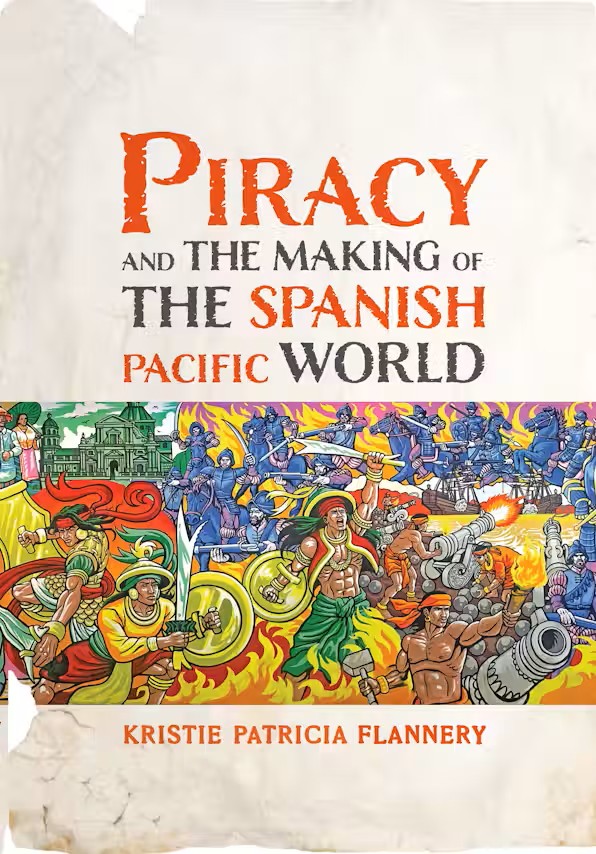
Piracy and the Making of the Spanish Pacific World

Read in the May 2025 issue of the IJMH (requires subscription) the review by Diego Javier of “Piracy and the Making of the Spanish Pacific World” by Kristie Flannery

https://journals.sagepub.com/doi/abs/10.1177/08438714251331828

Piracy and the Making of the Spanish Pacific World offers a new interpretation of Spanish colonial rule in the Philippine islands. Drawing on the rich archives of Spain’s Asian empire, Kristie Patricia Flannery reveals that Spanish colonial officials and Catholic missionaries forged alliances with Indigenous Filipinos and Chinese migrant settlers in the Southeast Asian archipelago to wage war against waves of pirates, including massive Chinese pirate fleets, Muslim pirates from the Sulu Zone, and even the British fleet that attacked at the height of the Seven Years’ War. Anti-piracy alliances made Spanish colonial rule resilient to both external shocks and internal revolts that shook the colony to its core.

This revisionist study complicates the assumption that empire was imposed on Filipinos with brute force alone. Rather, anti-piracy also shaped the politics of belonging in the colonial Philippines. Real and imagined pirate threats especially influenced the fate and fortunes of Chinese migrants in the islands. They triggered genocidal massacres of the Chinese at some junctures, and at others facilitated Chinese integration into the Catholic nation as loyal vassals.

Piracy and the Making of the Spanish Pacific World demonstrates that piracy is key to explaining the surprising longevity of Spain’s Asian empire, which, unlike Spanish colonial rule in the Americas, survived the Age of Revolutions and endured almost to the end of the nineteenth century. Moreover, it offers important new insight into piracy’s impact on the trajectory of globalization and European imperial expansion in maritime Asia.

Ordinary People, Extraordinary Times: Living the British Empire in Jamaica, 1756

Read in the May 2025 issue of the IJMH (requires subscription) the review by Christos Giannatos of “Ordinary People, Extraordinary Times: Living the British Empire in Jamaica, 1756” by Sheryllyne Haggerty

https://journals.sagepub.com/doi/abs/10.1177/08438714251331848

In October of 1756 Sarah Folkes wrote home to her children in London from Jamaica. Posted on the ship Europa, bound for London, her letter was one of around 350 that were never delivered due to an act of war; they remain together today in the National Archives in London.

In Ordinary People, Extraordinary Times Sheryllynne Haggerty closely reads and analyses this collection of correspondence, exploring the everyday lives of poor and middling whites, free people of colour, and the enslaved in mid-eighteenth-century Jamaica – Britain’s wealthiest colony of the time – at the start of the Seven Years’ War. This unique cache of letters brings to life both thoughts and behaviours that even today appear quite modern: concerns over money, surviving in a war-torn world, family squabbles, poor physical and mental health, and a desire to purchase fashionable consumer goods. The letters also offer a glimpse into the impact of British colonialism on the island; Jamaica was a violent, cruel, and deadly materialistic place dominated by slavery from which all free people benefited, and it is clear that the start of the Seven Years’ War heightened the precariousness of enslaved peoples’ lives. Jamaica may have been Britain’s Caribbean jewel, but its society was heterogeneous and fractured along racial and socioeconomic lines.
A rare study of microhistory, Ordinary People, Extraordinary Times paints a picture of daily life in Jamaica against the vast backdrop of transatlantic slavery, war, and the eighteenth-century British Empire.

https://www.mqup.ca/ordinary-people–extraordinary-times-products-9780228018513.php

Islands and the British Empire in the Age of Sail

Read in the May 2025 issue of the IJMH (requires subscription) the review by Richard Blakemore of “Islands and the British Empire in the Age of Sail” by Douglas Hamilton and John McAleer, eds.

https://journals.sagepub.com/doi/abs/10.1177/08438714251331833

Islands are not just geographical units or physical facts; their importance and significance arise from the human activities associated with them. The maritime routes of sailing ships, the victualling requirements of their sailors, and the strategic demands of seaborne empires in the age of sail – as well as their intrinsic value as sources of rare commodities – meant that islands across the globe played prominent parts in imperial consolidation and expansion. This volume examines the various ways in which islands (and groups of islands) contributed to the establishment, extension, and maintenance of the British Empire in the age of sail. Thematically related chapters explore the geographical, topographical, economic, and social diversity of the islands that comprised a large component of the British Empire in an era of rapid and significant expansion.
Although many of these islands were isolated rocky outcrops, they acted as crucial nodal points, providing critical assistance for ships and men embarked on the long-distance voyages that characterised British overseas activities in the period. Intercontinental maritime trade, colonial settlement, and scientific exploration and experimentation would have been impossible without these oceanic islands. They also acted as sites of strategic competition, contestation, and conflict for rival European powers keen to outstrip each other in developing and maintaining overseas markets, plantations, and settlements.

The importance of islands outstripped their physical size, the populations they sustained, or their individual economic contribution to the imperial balance sheet. Standing at the centre of maritime routes of global connectivity, islands offer historians of the British Empire fresh perspectives on the intercontinental communication, commercial connections, and territorial expansion that characterised that empire.

https://global.oup.com/academic/product/islands-and-the-british-empire-in-the-age-of-sail-9780198847229

Ligurian shipping, routes and trade in the Black Sea, 1815–1914

Read in the May 2025 issue of the IJMH (requires subscription) the article by Leonardo Scavino on “Ligurian shipping, routes and trade in the Black Sea, 1815–1914”

https://journals.sagepub.com/doi/abs/10.1177/08438714251326024

This article explores the resurgence of Ligurian maritime activity in the Black Sea during the early nineteenth century after a four-century absence, driven by the lucrative Black Sea grain trade and coinciding with Genoa’s transition from French to Sardinian rule. Following the Vienna Congress, Ligurian vessels, primarily from small coastal communities, began frequenting Black Sea ports to transport grain to Genoa, Livorno and Marseilles. These efforts were supported by Savoy’s trade policies and Sardinian consuls in the region, leading to a peak in Ligurian shipping activity in the 1860s, before it declined due to competition from foreign steamships. The article emphasizes the crucial role of institutional and state support in establishing this trade, and examines how interactions with national and foreign merchants shaped its development. It is structured around Savoy’s trade policies, the Ligurian presence during the Age of Sail, and the emergence of a niche Italian steam-shipping fleet.

The Tame and the Wild: People and Animals after 1492

Read in the May 2025 issue of the IJMH (requires subscription) the review by Erica Fudge of “The Tame and the Wild: People and Animals after 1492” by Marcy Norton

https://journals.sagepub.com/doi/abs/10.1177/08438714251331829

When the men and women of the island of Guanahani first made contact with Christopher Columbus and his crew on October 12, 1492, the cultural differences between the two groups were vaster than the oceans that had separated them. There is perhaps no better demonstration than the divide in their respective ways of relating to animals. In The Tame and the Wild, Marcy Norton tells a new history of the colonization of the Americas, one that places wildlife and livestock at the center of the story. She reveals that the encounters between European and Native American beliefs about animal life transformed societies on both sides of the Atlantic.

Europeans’ strategies and motives for conquest were inseparable from the horses that carried them in military campaigns and the dogs they deployed to terrorize Native peoples. Even more crucial were the sheep, cattle, pigs, and chickens whose flesh became food and whose skins became valuable commodities. Yet as central as the domestication of animals was to European plans in the Americas, Native peoples’ own practices around animals proved just as crucial in shaping the world after 1492. Cultures throughout the Caribbean, Amazonia, and Mexico were deeply invested in familiarization: the practice of capturing wild animals—not only parrots and monkeys but even tapir, deer, and manatee—and turning some of them into “companion species.” These taming practices not only influenced the way Indigenous people responded to human and nonhuman intruders but also transformed European culture itself, paving the way for both zoological science and the modern pet.

https://www.hup.harvard.edu/books/9780674737525

Navigations: The Portuguese Discoveries and the Renaissance

Read in the May 2025 issue of the IJMH (requires subscription) the review by Zoltán Biedermann of “Navigations: The Portuguese Discoveries and the Renaissance” by Malyn Newitt

https://journals.sagepub.com/doi/abs/10.1177/08438714251332124

Navigations re-examines the Portuguese voyages of discovery by placing them in their medieval and Renaissance settings. It shows how these voyages grew out of a crusading ethos, as well as long-distance trade with Asia and Africa and developments in map-making and ship design. The slave trade, the diaspora of the Sephardic Jews and the intercontinental spread of plants and animals gave these voyages long-term global significance.

The voyages of discovery are narrated within the context of Portuguese politics, and this book describes the role of the Portuguese ruling dynasty – including its female members – in the flowering of the Portuguese Renaissance and the distinctive ideology of the Renaissance state, and in the cultural changes that took place within a wider European context.