Australia’s Cocos (Keeling) Islands and Christmas Island

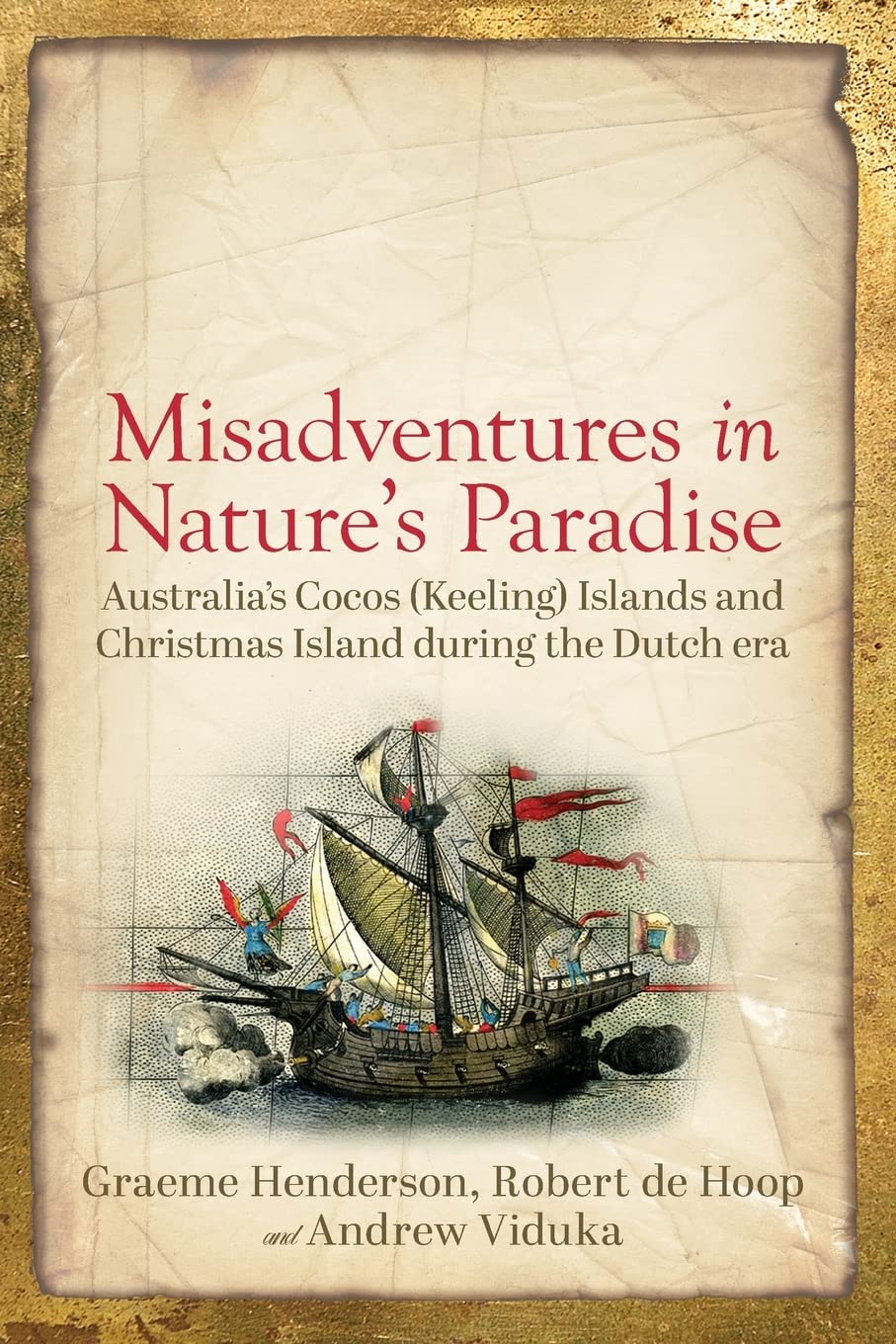
“Misadventures in Nature’s Paradise: Australia’s Cocos (Keeling) Islands and Christmas Island during the Dutch Era” by Graeme Henderson, Robert de Hoop and Andrew Viduka

Read the review (requires subscription) by Bruno E. J. S. Werz in the November 2024 issue of the IJMH

https://journals.sagepub.com/doi/abs/10.1177/08438714241272659

A description of the book is available here:

https://uwap.uwa.edu.au/products/misadventures-in-natures-paradise ?srsltid=AfmBOooX6usgSKuBenA-o3cPQHbNjZJXEmrNUm78jjTNAXOvVdyf92P1

Misadventures in Nature’s Paradise explores the earliest history of Australia’s Indian Ocean territories of the Cocos (Keeling) Islands and Christmas Island.

A time possibly coined the Dutch Era, saw Dutch cartographers voyaging eastward across the southern Indian Ocean to the East Indies, and occasionally falling victim to shipwreck disasters. On their journey, Dutch voyagers would rely upon trade routes established by seafarers from Africa, the Middle East and Asia. These local seafarers would speak of terrible dangers in the unknown waters of the south: strong ocean currents, dark shadows and giant birds of prey. The Dutch would later develop a shorter trade route between South Africa and Indonesia which would take their vessels southward and then toward the Christmas and Cocos (Keeling) islands as we know them today.

The authors of this volume, historical maritime archaeologists Graeme Henderson, Robert de Hoop and Andrew Viduka, tease out some of the real-life ramifications of the Indian Ocean and European myths upon the destiny of the Cocos (Keeling) and Christmas islands and provide evidence that indicates several eighteenth-century Dutch ships foundered close to these beautiful islands. Their wrecks still await discovery.

The Extraordinary Journey of David Ingram

“The Extraordinary Journey of David Ingram: An Elizabethan Sailor in Native North America” by Dean Snow

Read the review (requires subscription) by Cheryl Butler in the November 2024 issue of the IJMH

https://journals.sagepub.com/doi/abs/10.1177/08438714241272605

A description of the book is available here:

In The Extraordinary Journey of David Ingram, author Dean Snow rights the record on a shipwrecked sailor who traversed the length of the North American continent only to be maligned as deceitful storyteller.

In the autumn of 1569, a French ship rescued David Ingram and two other English sailors from the shore of the Gulf of Maine. The men had walked over 3000 miles in less than a year after being marooned near Tampico, Mexico. They were the only three men to escape alive and uncaptured, out of a hundred put ashore at the close of John Hawkins’s disastrous third slaving expedition. A dozen years later, Ingram was called in for questioning by Francis Walsingham, Queen Elizabeth’s spymaster. In 1589, the historian Richard Hakluyt published his version of Ingram’s story based on the records of that interrogation. For four centuries historians have used that publication as evidence that Ingram was an egregious travel liar, an unreliable early source for information about the people of interior eastern North America before severe historic epidemics devastated them.

In The Extraordinary Journey of David Ingram,author and recognized archaeologist Dean Snow shows that Ingram was not a fraud, contradicting the longstanding narrative of his life. Snow’s careful examination of three long-neglected surviving records of Ingram’s interrogation reveals that the confusion in the 1589 publication was the result of disorganization by court recorders and poor editing by Richard Hakluyt. Restoration of Ingram’s testimony has reinstated him as a trustworthy source on the peoples of West Africa, the Caribbean, and eastern North America in the middle sixteenth century. Ingram’s life story, with his long traverse through North America at its core, can now finally be understood and appreciated for what it was: the tale of a unique, bold adventurer.

Maritime Trade in the Low Countries

The Power and Pains of Polysemy: Maritime Trade, Averages, and Institutional Development in the Low Countries (15th–16th Centuries) by Gijs Dreijer

Read the review (requires subscription) by Jeremy Land in the November 2024 issue of the IJMH

https://journals.sagepub.com/doi/abs/10.1177/08438714241274990

A description of the book is available here:

https://brill.com/display/title/64431

As the fall-out of the Ever Given Suez canal blockage shows, an ancient instrument like General Average (GA) is still highly relevant in redistributing risks and costs in maritime trade. However, bar marine insurance, not much is known about the development of tools of maritime risk management like GA, which redistributes extraordinary costs incurred for the common safety of maritime ventures.

This book investigates the development of General Average and other so-called Averages in the Low Countries on the eve of the early modern period, showing how the various varieties of Averages played a significant role in the development of maritime risk management and the broader institutional development in the Low Countries.

“In Memoriam: Trevor Burnard” by Lou Roper

Many IJMH readers will have learned of the untimely death of Trevor Burnard, Director of the Wilberforce Institute of the Study of Slavery and Emancipation and Professor of History at the University of Hull, last July. The wide awareness of Professor Burnard’s passing in and of itself reflects his prolific scholarship as well as the profound influence of this remarkably generous colleague. A preeminent historian of early modern trafficking of enslaved Africans and of enslavement in Anglo-America, especially the British West Indies, as well as a leading authority on British colonization, he occupied the vanguard in effecting a shift in understanding that has made the histories of European overseas empire and of enslavement—and the violence, especially sexual, that was central to enslavement—inseparable.

Read more at https://journals.sagepub.com/doi/full/10.1177/08438714241291704

Dutch Chartered Companies

Patronage, Patrimonialism, and Governors’ Careers in the Dutch Chartered Companies, 1630–1681: Careers of Empire by Erik Odegard

Read the review (requires subscription) by Vany Susanto in the November 2024 issue of the IJMH

https://journals.sagepub.com/doi/abs/10.1177/08438714241272552

A description of the book is available here:

https://brill.com/display/title/59885

How did individuals advance to the highest ranks in the Dutch colonial administrations? And how, once appointed, was this rank retained? To answer these questions, this book explores the careers of Dutch colonial governors in the 17th century with a focus on two case-studies: Johan Maurits van Nassau-Siegen, governor of Dutch Brazil (1636-1644) and Rijckloff Volckertsz van Goens, Governor-General in Batavia in the 1670s.

By comparing a Western (Atlantic, WIC) and an Eastern (Asian, VOC) example, this book shows how networks sustaining career-making differed in the various parts of the empire: the West India Company was much more involved in domestic political debates, and this led to a closer integration of political patronage networks, while the East India Company was better able to follow an independent course. The book shows that to understand the inner workings of the Dutch India companies, we need to understand the lives of those who turned the empire into their career.

Ship-repair companies in Britain

“A Cinderella industry: Private and nationalized ship-repair companies in Britain, 1970–1986” by Hugh Murphy in the latest issue of the IJMH

Read it (requires subscription) at https://doi.org/10.1177/08438714241271821

This article explores Britain’s ship-repair industry under private enterprise and partly under state control from 1970 to 1986 in order to shed much-needed light on ship repair during a crucial period in its history – a period when a substantial proportion of the industry moved from private to state control, initially in 1974 when four major ship repairers were nationalized, and again in 1977 when a further six ship-repair companies came under state control through the British Shipbuilders Corporation. The last remaining nationalized ship-repair firm reverted to private control in 1986. The article aims to encourage maritime historians to look at the histories of their ship-repairing industries nationally and internationally, either monographically or by a case study approach, in order to build up a national historiographical approach to the subject.

Art on the Move in the Mediterranean and the Black Sea

The Land between Two Seas: Art on the Move in the Mediterranean and the Black Sea 1300–1700 by Alina Payne, ed.

Read the review (requires subscription) by Maximilian Hartmuth in the November 2024 issue of the IJMH

https://journals.sagepub.com/doi/abs/10.1177/08438714241272537

A description of the book is available here:

https://brill.com/edcollbook-oa/title/61882

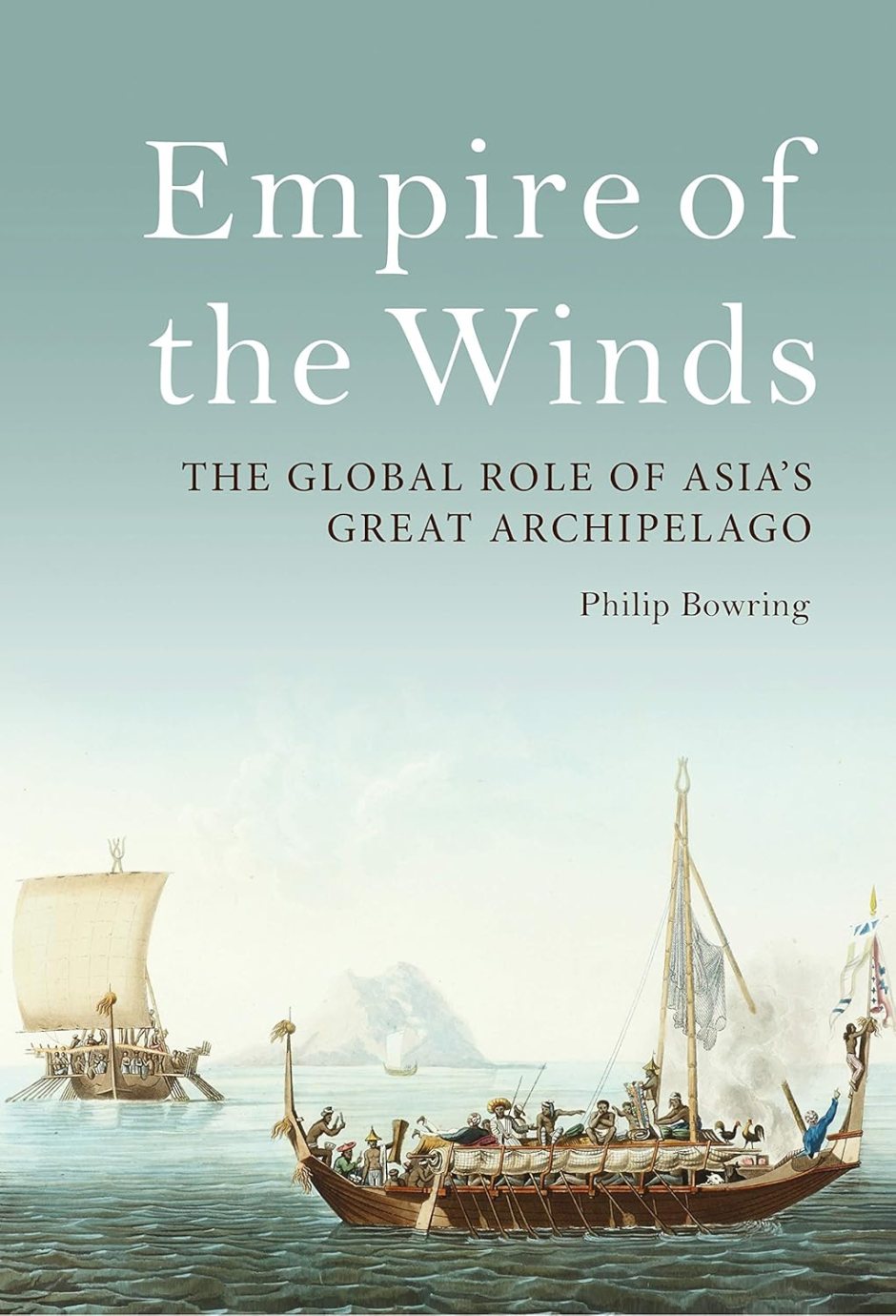
Based upon a sweeping command of Dutch East India Company (VOC) primary sources, Knaap’s manuscript offers a thought-provoking thematic examination and chronological survey of the Dutch Republic’s overseas and colonial expansion in Asia and South Africa, mainly through the VOC and its successors, the Batavian Republic, the Kingdom of Holland and Franco-Dutch Java, over a period of more than two centuries, 1596-1811. It elucidates and deals with several conceptual and theoretical issues that are intrinsically important and germane to a polity’s definition of and how it chooses to execute the process of expansion overseas in the early modern period. One of this work’s major arguments and contributions is its advocacy that the Dutch VOC’s expansion in Asia was an imperial project and must be seen as an act of empire, or, at the very minimum, the attempt to construct one via the innovative utilization of a highly organized and dynamic commercial institution with significant political and diplomatic power and naval and military resources.

Austrian seafarers’ shipboard collective protests

“Beyond docks, below decks: Austrian seafarers’ shipboard collective protests in the age of industrial shipping” by Matteo Barbano

Read it (open access) in the latest issue of the IJMH:

https://journals.sagepub.com/doi/abs/10.1177/08438714241271805

This article explores collective resistance actions among Austrian seafarers between the late nineteenth century and First World War, shedding light on the seaborne dimension of their struggles and investigating possible connections between the developmental stages of the seafarers’ labour movement in Trieste and their engagement in collective action at sea. In doing so, the research focuses particularly on the crews of Austrian Lloyd, the most powerful shipping company in the Habsburg merchant marine, which played a leading role in shaping labour relations between Austrian seafarers and shipowners. By analysing data extracted from the Black Book, the company’s tool for blacklisting seafarers, this article identifies seaborne collective resistance as a distinctive mode of struggle found in specific phases of the industrial relations between Lloyd and its seagoing personnel, underscoring the relevance of the ship as a significant stage in maritime labour conflicts in the age of industrial shipping.

First Dutch Colonial Empire in Asia and South Africa

Genesis and Nemesis of the First Dutch Colonial Empire in Asia and South Africa, 1596–1811 by Gerrit Knaap

Read the review (requires subscription) by Hanna te Velde in the November 2024 issue of the IJMH

https://journals.sagepub.com/doi/abs/10.1177/08438714241272592

A description of the book is available here:

https://brill.com/display/title/63374

Based upon a sweeping command of Dutch East India Company (VOC) primary sources, Knaap’s manuscript offers a thought-provoking thematic examination and chronological survey of the Dutch Republic’s overseas and colonial expansion in Asia and South Africa, mainly through the VOC and its successors, the Batavian Republic, the Kingdom of Holland and Franco-Dutch Java, over a period of more than two centuries, 1596-1811. It elucidates and deals with several conceptual and theoretical issues that are intrinsically important and germane to a polity’s definition of and how it chooses to execute the process of expansion overseas in the early modern period. One of this work’s major arguments and contributions is its advocacy that the Dutch VOC’s expansion in Asia was an imperial project and must be seen as an act of empire, or, at the very minimum, the attempt to construct one via the innovative utilization of a highly organized and dynamic commercial institution with significant political and diplomatic power and naval and military resources.

From warships to whaleships

“From warships to whaleships: Former Royal Navy vessels entering the South Seas fishery in the post-Napoleonic period, 1815–1845” by Julie Papworth and Roger Dence

Read it at https://doi.org/10.1177/08438714241282428 (subscription needed)

During Britain’s conflicts between 1793 and 1815, the Royal Navy changed markedly. New classes of smaller warships were introduced, with numerous vessels built to Admiralty (King’s Yard) designs in private shipyards rather than the Royal Dockyards. Many were sloops-of-war, flush-decked and unrated vessels, carrying 20 guns or fewer, that proved versatile in operations around the world. After 1815, the size of the fleet was reduced. Initially many vessels were kept in reserve, but eventually most were sold for mercantile service or breaking, some of the latter also then being resold for merchant use. These vessels proved attractive to long-established whaling owners and new entrants to the whaling trade alike. Such warship-to-whaleship transitions are examined through vessels entering the British southern whale fishery in the post-Napoleonic period between 1815 and 1845.