Maritime Men of the Asia-Pacific

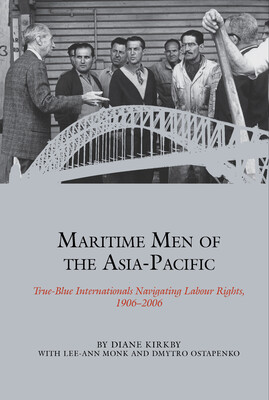
Maritime Men of the Asia-Pacific: True-Blue Internationals Navigating Labour Rights 1906–2006 by Diane Kirkby with Lee-Ann Monk and Dmytro Ostapenko

Read the review (requires subscription) by Helen Devereux in the November 2024 issue of the IJMH

https://journals.sagepub.com/doi/abs/10.1177/08438714241272554

A description of the book is available here:

https://www.liverpooluniversitypress.co.uk/doi/book/10.3828/9781802077193

Maritime workers occupy a central place in global labour history. This new and compelling account from Australia, shows seafaring and waterside unions engaged in a shared history of activism for legally regulated wages and safe liveable conditions for all who go to sea. Maritime Men of the South Pacific provides a corrective to studies which overlook this region’s significance as a provider of the world’s maritime labour force and where unions have a rich history of reaching across their differences to forge connections in solidarity. From the ‘militant young Australian’ Harry Bridges whose progressive unionism transformed the San Francisco waterfront, to Australia’s successful implementation of the Maritime Labour Convention 2006, this is a story of vision and leadership on the international stage. Unionists who saw themselves as internationalists were also operating within a national and imperial framework where conflicting interests and differences of race and ideology had to be overcome. Union activists in India, China and Japan struggled against indentured labour and ‘coolie’ standards. They linked with their fellow-unionists in pursuing an ideal of international labour rights against the power of shipowners and anti-union governments. This is a complex story of endurance, cooperation and conflict and its empowering legacy.

Transporting convict to Australia

“Exploiting inter- and intracontinental markets: The business of transporting convicts to the Australian colonies in the late eighteenth and early nineteenth century” by Lauren Darwin in the November 2024 issue of the IJMH

Read it in open access at https://doi.org/10.1177/08438714241274977

This article explores the pivotal role played by convict transports in the expansion and redirection of British maritime trade to the East. Through an investigation into the business of transporting prisoners across the seas in the late eighteenth and early nineteenth century, it reveals that contractors, shipowners and captains connected to convict transportation were at the forefront of exploiting new trading opportunities in the Indian and Pacific Oceans. By analysing the voyages of convict ships within the prism of long-haul trading ventures, this work reveals the often overlooked business acumen of those who organized and executed convict transportation as they participated in inter- and intra-continental maritime trade.

From Northeast Passage to Northern Sea Route

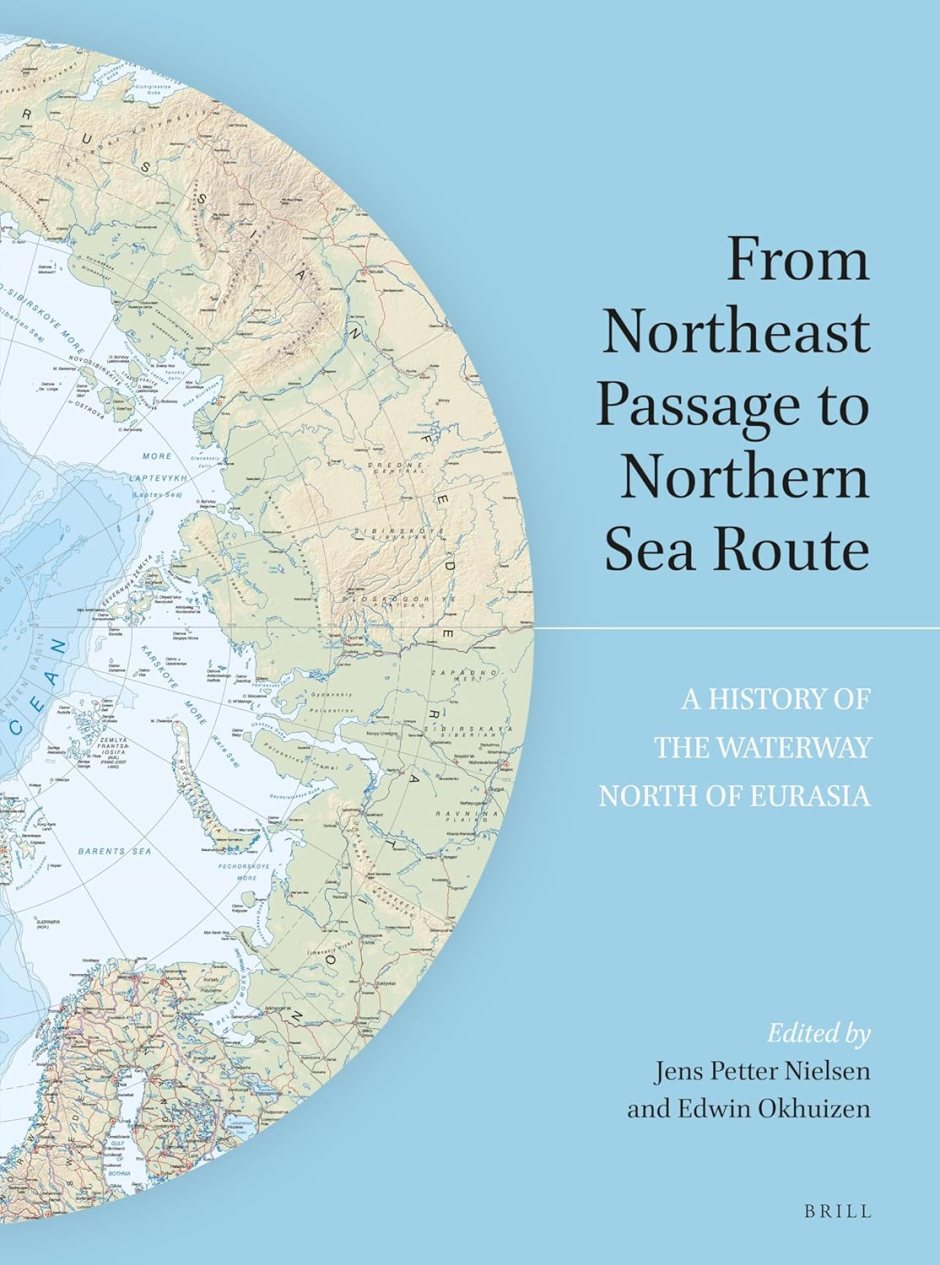
From Northeast Passage to Northern Sea Route: A History of the Waterway North of Eurasia by Jens Petter Nielsen and Edwin Okhuizen, eds.

Read the review (requires subscription) by Ingo Heidbrink in the November 2024 issue of the IJMH

https://journals.sagepub.com/doi/abs/10.1177/08438714241272603

A description of the book is available here:

https://brill.com/display/title/39591

The notion of a waterway north of Eurasia, conceived in the first half of the sixteenth century, remained only a dream for centuries, due to ice, unmapped coastlines and a lack of geographical knowledge. This volume is the first comprehensive, scholarly account in English of the slow but steady exploration and commercial exploitation of the Siberian coastal waters, and it proves that this was a truly international endeavour. However, in the end, the Northern Sea Route as a through traverse route came to be used primarily by the Soviet Union, for which it became a crucial vehicle for the geopolitical and economic integration of its vast territories. As an international trade route the Northern Sea Route is only today about to win its way, essentially as a result of global warming. This being the case, should we rejoice or despair?

The Anglo-Dutch Wars

“The balance of sea power in the early modern era: The Anglo-Dutch Wars (1652-1674)” by Izidor Janžekovič was published in the November 2024 issue of the IJMH

Read it in open access at https://doi.org/10.1177/08438714241269611

The balance of power is among the foundational principles in international relations. This principle, however, has been analysed mostly in relation to land powers on the European continent, while the historiography has failed to appropriately recognize its naval aspect so far. This article compares the English and Dutch sea powers or fleets during the three Anglo-Dutch Wars (1652–1674). Warships or ships of the line were the main instruments of naval warfare, and hence key to any measurements of sea power. Detailed tables of the fleets with the number of warships and guns for the major engagements show the balance of sea power at the time. Attaining and maintaining the balance of (sea) power in the early modern era was not just an abstract idea, but also an interactive process, based on numerical analysis. The author argues that there was a real or naval balance of sea power between the fleets or alliances of fleets; that the balance of sea power was acknowledged in the international alliance treaties; and that the balance of sea power became an element of early modern political discourse.

Ramsgate: The Town and Its Seaside Heritage

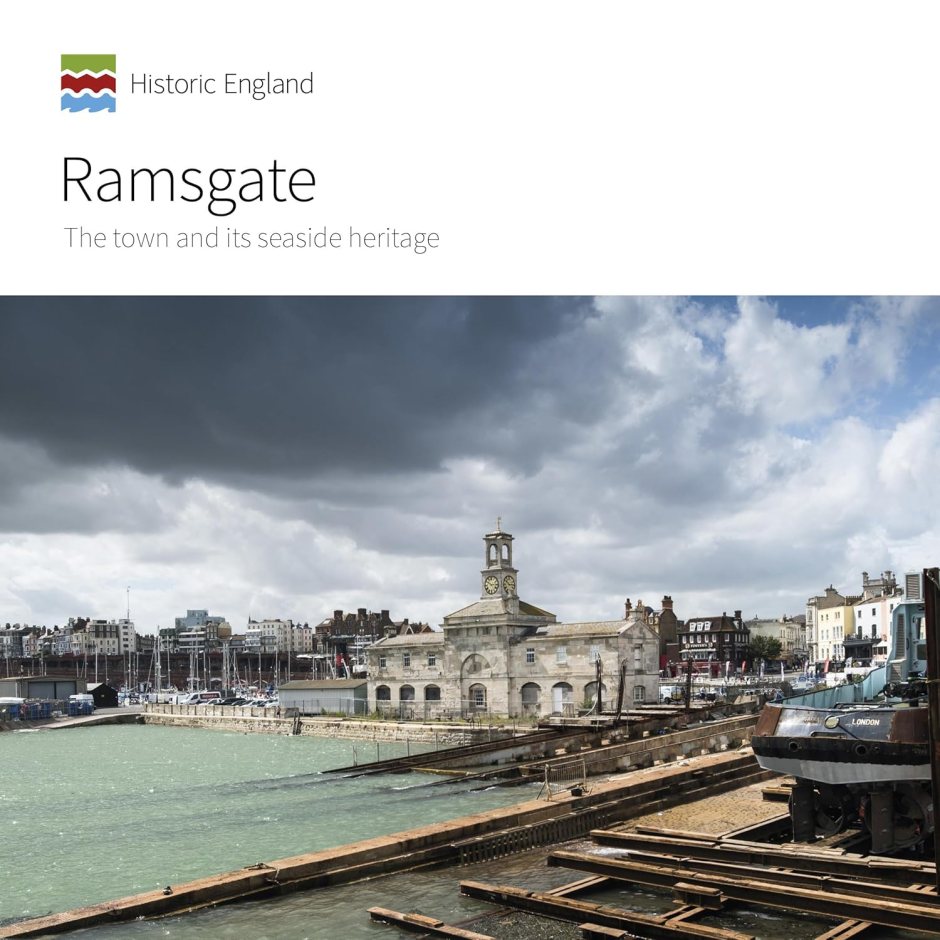
Ramsgate: The Town and Its Seaside Heritage by Geraint Franklin, with Nick Dermott and Allan Brodie

Read the review (requires subscription) by Robb Robinson in the November 2024 issue of the IJMH

https://journals.sagepub.com/doi/abs/10.1177/08438714241272588

A description of the book is available here:

https://www.liverpooluniversitypress.co.uk/doi/book/10.3828/9781789621891

For over 250 years people have headed to Ramsgate for a day at the seaside – and discovered much more in the process. This book charts Ramsgate’s transformation from quiet fishing village to a ‘harbour of refuge’ and seaside resort, driven by the town’s strategic position on the east Kent coast. Once visited by a handful of intrepid sea bathers, improvements in passenger boats and the arrival in 1846 of the railway opened up the resort to thousands of holidaymakers, necessitating new bathing facilities and entertainment venues. Early 19th century Ramsgate was patronised by royalty and boasted up-to-date terraces, crescents and squares. The town attracted minority faith communities, represented by the synagogue completed in 1833 for Sir Moses Montefiore and A. W. N. Pugin’s Roman Catholic church of St Augustine (1845-50).

This wide-ranging, accessible study tells the story of Ramsgate’s rich maritime and seaside heritage. It also profiles the challenges and opportunities that the town faces today in seeking to redefine itself as an attractive place to visit, live and work. Ramsgate: the town and its seaside heritage combines documentary research with insights derived from the town’s fascinating architectural heritage, illustrated with new and archival photographs.

Opium, intra-Asian trade and the commercial world of Batavia

“The Amfioen Societëit (1745–1794): Opium, intra-Asian trade and the commercial world of Batavia in the eighteenth century” by Noelle Nadiah Richardson in the November 2024 issue of the IJMH

Read it in open access at https://doi.org/10.1177/08438714241275569

This article analyses the emergence of the Amfioen Societëit (1745–1794) and its impact on the market for opium in eighteenth-century Java. It engages with a limited body of historiography to challenge assumptions that the Societëit was a wholly colonial institution designed to serve an elite – namely, European – set of interests. In reassessing how the Societëit worked in theory and in practice, it is argued that this institution was born from the necessary collaborative engagement of a European and a local commercial class with different but vested interests in the opium trade. Moreover, the article situates the Societëit among other finance institutions that existed in eighteenth-century Java to serve the credit needs of the local commercial milieu. In doing so, it lays the foundations for a deeper and more nuanced history of the opium trade and the local economy of early modern Java in a period about which very little is known.

A history of Indian Travelling Ayahs

Waiting on Empire: A History of Indian Travelling Ayahs in Britain by Arunima Datta

Read the review (requires subscription) by Jo Stanley in the November 2024 issue of the IJMH

https://journals.sagepub.com/doi/abs/10.1177/08438714241272581

A description of the book is available here:

The expansion of the British Empire facilitated movement across the globe for both the colonizers and the colonized. Waiting on Empire focuses on a largely forgotten group in this story of movement and migration: South Asian travelling ayahs (servants and nannies), who travelled between India and Britain and often found themselves destitute in Britain as they struggled to find their way home to South Asia.

Delving into the stories of individual ayahs from a wide range of sources, Arunima Datta illuminates their brave struggle to assert their rights, showing how ayahs negotiated their precarious employment conditions, capitalized on social sympathy amongst some sections of the British population, and confronted or collaborated with various British institutions and individuals to demand justice and humane treatment.

In doing so, Datta re-imagines the experience of waiting. Waiting is a recurrent human experience, yet it is often marginalized. It takes a particular form within complex bureaucratized societies in which the marginalized inevitably wait upon those with power over them. Those who wait are often discounted as passive, inactive victims. This book shows that, in spite of their precarious position, the travelling ayahs of the British empire were far from this stereotype.

Unfree labour in the Indian Ocean

Margaret E. Schotte writes in the latest issue of the IJMH on “‘Belonging to the Company’: Transporting and documenting unfree labour in the Indian Ocean, 1719–1790”

Read it in open access at https://doi.org/10.1177/08438714241272583

Over the course of the eighteenth century, French East India Company ships carried numerous sailors, soldiers, passengers and unfree labourers to and from various ports of trade in the Indian Ocean. Although European merchant companies developed extensive documenting systems, certain elements received little attention in the records. When it came to tracking unfree labourers, Company employees used terminology with ambiguous meanings and categories that were codified in the Atlantic context and therefore not initially applicable in the Indian Ocean. In order for historians to interpret these records more accurately, this article reviews specific terminology and pertinent French legislation about racialized labourers. This contextual information helps to uncover previously overlooked groups of unfree labourers working for – and, at times, trying to escape from – the French East India Company in the Indian Ocean and beyond.

Gender at Sea 

Gender at Sea by Djoeke van Netten et al., eds.

Read the review (requires subscription) by Valerie Burton in the November 2024 issue of the IJMH

https://journals.sagepub.com/doi/abs/10.1177/08438714241272691

A description of the book is available here:

https://verloren.nl/Webshop/Detail/catid/204/eid/58732/gender-at-sea

For centuries seafaring people thought that the presence of women on board would mean bad luck: rough weather, shipwreck, and other disasters were sure to follow. Because of these beliefs and prejudices women were supposedly excluded from the maritime domain. In the field of maritime history too, the ship and the sea have predominantly been perceived as a space for men. This volume of the Yearbook of Women’s History challenges these notions. It asks: to what extent were the sea and the ship ever male-dominated and masculine spaces? How have women been part of seafaring communities, maritime undertakings, and maritime culture? How did gender notions impact life on board and vice versa? From a multidisciplinary perspective, this volume moves from Indonesia to the Faroe Islands, from the Mediterranean to Newfoundland; bringing to light the presence of women and the workings of gender on sailing, whaling, steam, cruise, passenger, pirate, and navy ships. As a whole it demonstrates the diversity and the agency of women at sea from ancient times to the present day.

SlaveVoyages database and the Indian Ocean

Read “Is the SlaveVoyages database useful for scholars of slave trading in the wider Indian Ocean World?” by David Eltis in the latest issue of the IJMH (requires subscription)

https://doi.org/10.1177/08438714241272611

Abstract

Assessing the differences between scholarly collaboration on slave trading in the Atlantic World, on the one hand, and similar activities in the wider Indian Ocean, on the other, needs to begin with an assessment of the relative importance of slave trading in the two oceans. Both oceans saw a maritime slave trade that drew heavily on sub–Saharan Africa. But while almost all captives arriving in the Americas came from Africa, in the Indian Ocean World there was a significant, probably majority, traffic in non-Africans, especially if one includes the South China Sea, as indeed most assessments of the Indian Ocean World slave trade do. Focusing on Africa alone initially, scholars who have made their name in the Atlantic World have tended to support the idea that the combined numbers of the Sahara Desert and Indian Ocean slave trade over two millennia were about the same as the volume of the transatlantic slave trade in its 360 years of existence.