The curse of the Somers

The Curse of the Somers: The Secret History behind the U.S. Navy’s Most Infamous Mutiny by James P. Delgado
https://global.oup.com/academic/product/the-curse-of-the-somers-9780197575222
A detailed and riveting account of the U.S. Navy’s greatest mutiny and its wide-ranging cultural and historical impact
The greatest controversy in the history of the U.S. Navy of the early American Republic was the revelation that the son of the Secretary of War had seemingly plotted a bloody mutiny that would have turned the U.S. brig Somers into a pirate ship. The plot discovered, he and his co-conspirators were hastily condemned and hanged at sea.

The repercussions of those acts brought headlines, scandal, a fistfight at a cabinet meeting, a court martial, ruined lives, lost reputations, and tales of a haunted ship “bound for the devil” and lost tragically at sea with many of its crew. The “Somers affair” led to the founding of the U.S. Naval Academy and it remains the Navy’s only acknowledged mutiny in its history. The story also inspired Herman Melville’s White-Jacket and Billy Budd. Others connected to the Somers included Commodore Perry, a relation and defender of the Somers’ captain Mackenzie; James Fenimore Cooper, whose feud with the captain, dating back to the War of 1812, resurfaced in his reportage of the affair; and Raphael Semmes, the Somers’ last caption who later served in the Confederate Navy.

The Curse of the Somers is a thorough recreation of this classic tale, told with the help of recently uncovered evidence. Written by a maritime historian and archaeologist who helped identify the long-lost wreck and subsequently studied its sunken remains, this is a timeless tale of life and death at sea. James P. Delgado re-examines the circumstances, drawing from a rich historical record and from the investigation of the ship’s sunken remains. What surfaces is an all-too-human tale that resonates and chills across the centuries.

Read the review by Steven Pfaff in the August 2024 issue of the IJMH (requires subscription)
https://doi.org/10.1177/08438714241261798

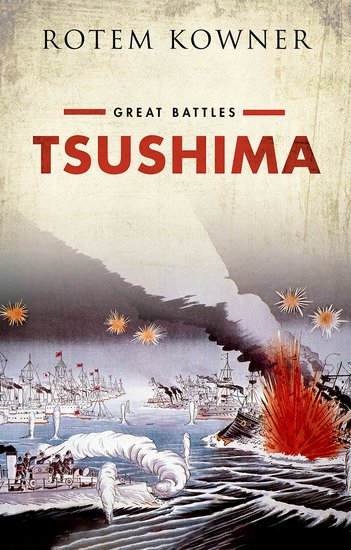
The Battle of Tsushima

https://global.oup.com/academic/product/tsushima-9780198831075

Tsushima by Rotem Kowner

The Battle of Tsushima was the most decisive naval engagement in the century that elapsed since the Battle of Trafalgar in 1805.

Although these two battles are often compared, the Battle of Tsushima, in which the Japanese Imperial Navy defeated the Russian Imperial Navy, was also unprecedented in many ways. It marks the first naval victory of an Asian power over a major European power; the most devastating defeat suffered by the Imperial Russian Navy in its entire history; and the only truly decisive engagement between two battleship fleets in modern times.

In addition, the Battle of Tsushima was also the most decisive naval engagement of the Russo-Japanese War and one that exerted a major impact on the course of that war. Its impact was so dramatic, in fact, that the two belligerents concluded a peace agreement within three months of the battle’s conclusion. At the same time, and because it involved two of the world’s largest fleets, the influence this battle exerted was both far reaching and long standing. In subsequent years, the symbolic victory of an “Eastern” power over Tsarist Russia using modern technology was feared and celebrated in both the Western and the Colonial worlds. Similarly, and in both Japan and Russia, the Battle of Tsushima had a prolonged impact on their respective navies as well as on their geopolitical ambitions in Asia and beyond.

By relying on a diverse array of primary sources, this book examines the battle in depth and is the first to offer a penetrating analysis of its global impact as well as the way its memory has evolved in both Japan and Russia.

Read the review by Sofya Anisimova in the August 2024 issue of the IJMH (requires subscription)

https://doi.org/10.1177/08438714241264536

The end of the slave trade

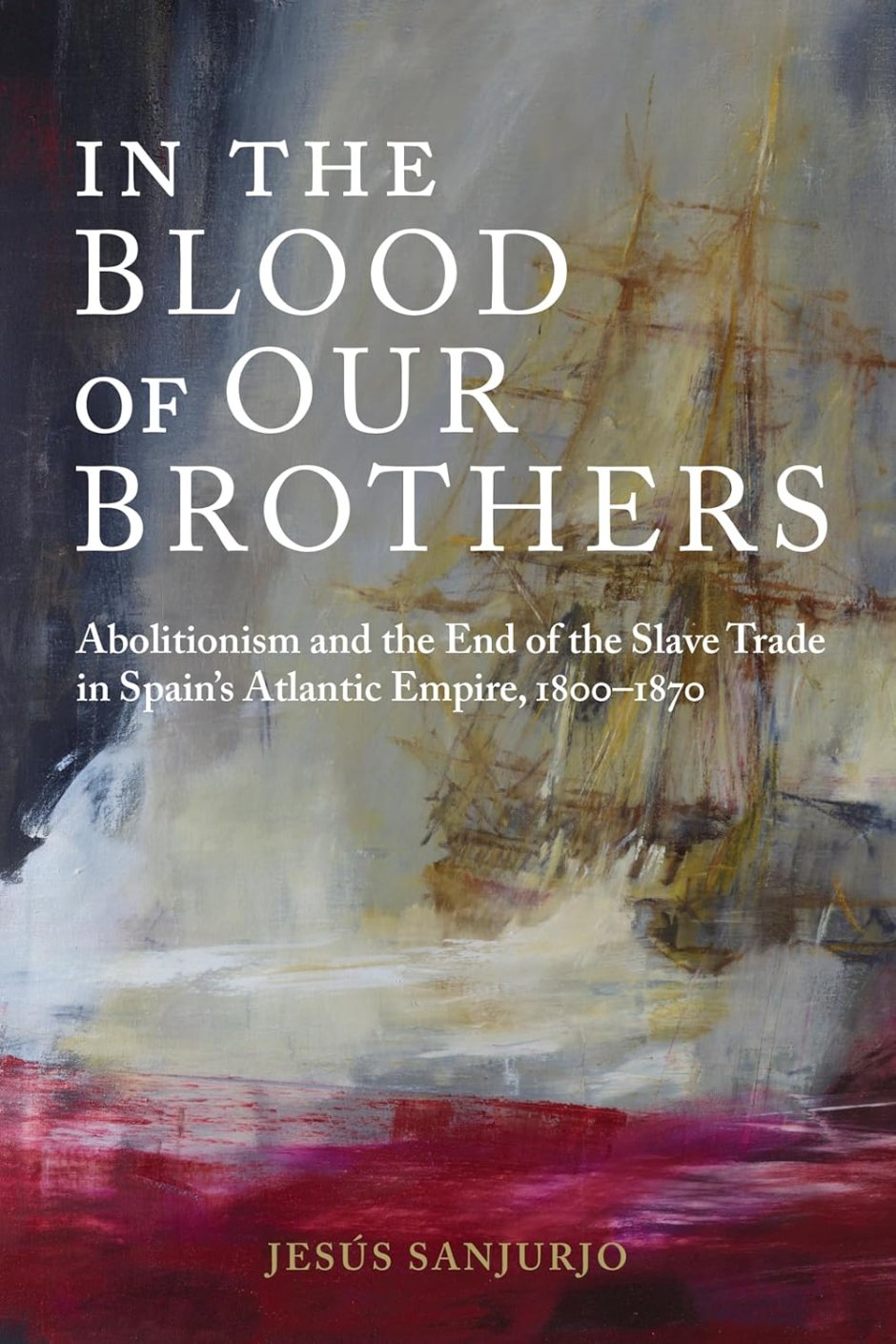
In the Blood of Our Brothers: Abolitionism and the End of the Slave Trade in Spain’s Atlantic Empire, 1800–1870 by Jesús Sanjurjo
Throughout the nineteenth century, very few people in Spain campaigned to stop the slave trade and did even less to abolish slavery. Even when some supported abolition, the reasons that moved them were not always humanitarian, liberal, or egalitarian. How abolitionist ideas were received, shaped, and transformed during this period has been ripe for study. Jesús Sanjurjo’s In the Blood of Our Brothers: Abolitionism and the End of the Slave Trade in Spain’s Atlantic Empire, 1800–1870 provides a comprehensive theory of the history, the politics, and the economics of the persistence and growth of the slave trade in the Spanish empire even as other countries moved toward abolition.
Sanjurjo privileges the central role that British activists and diplomats played in advancing the abolitionist cause in Spain. In so doing, he brings to attention the complex and uneven development of abolitionist and antiabolitionist discourses in Spain’s public life, from the beginning of the nineteenth century to the end of the transatlantic trade. His delineation of the ideological and political tension between Spanish liberalism and imperialism is crucial to formulating a fuller explanation of the reasons for the failure of anti–slave trade initiatives from 1811 to the 1860s. Slave trade was tied to the notion of inviolable property rights, and slavery persisted and peaked following three successful liberal revolutions in Spain.
https://www.uapress.ua.edu/9780817321055/in-the-blood-of-our-brothers/
Read the review by Lloyd Belton in the August 2024 issue of the IJMH
https://doi.org/10.1177/08438714241261801

Hunting the devil fish

Lynn B. Harris on “A dangerous and exhausting struggle’: Hunting the devil fish of coastal North and South Carolina from the colonial era to the early decades of the 1900s”

Scientists, hunters and business entrepreneurs in the Carolinas all had mutual interests in giant manta rays (Mobula birostris) during the early decades of the 1900s. Eastern-seaboard coastal communities called them devil fish, because of the horn-shaped fins on their head. Although the Ocean Leather Company in Morehead City primarily processed shark-skin leather, it also experimented with the skins of rays and other sea animals for the manufacture of a great variety of consumer products. Articles were written for scientific journals and ray specimens were contributed to national institutions like the American Museum of Natural History. Local fishermen, along with celebrities like the US president, Teddy Roosevelt, harpooned devil fish in Cape Lookout while marvelling at their grace and strength, breaching up to six feet above the water’s surface. Beaufort planter William Elliott presented many accounts of this fantastic sea creature, with vivid stories of enslaved African harpooners jumping off boats onto the backs of giant manta rays. This research combines historical accounts and images, newspaper advertisements and talks at local explorer clubs to illustrate case studies of the community’s obsession with collecting, cooking, hunting and conquering rays as an important component of maritime leisure and environmental history. It concludes by addressing international examples of subsistence, recreational and industrial fishing, and its impacts on manta rays.

Check it (requires subscription) at this link:

https://doi.org/10.1177/08438714241266441

The Corporations That Built British Colonialism

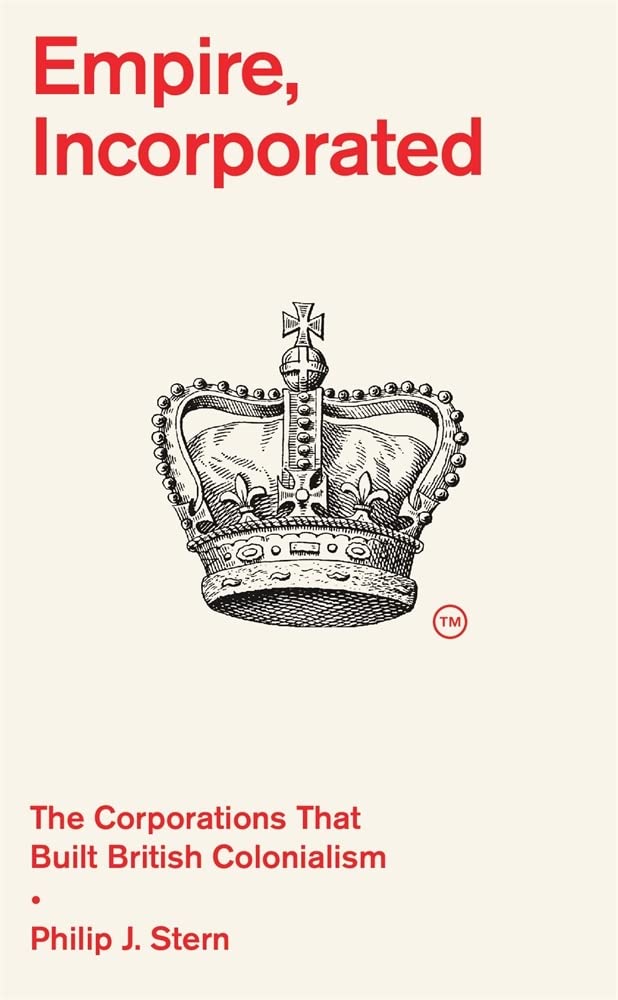
Empire, Incorporated: The Corporations That Built British Colonialism by Philip J. Stern
Across four centuries, from Ireland to India, the Americas to Africa and Australia, British colonialism was above all the business of corporations. Corporations conceived, promoted, financed, and governed overseas expansion, making claims over territory and peoples while ensuring that British and colonial society remained invested, quite literally, in their ventures. Colonial companies were also relentlessly controversial, frequently in debt, and prone to failure. The corporation was well-suited to overseas expansion not because it was an inevitable juggernaut but because, like empire itself, it was an elusive contradiction: public and private; person and society; subordinate and autonomous; centralized and diffuse; immortal and precarious; national and cosmopolitan—a legal fiction with very real power.
Breaking from traditional histories in which corporations take a supporting role by doing the dirty work of sovereign states in exchange for commercial monopolies, Philip Stern argues that corporations took the lead in global expansion and administration. Whether in sixteenth-century Ireland and North America or the Falklands in the early 1980s, corporations were key players. And, as Empire, Incorporated makes clear, venture colonialism did not cease with the end of empire. Its legacies continue to raise questions about corporate power that are just as relevant today as they were 400 years ago.
Challenging conventional wisdom about where power is held on a global scale, Stern complicates the supposedly firm distinction between private enterprise and the state, offering a new history of the British Empire, as well as a new history of the corporation.
https://www.hup.harvard.edu/books/9780674988125
Read the review by Gijs Dreijer in the August 2024 issue of the IJMH
https://doi.org/10.1177/08438714241261804

Norwegian and Allied seafarers in WW2

Bjørn Tore Rosendahl writes on “Semi-militarized in war and lack of recognition in peace: Norwegian and other Allied seafarers in the Second World War”

Ship transport was a decisive factor for the outcome of the Second World War and resulted in many casualties among merchant seafarers. A lesser-known consequence of the war was the challenges to the seafarers’ position as civilians, not least through the militarization of merchant ships. This article investigates how this took place and its consequences during and after the war. Both the seafarers’ questionable legal status in relation to the rules of war and the character of their situation are analysed. This is done by studying how the wartime seafarers were treated by their governments, the enemies’ perspective and the seafarers’ own identity, using empirical examples from the Norwegian and other Allied nations’ merchant fleets. An unclear and changing position between being a military and a civilian person, probably contributed to the lack of recognition of the seafarers’ long and dangerous wartime effort in the post-war era.

Check it (requires subscription) at this link:

https://doi.org/10.1177/08438714241261828

The school of navigation in Svendborg

“From a free horizon to autonomous ships: The School of Navigation in Svendborg and imagined maritime futures, 1865–2023” by Nils Valdersdorf Jensen

As navigation developed from the nineteenth century onwards so did the education of navigators in Svendborg, the heartland of maritime Denmark. Svendborg’s School of Navigation has occupied three different buildings, each of which was built for the purpose of navigational education. The buildings from 1865, 1952 and 2023 were all designed according to the technological needs of the current time but also reflected visions of the maritime future. The aim of this article is to use the schools, their architecture and their educational practices to decipher the imagined maritime futures in Svendborg from 1865 to 2023. It is found that the sense of future change has grown stronger as the schools have changed, from valuing a free horizon and sextants to preparing students for autonomous ships.

Check it (requires subscription) at this link:

https://doi.org/10.1177/08438714241261825

The voyage of Lusitania

Mark Howards published an article on “The voyage of the London whaler Lusitania, 1826–1829”

The British whaling ship Lusitania left London in 1826 on a three-year voyage to the South Seas. During the course of its long voyage, the vessel spent much of its time in the waters off the Indonesian archipelago and among the islands of western Melanesia. British whalers had been driven to this challenging region because sperm whales had been severely depleted in other less difficult whaling grounds. In those tropical waters, the hot climate, endemic diseases and high death rate among the crew, as well as the routine dangers of the trade, were to try the Lusitania and her crew to the utmost. One of them kept a journal during the voyage. It chronicles the many challenges faced by this and other vessels working this whaling ground, which until recent times has been poorly documented.

Check it out (requires subscription) at this link:

https://doi.org/10.1177/08438714241262671

British Slaves and Barbary Corsairs, 1580–1750 by Bernard Capp

British Slaves and Barbary Corsairs is the first comprehensive study of the thousands of Britons captured and enslaved in North Africa in the early modern period, an issue of intense contemporary concern but almost wholly overlooked in modern histories of Britain. The study charts the course of victims’ lives from capture to eventual liberation, death in Barbary, or, for a lucky few, escape. After sketching the outlines of Barbary’s government and society, and the world of the corsairs, it describes the trauma of the slave-market, the lives of galley-slaves and labourers, and the fate of female captives. Most captives clung on to their Christian faith, but a significant minority apostatized and accepted Islam. For them, and for Britons who joined the corsairs voluntarily, identity became fluid and multi-layered. Bernard Capp also explores in depth how ransoms were raised by private and public initiatives, and how redemptions were organised by merchants, consuls, and other intermediaries. With most families too poor to raise any ransom, the state came under intense pressure to intervene. From the mid-seventeenth century, the navy played a significant role in ‘gunboat diplomacy’ that eventually helped end the corsair threat. The Barbary corsairs posed a challenge to most European powers, and the study places the British story within the wider context of Mediterranean slavery, which saw Moors and Christians as both captors and captives.

Read the review by Jake Dyble in the August 2024 issue of the IJMH
https://doi.org/10.1177/08438714241261822

Learning seamanship in Europe

Karel Davids writes about “Changing ways to learn seamanship in Europe circa 1600–1920: Books, institutions and sociopolitical contexts” in the August 2024 issue of the IJMH.

Seamanship is the art of handling and manoeuvring a ship. For centuries, seamanship skills were transmitted not in writing, but by hands-on instruction on board. However, between circa 1600 and 1920, this ‘tacit’ knowledge was increasingly made ‘explicit’ in printed literature. Why did this happen? To answer this question, this article analyses dozens of books on seamanship produced in Britain, France, Spain, the Netherlands and Italy. It discusses the different genres, the background of the authors and the intended reading publics. It shows that the transformation occurred almost simultaneously across Europe and that it was not triggered by technological change. The article argues that the explanation instead can be found in the rise of new institutions for the education and selection of seamen, which was linked with the growing aspirations of states and other organizations to gain more control over the quality of the personnel needed to man their ships.

Check it (requires subscription) at this link:

https://doi.org/10.1177/08438714241262174