Interdisciplinary Studies in Human-Environment Interactions in Watery Spaces

https://www.barpublishing.com/down-by-the-water.html

Waterways have been key factors in the development of societies from prehistoric times, particularly due to their role as vectors for cultural interactions, material exchange, and transmission of knowledge. The fluidity of these highways of transport and communications is tightly linked to the presence of transit points: spaces with unique geographical characteristics that acted as nodal points between different communities. Transit points are thus defined as places of intense social contacts, putting objects of physical geography into the domain of social sciences and humanities. The subject is challenging, as activities that happen in aquatic spaces seldom leave substantial archaeological traces behind. Nevertheless, by focusing on the intersection between humans and their environment down by the water, this book demonstrates what can be achieved by changing the research paradigm to one that fully embraces the nuances of the aquatic world, and especially the intricate connection between society and waterscapes.

Morgan Breene publishes a review in the May 2024 issue of the IJMH (subscription needed). You can read it at this link:

https://journals.sagepub.com/doi/abs/10.1177/08438714241241210

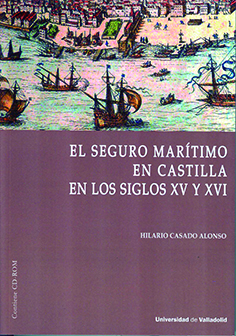
Maritime Insurance in Castile

The book studies trade and navigation at a global scale in the XV and XVI centuries based on an analysis of maritime insurance in Castile, a perspective which has hitherto scarcely been addressed by historiography. The author draws on research into numerous documents, prominent amongst which is the information contained in close to 20,000 insurance policies taken out in the aforementioned two centuries and which have been conserved in Spanish and foreign archives, particularly in the large Burgos exchange house. The various parts of the book examine the legal characteristics of maritime insurance, together with those related to reinsurance and life insurance. In addition, an analysis is provided of the various types of ships, as well as both the main and secondary routes, the volume and value of the cargo transported, the names and origin of those involved (ship-owners, merchants, shipping agents, commission agents…), the events and conflicts to emerge and how these were dealt with, the financial world of insurance and how insurance prices evolved. What results is a description of a vast maritime landscape revolving around the Iberian Peninsula, stretching from the Baltic to the Island of Chios, through Newfoundland, Latin-America, Africa and Asia, and which helps us to reconstruct the trade and port networks of the time. It also enables us to study another aspect of the finances of the Spanish Monarchy. In sum, it provides further insights into the economic and maritime history of Europe.

Montserrat Cachero publishes a review in the May 2024 issue of the IJMH (subscription needed). You can read it at this link:

https://journals.sagepub.com/doi/abs/10.1177/08438714241230402

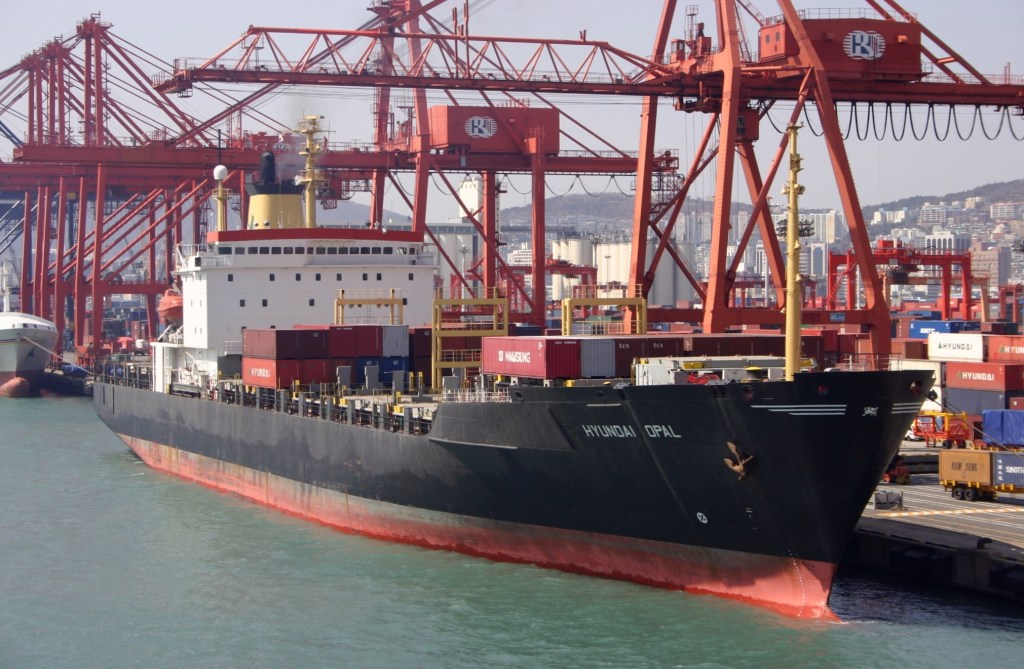
Korea’s shipping industry

“Overcoming the crisis in Korea’s shipping industry, 1980–1988” by S. June Kim was published in the May 2024 issue of the IJMH

Read it here (requires subscription): https://journals.sagepub.com/…/10.1177/08438714241236252

Korea’s shipping industry, which began to grow rapidly during the 1970s, faced a crisis in the early 1980s. The leading cause of the crisis was the significant slump in the shipping market caused by the second oil shock and the overcapacity of tonnages through the acquisition of second-hand vessels at a high price during the shipping boom in the early 1980s. The crisis in the shipping industry could have spread directly to the entire banking sector and led to a catastrophe in the national economy. The military government implemented the Shipping Industry Rationalization policy from 1983 to 1988 to prevent such a collapse of the national economy. This article reviews the cause of the shipping industry crisis in Korea in the 1980s and the achievements and limitations of the Shipping Industry Rationalization policy as a way of overcoming the crisis.

The Great Plague Scare

https://www.cambridge.org/…/56DFD428F80D070D6ACEEADD792…

The Great Plague Scare of 1720. Disaster and Diplomacy in the Eighteenth-Century Atlantic World, by Cindy Ermus

From 1720 to 1722, the French region of Provence and surrounding areas experienced one of the last major epidemics of plague to strike Western Europe. The Plague of Provence was a major disaster that left in its wake as many as 126,000 deaths, as well as new understandings about the nature of contagion and the best ways to manage its threat. In this transnational study, Cindy Ermus focuses on the social, commercial, and diplomatic impact of the epidemic beyond French borders, examining reactions to this public health crisis from Italy to Great Britain to Spain and the overseas colonies. She reveals how a crisis in one part of the globe can transcend geographic boundaries and influence society, politics, and public health policy in regions far from the epicentre of disaster.

Version 1.0.0

Marina Inì publishes a review in the May 2024 issue of the IJMH. Read it here (subscription needed):

https://journals.sagepub.com/…/10.1177/08438714241230392

The German naval strategy

“The German naval strategy for the Atlantic islands between 1940 and 1943”, by Juan José Díaz Benítez can be read (requires subscription) at this link:

https://journals.sagepub.com/…/10.1177/08438714241237614

Although the strategic value of the Spanish and Portuguese Atlantic islands for the Third Reich during the Second World War has been the subject of several studies, certain issues remain unknown. One is the link between the strategic re-evaluation of these islands and Spain and Portugal’s neutrality. The other is the role of the different Atlantic archipelagos in the German strategy after 1940. To respond to these questions, the author consulted primary sources in the Bundesarchiv-Militärarchiv and other archives elsewhere, as well as the most relevant bibliographical references. Worth highlighting among the conclusions is that the Spanish policy of non-belligerence significantly influenced German interests concerning the Atlantic islands during both the summer and autumn of 1940, as well as in later periods during the conflict.

A history of Lake Tanganyika

On the Frontiers of the Indian Ocean World. A History of Lake Tanganyika, c.1830-1890, by Philip Gooding,

This is the first interdisciplinary history of Lake Tanganyika and of eastern Africa’s relationship with the wider Indian Ocean World during the nineteenth century. Philip Gooding deploys diverse source materials, including oral, climatological, anthropological, and archaeological sources, to ground interpretations of the better-known, European-authored archive in local epistemologies and understandings of the past. Gooding shows that Lake Tanganyika’s shape, location, and distinctive lacustrine environment contributed to phenomena traditionally associated with the history of the wider Indian Ocean World being negotiated, contested, and re-imagined in particularly robust ways. He adds novel contributions to African and Indian Ocean histories of urbanism, the environment, spirituality, kinship, commerce, consumption, material culture, bondage, slavery, Islam, and capitalism. African peoples and environments are positioned as central to the histories of global economies, religions, and cultures.

Ned Bertz publishes a review in the May 2024 issue of the IJMH. Read it here (requires subscription): https://journals.sagepub.com/…/10.1177/08438714241230409

Travel experiences of Dutch missionary sisters

“Sisters at sea: Travel experiences of missionary sisters to the Dutch East Indies and Indonesia in the nineteenth and twentieth centuries” by Ron Brand and Kirsten Kamphuis is published in the May 2024 issue of the IJMH.

Read it here (subscription needed): https://journals.sagepub.com/…/10.1177/08438714231218525

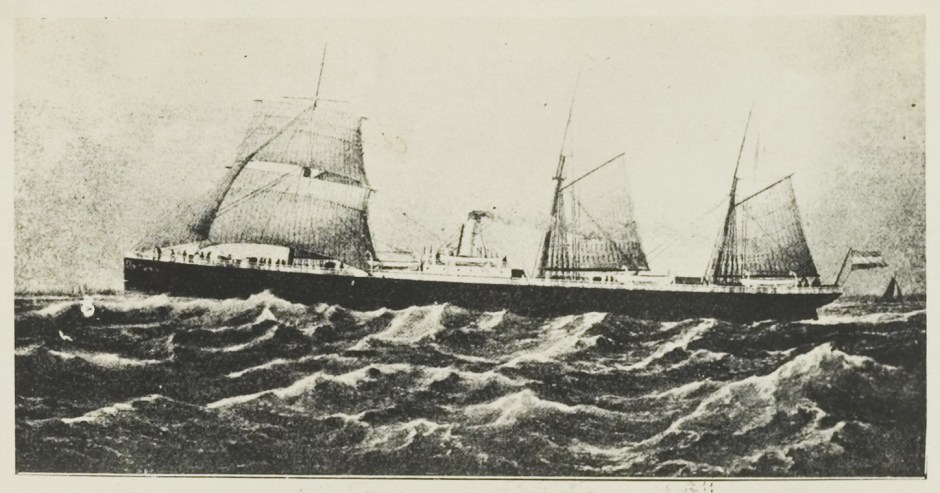
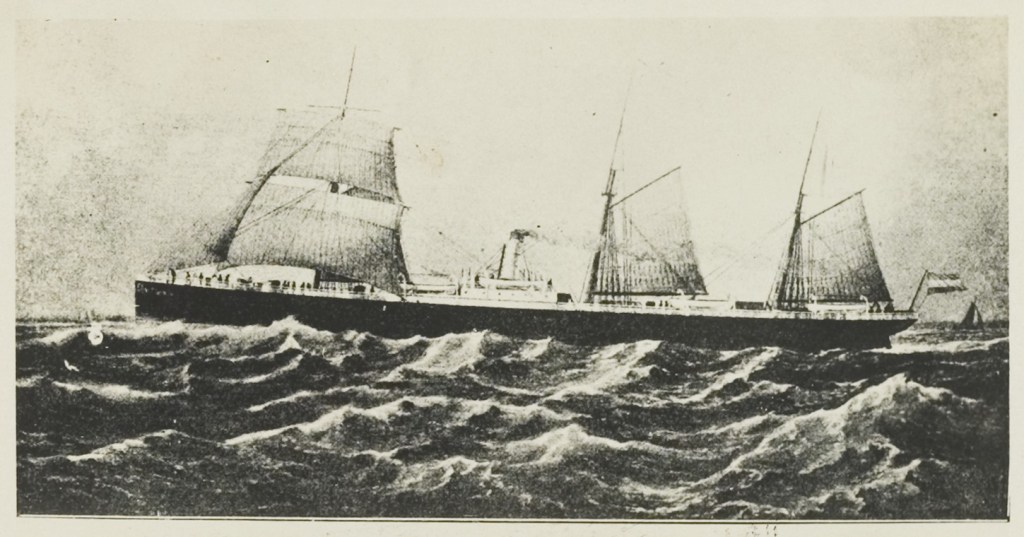
This article compares three travel reports of missionary sisters to the Dutch East Indies. The oldest travelogue was written by Mère Stanislas. In 1872 she travels with the SS Conrad of the Stoomvaart Maatschappij ‘Nederland’. The second travelogue was written by Sister Leonie Wilbers. She travels in 1900 on board the SS Bromo of the Rotterdamsche Lloyd. Finally, the third travelogue dates from the years 1955–1956. Sister Jeanne Marie (‘Jo’) Oomen travels with the MS Oranje of the Stoomvaart Maatschappij ‘Nederland’. These travelogues offer a fascinating look at life on board, seen through the eyes of three mission sisters over a period of about 80 years. What do the mission sisters write about the departure, the ship’s journey and life on board, the view of other cultures and the arrival at the mission post? What did they notice on board and what did they write about? Does this include a gender aspect?

Maritime musicians

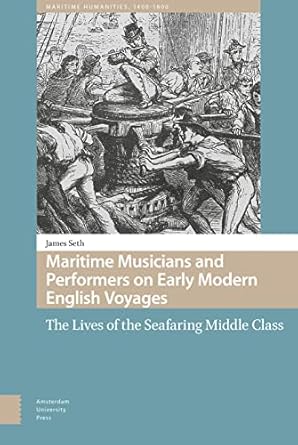
James Seth, Maritime Musicians and Performers on Early Modern English Voyages. The Lives of the Seafaring Middle Class

Maritime Musicians and Performers on Early Modern English Voyages aims to tell the full story of early English shipboard performers, who have been historically absent from conversations about English navigation, maritime culture, and economic expansion. Often described reductively in voyaging accounts as having one function, in fact maritime performers served many communicative tasks. Their lives were not only complex, but often contradictory. Though not high-ranking officers, neither were they lower-ranking mariners or sailors. They were influenced by a range of competing cultural practices, having spent time playing on both land and sea, and their roles required them to mediate parties using music, dance, and theatre as powerful forms of nonverbal communication. Their performances transcended and breached boundaries of language, rank, race, religion, and nationality, thereby upsetting conventional practices, improving shipboard and international relations, and ensuring the success of their voyages.

Mollie Carlyle writes a review in the May 2024 issue of the IJMH. Read it (subscription needed) at this link: https://journals.sagepub.com/…/10.1177/08438714241230408

The double capture of the Danish frigate Tranquebar

“The double capture of the Danish frigate Tranquebar in 1763” by Jorge Simón Izquierdo Díaz and Jørgen Mikkelsen in the May 2024 issue of the IJMH. Read it here (subscription needed):

https://journals.sagepub.com/…/10.1177/08438714241236113

This article discusses the capture of a single ship in 1763, which involved an unusually complicated sequence of events that illuminates the distinction between piracy and privateering. The vessel in question was the frigate Tranquebar, which belonged to the Danish Asiatic Company – a trading company that, in the years 1732–1772, had a monopoly over Danish shipping in Asia. The episode involving the Danish frigate, which ended up in Portuguese hands after its capture by Maratha ships, raises questions about the nature of piracy and prize law in the context of international relations between maritime powers in times of change.

Hard aground

Hard Aground. The Wreck of the USS Tennessee and the Rise of the US Navy, by Andrew C. A. Jampoler

Three intertwined stories that reveal the challenges faced by the US Navy in its evolution between the Civil War and the First World War.

Hard Aground brings together three intertwined stories documenting the US Navy’s strategic and matériel evolution from the end of Civil War through the First World War. These incidents had lasting consequences for how the navy would modernize itself throughout the rest of the twentieth century.

The first story focuses on the reconstruction of the US Navy following the swift and near-total dismantling of the Union Navy infrastructure after the Civil War. This reconstruction began with barely enough time for the navy’s campaigns in the Spanish-American War, and for its role in the First World War. Jampoler argues that the federal government discovered that the fleet requested by the navy, and paid for by Congress, was the wrong fleet. Focus was on battleships and cruisers rather than destroyers and other small combat vessels needed to hunt submarines and serve as convoy escorts.

The second story relates the short, tragic life of the USS Tennessee (later renamed Memphis), one of the steel-hulled ships of the new Armored Cruiser Squadron that was a centerpiece of the navy’s modernization effort. The USS Tennessee was ordered on two unusual missions in the early months of the First World War, long before the United States formally entered the war. These little-known missions and the ship’s shocking destruction in a storm surge in the Caribbean serve as the centerpiece of the story. Threaded through the narrative are biographical sketches of the principal players in the drama that unfolded following the ship’s demise, including two of Tennessee’s commanding officers: Vice Admiral Sims, who commanded the US Navy squadrons deployed to Europe in support of the Royal Navy; Rear Admiral William Caperton, who commanded the Caribbean squadron before the Memphis (formerly the Tennessee) was lost; Charles Pond, squadron commander during the wreck; and the American ambassador to the Ottoman court, President Wilson’s enthusiastic supporter, Henry Morgenthau.

Jampoler rounds out this fascinating account with the story of how the USS Tennessee’s destruction prompted fierce deliberations about the US Navy’s operations and chains of command for the remainder of the First World War and the high-level political wrangling inside the Department of the Navy immediately after the war, as civilian appointees and senior officers wrestled to reshape the department in their image.

John Jopling publishes a review in the May 2024 issue of the IJMH. Read it here (requires subscription): https://journals.sagepub.com/…/10.1177/08438714241231411