From Japan to the Yangtze River Delta

Read in the May 2025 issue of the IJMH (requires subscription) the article by Lin Yuju on the transformation of Taiwan’s sugar trade in the early Qing dynasty

Abstract:

In 1684, Taiwan became part of the Qing Empire. Initially, its external trade followed the traditions of the preceding Dutch East India Company (1624–1662) and Zheng-dynasty (1662–1684) periods, transporting deerskins and sugar to Japan to be sold in Nagasaki. However, during the Kangxi (1661–1722) era, civil and military officials who came to Taiwan seized large amounts of land or established official manors, competing with the local population for profits and controlling Taiwan’s major export commodity – sugar. Officials from Fujian (福建) Province, such as Shi Lang (施琅) and the Fujian supreme commander (zongdu, 總督), used various pretexts to divide the benefits of Taiwan’s trade with Japan among themselves; these included raising funds for the military or contributions towards the conquest of Taiwan. Shi Lang, who served as the commander-in-chief of the Fujian naval forces throughout his life, was based in Xiamen. He controlled Taiwan and the Penghu region, and he profited the most from the sugar-for-Japan trade. The Jinjiang maritime merchant group that was centred around Shi’s clan rose to prominence by seizing the opportunity. Not until the 1690s, around the time of Shi’s passing and under the influence of Qing-dynasty policies, did this trade gradually come into the hands of merchants from Jiangsu (江蘇) and Zhejiang (浙江). Japan’s imposition of trade restrictions further prompted Taiwan’s sugar market to turn towards the Yangtze River Delta. The ‘Taiwan ships’ that had been navigating the East Asian trade since the Zheng dynasty were transformed into ‘sugar ships’, focusing on trade between Taiwan and mainland China. Towards the end of the Kangxi era, the exchange of Taiwanese sugar for silk and cotton from the Yangtze River Delta marked the beginning of this new phase. Consequently, local maritime merchants based in Taiwan began to emerge.

https://journals.sagepub.com/doi/10.1177/08438714251322593

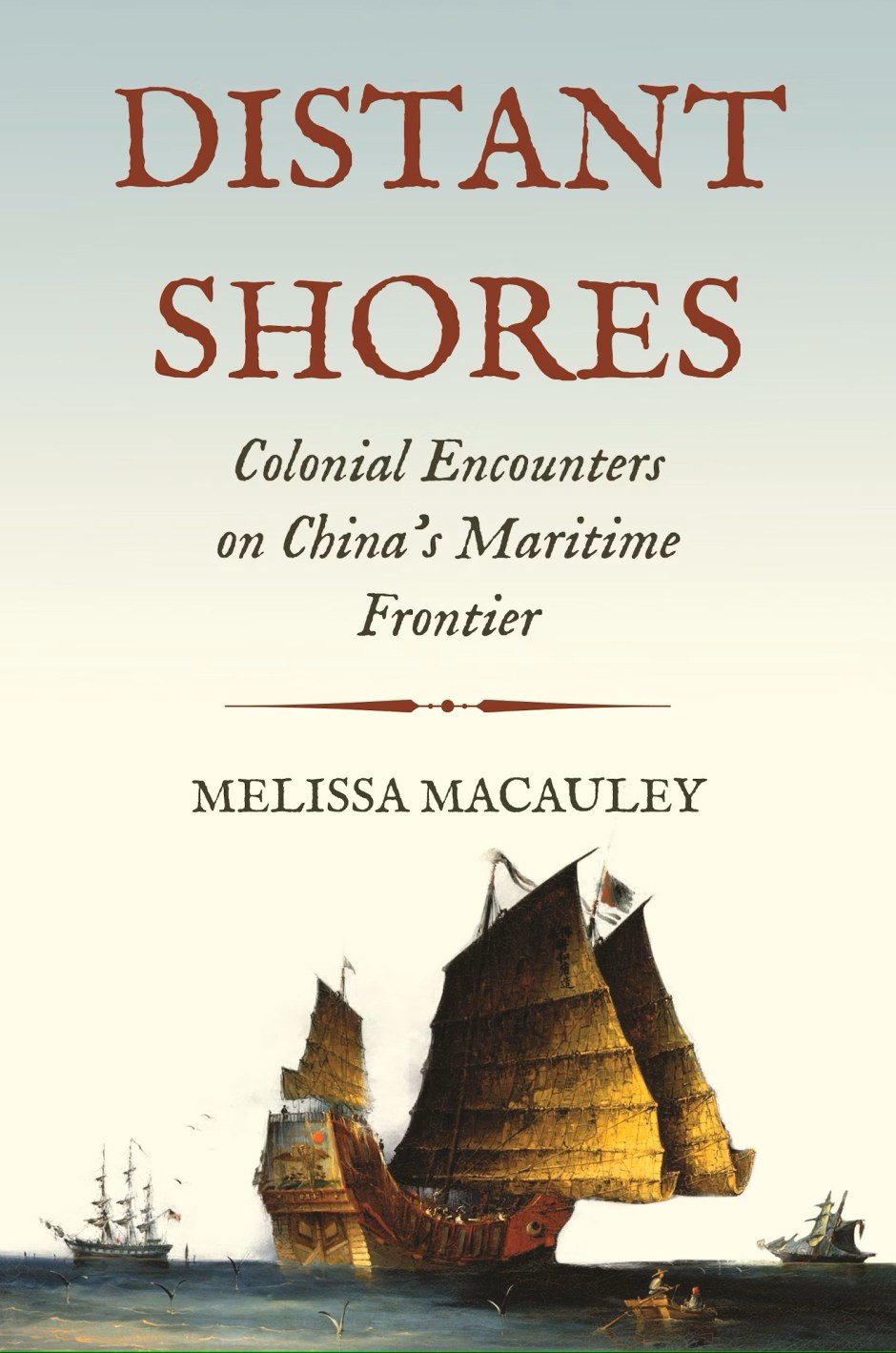
Distant Shores: Colonial Encounters on China’s Maritime Frontier

📖 Read in the May 2025 issue of the IJMH (requires subscription) the book review by Daria Dahpon Ho of Distant Shores: Colonial Encounters on China’s Maritime Frontier by Melissa Macauley
Book Abstract

China has conventionally been considered a land empire whose lack of maritime and colonial reach contributed to its economic decline after the mid-eighteenth century. Distant Shores challenges this view, showing that the economic expansion of southeastern Chinese rivaled the colonial ambitions of Europeans overseas.

In a story that dawns with the Industrial Revolution and culminates in the Great Depression, Melissa Macauley explains how sojourners from an ungovernable corner of China emerged among the commercial masters of the South China Sea. She focuses on Chaozhou, a region in the great maritime province of Guangdong, whose people shared a repertoire of ritual, cultural, and economic practices. Macauley traces how Chaozhouese at home and abroad reaped many of the benefits of an overseas colonial system without establishing formal governing authority. Their power was sustained instead through a mosaic of familial, fraternal, and commercial relationships spread across the ports of Bangkok, Singapore, Saigon, Hong Kong, Shanghai, and Swatow. The picture that emerges is not one of Chinese divergence from European modernity but rather of a convergence in colonial sites that were critical to modern development and accelerating levels of capital accumulation.

A magisterial work of scholarship, Distant Shores reveals how the transoceanic migration of Chaozhouese laborers and merchants across a far-flung maritime world linked the Chinese homeland to an ever-expanding frontier of settlement and economic extraction.

https://press.princeton.edu/…/9780691…/distant-shores…

Read the full book review here (requires subscription)

https://journals.sagepub.com/…/10.1177/08438714251332122

Mauritius and Madagascar in the eyes of the VOC. 

Read in the May 2025 issue of the IJMH (requires subscription) the article by Freek Loves on VOC perceptions of Mauritius and Madagascar in the early seventeenth century

Abstract:

This article examines what the VOC (Dutch East India Company) thought of Mauritius and Madagascar during the first half of the seventeenth century. Long depicted as backwaters of the overseas empire of the VOC, this article argues through the correspondence between the board of directors of the VOC in the Dutch Republic and the office of the governor-general in Batavia, and between them and senior Company personnel, that the Company engaged with Madagascar and Mauritius on a serious note and that both were considered important assets.

https://journals.sagepub.com/doi/10.1177/08438714251325200

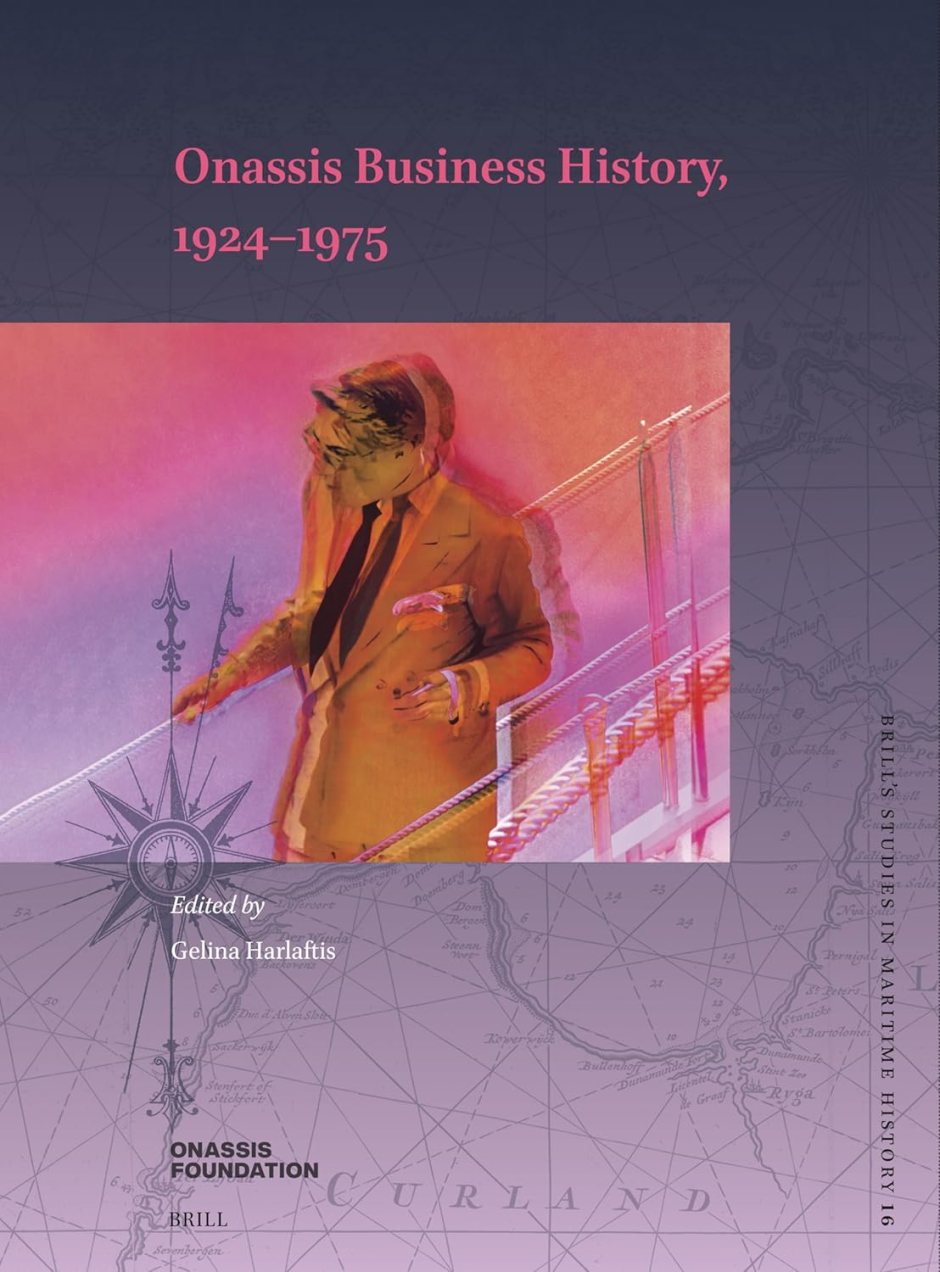
Onassis Business History, 1924–1975

Read in the May 2025 issue of the IJMH (requires subscription) the book review by Marc Levinson of Onassis Business History, 1924–1975, edited by Gelina Harlaftis.

Book Abstract

Aristotle Onassis was the most famous shipowner of the twentieth century. He became the archetype and image of the ship-owning magnate, the symbol of Greek enterprise on a global scale. What distinguished him from the rest was that he created the shipping business of the new global era, combining the European maritime tradition and the American institutions and resources. Almost all books written on Onassis focus on his lifestyle and personal life. This is the first book examining all aspects of his multi-faceted global business activities in the shipping, airline and oil industries. It is based on the newly-formed Onassis Archive comprising thousands of new and unpublished files of his core business.

https://brill.com/display/title/64382

Read the full book review here (requires subscription)

https://journals.sagepub.com/doi/abs/10.1177/08438714251332126

Shipwrecks, ius naufragii and diplomacy in the medieval Mediterranean

Read in the May 2025 issue of the IJMH (requires subscription) the article by Simone Lombardo on shipwrecks, ius naufragii, and diplomacy in the medieval Mediterranean

Abstract:

The ius naufragii, or the right to loot shipwrecks, represented a significant challenge in the medieval maritime world. The article examines the efforts of some Italian maritime cities that were at the forefront of abolishing this practice and protecting their shipwrecked goods from the twelfth century onward. These cities primarily used diplomatic measures, establishing treaties with other coastal powers to outlaw the practice across several areas of the Mediterranean. Legislative efforts are also reflected in the statutes of these communities. The recovery of shipwrecked goods was a complex practical endeavour, which could lead to case-by-case negotiations due to the persistent difficulty of enforcing the ban on ius naufragii. The article also questions the protective measures issued to maritime personnel, highlighting the collective response of merchant communities to address such a shared challenge.

https://journals.sagepub.com/doi/10.1177/08438714251330706

The maritime towns of Asturias

Read in the May 2025 issue of the IJMH (requires subscription) the review by Alfonso J. Hernández Rodríguez of Las villas marítimas del Principado de Asturias a finales del Antiguo Régimen (1750–1810)

Abstract of the book:

This comprehensive monograph examines the maritime towns of Asturias—jurisdictional centers along the coast—during six transformative decades (1750–1810). It explores population growth (notably in central coast towns like Gijón) and demographic crises, economic stagnation marked by fishing and manufacturing underdevelopment, limited trade and emigration, oligarchic municipal governance, and social poverty. The work relies on demographic data (Catastro de Ensenada, parish records), economic records, and a robust archival base, offering an in depth socio economic and institutional portrait of the region.

Read the full book review here (requires subscription)

https://journals.sagepub.com/doi/abs/10.1177/08438714251332111

Editorial of the May 2025 issue of the IJMH

Read the Editorial of the May 2025 issue of the IJMH.

Cátia Antunes and Michiel van Groesen write about the value of maritime history and policy

Abstract:

The study of maritime history and policy offers profound insights into the economic, political and social dynamics that have shaped global interactions across centuries. The articles presented in this issue bring together diverse perspectives on maritime trade, legal frameworks, diplomacy and the lived experiences of sailors, merchants and policymakers, enriching our understanding of seaborne activities from the medieval period to the present.

Read the entire editorial at

https://journals.sagepub.com/doi/full/10.1177/08438714251330348

The maritime towns of the Principality of Asturias at the end of the Ancien Régime (1750–1810)

Alfonso J. Hernández Rodríguez reviews the recent book “Las villas marítimas del Principado de Asturias a finales del Antiguo Régimen (1750–1810)” by Pablo Sánchez Pascual

Read it at this link (requires subscription):

https://journals.sagepub.com/doi/abs/10.1177/08438714251332111

“The maritime towns of the Principality of Asturias at the end of the Ancien Régime (1750–1810)” analyses the historical reality of the jurisdictional capitals of the urban councils of the Asturian coast and their ports during six crucial decades in the demographic, socio-economic and institutional spheres.

The population of these municipalities experienced significant growth until the last decade of the 18th century, especially on the central coast, where the largest towns and ports were located. Gijón stands out, with almost 4,000 inhabitants at the end of the period, although some of these towns barely reached 500. Economic backwardness was a reality in Asturias, witnessing rising poverty and intensifying emigration. Fishing was experiencing a profound crisis, with a lack of investment in ports, a backward fishing industry, and widespread poverty among fishermen, caused primarily by maritime registration. River fishing suffered from specific problems. The expansion of manufacturing was conditioned by different technical, organizational, and investment circumstances. Neither the textile sector centered on linen nor traditional iron and steel industry were able to lead Asturian industrialization. The failure of the latter also played a role in the lack of entrepreneurial spirit. Trade was limited, based on the export of raw materials and the import of manufactured goods. The number of large merchants operating from Asturias was also very small, living as rentiers. Nobility and clergy owned extensive rural estates. Gijón was the only port authorized for trade with America, which negatively affected the rest. The escalating war also contributed to the deterioration of the economic situation. Local noble oligarchies dominated municipal governments, where the degree of representation was very limited, and the Carolingian municipal reforms failed to achieve their objectives.

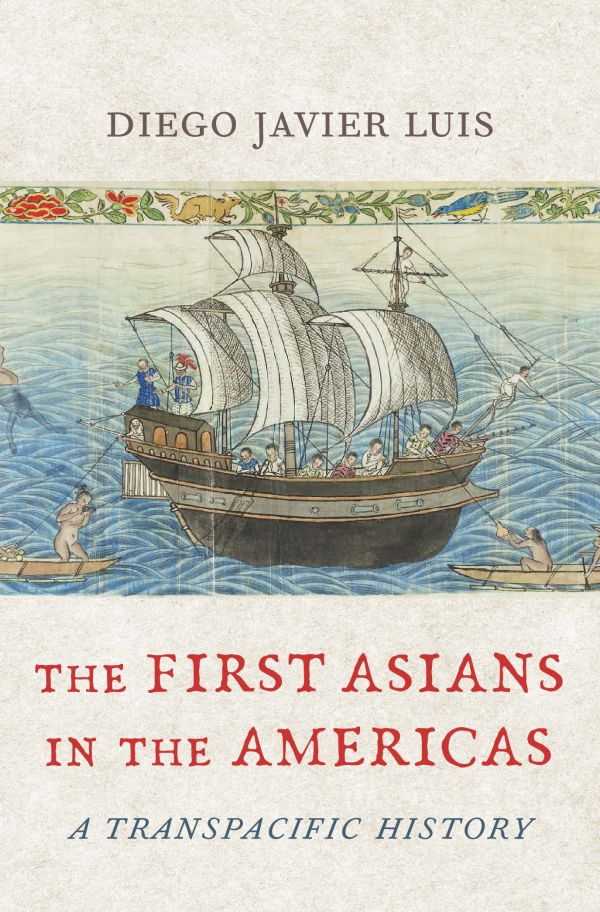
The First Asians in the Americas: A Transpacific History

“The First Asians in the Americas: A Transpacific History” by Diego Javier Luis was reviewed by Ricardo Padrón in the International Journal of Maritime History.

Read the review (requires subscription) at this link:

https://journals.sagepub.com/…/10.1177/08438714251333991

The definitive account of transpacific Asian movement through the Spanish empire—from Manila to Acapulco and beyond—and its implications for the history of race and colonization in the Americas.

Between 1565 and 1815, the so-called Manila galleons enjoyed a near-complete monopoly on transpacific trade between Spain’s Asian and American colonies. Sailing from the Philippines to Mexico and back, these Spanish trading ships also facilitated the earliest migrations and displacements of Asian peoples to the Americas. Hailing from Gujarat, Nagasaki, and many places in between, both free and enslaved Asians boarded the galleons and made the treacherous transpacific journey each year. Once in Mexico, they became “chinos” within the New Spanish caste system.

Diego Javier Luis chronicles this first sustained wave of Asian mobility to the early Americas. Uncovering how and why Asian peoples crossed the Pacific, he sheds new light on the daily lives of those who disembarked at Acapulco. There, the term “chino” officially racialized diverse ethnolinguistic populations into a single caste, vulnerable to New Spanish policies of colonial control. Yet Asians resisted these strictures, often by forging new connections across ethnic groups. Social adaptation and cultural convergence, Luis argues, defined Asian experiences in the Spanish Americas from the colonial invasions of the sixteenth century to the first cries for Mexican independence in the nineteenth.

The First Asians in the Americas speaks to an important era in the construction of race, vividly unfolding what it meant to be “chino” in the early modern Spanish empire. In so doing, it demonstrates the significance of colonial Latin America to Asian diasporic history and reveals the fundamental role of transpacific connections to the development of colonial societies in the Americas.

https://www.hup.harvard.edu/books/9780674271784

The United States, manganese nodules and the remaking of the deep seabed

Read in open access the recent article by Yoram Carboex, “An ocean of possibilities: The United States, manganese nodules and the remaking of the deep seabed”

https://doi.org/10.1177/08438714251334212

Abstract

This article follows US senator Lee Metcalf in his role as a promoter of deep-sea mining in the 1970s. By analysing his embrace of the deep sea as a new frontier for mineral resources, the author highlights a broader post-war development of the emergence of an imagination of the deep ocean as a potential solution for terrestrial problems. In the imagination of Metcalf and others, the deep sea came to be seen as a new and exciting space that could form an alternative to land-based mining. However, to make this possible, a clear legal framework regulating this unruly space was necessary. By the late 1970s, it had become clear that dreams of swiftly mining the deep seabed were futile. Nevertheless, as recent developments show, notions of the deep sea as a mineral-rich space have not disappeared but instead been temporarily dormant, to reappear now.