Pictures of professionalism and pride: Portraits of ship crews, circa 1870–1910

Anne Tove Austbø writes in the February issue of IJMH about “Pictures of professionalism and pride: Portraits of ship crews, circa 1870–1910”

Read the text at the link below (requires subscription)

https://journals.sagepub.com/…/10.1177/08438714241307420

Photographic portraits of merchant ship crews became a popular phenomenon in western coastal communities in the last decades of the nineteenth century. This article examines how the working collectives on ships in the northern European merchant fleet expressed their professional identities and maritime culture in photographs produced by commercial harbour photographers circa 1870–1910. It explores recurrent visual conventions and themes, as well as the original contexts of use and later circulation of the portraits. The study argues that the reason for their popularity was that ordinary crew members could, for the first time, articulate their professional status in new projections of seamanship, which also resonated with a long-established European maritime image world.

Maria Fusaro’s review of “Eastern Trade and the Mediterranean in the Middle Ages: Pegolotti’s Ayas–Tabriz Itinerary and Its Commercial Context” by Thomas Sinclair

Read (subscription needed) in the February 2025 issue of the IJMH Maria Fusaro’s review of “Eastern Trade and the Mediterranean in the Middle Ages: Pegolotti’s Ayas–Tabriz Itinerary and Its Commercial Context” by Thomas Sinclair

https://journals.sagepub.com/doi/abs/10.1177/08438714241306471

At the end of the High Middle Ages in Europe, with buying power and economic sophistication at a high, an itinerary detailing the toll stations along a commercial artery carrying eastern goods (from China, India and Iran) towards Europe was compiled, and later incorporated in the well-known trading manual of the Florentine bank official Pegolotti; Pegolotti was twice stationed in the city of Famagusta in Cyprus, which lay opposite the city of Ayas where the land route ended. The Il-Khanid capital, Tabriz in Iran, attracting expensive merchandise such as spices and silk from a variety of origins, was the road’s starting-point.

To demonstrate the importance of the route in its own time, parallel and contemporary routes in the Black Sea and the Levant are traced and the effect of trade on their cities noted. To compare the Ayas itinerary (1250s to 1330s) with previous periods the networks of commercial avenues in the previous period (1100-1250) and the subsequent one (1340s to 1500) are reconstructed. In each period the connection of east-west trade with the main movements of the European economy are fully drawn out, and the effects on the building history of the three main Italian cities concerned (Venice, Genoa and Florence) are sketched.

Attention then turns to the Pegolotti itinerary itself. The individual toll stations are identified employing a variety of means, such as names taken from the Roman itineraries (Peutinger Table and Antonine Itinerary) and archaeological data; this allows the course of the track to be followed through diverse topography to the city of Sivas, then across plains and through passes to Erzurum and finally to Tabriz. A picture is drawn of the urban history of each major city, including Sivas, Erzurum and Tabriz itself, and of the other towns along the route.

https://www.routledge.com/Eastern-Trade-and-the-Mediterranean-in-the-Middle-Ages-Pegolottis-Ayas-Tabriz-Itinerary-and-its-Commercial-Context/Sinclair/p/book/9781032083407?srsltid=AfmBOoqr07hG4Ii7bC_tqs3oNNi5X3Jx0BTd0s9nxTrGQBxLELkUEHMR

The Greenwich pensioners and Britain’s naval workforce, 1764–1869

Read in open access “The Greenwich pensioners and Britain’s naval workforce, 1764–1869” by Callum Easton in the February 2025 issue of the IJMH

https://journals.sagepub.com/…/10.1177/08438714241298350

The wealth of personal information recorded in the admissions books of Greenwich Hospital offers one of the most detailed portraits available of Britain’s essential naval workforce. This article uses a quinquennial sample of the men admitted to Greenwich Hospital between 1764 and 1864 to reconstruct the evolving composition of the Greenwich pensioners across this pivotal period of British naval ascendancy. Over this time, the prevailing features of the different cohorts of pensioners varied significantly, with differences between years of peace and war a driving factor. The characteristics of the admitted pensioners reflected the shifting fortunes and challenges encountered by the Royal Navy, and thereby offer a new perspective on important debates, such as the naval manning problem and the overall composition of naval manpower across this long period. The Greenwich Hospital population was far from static and its residents – experienced seamen – were among the decisive sinews of British power.

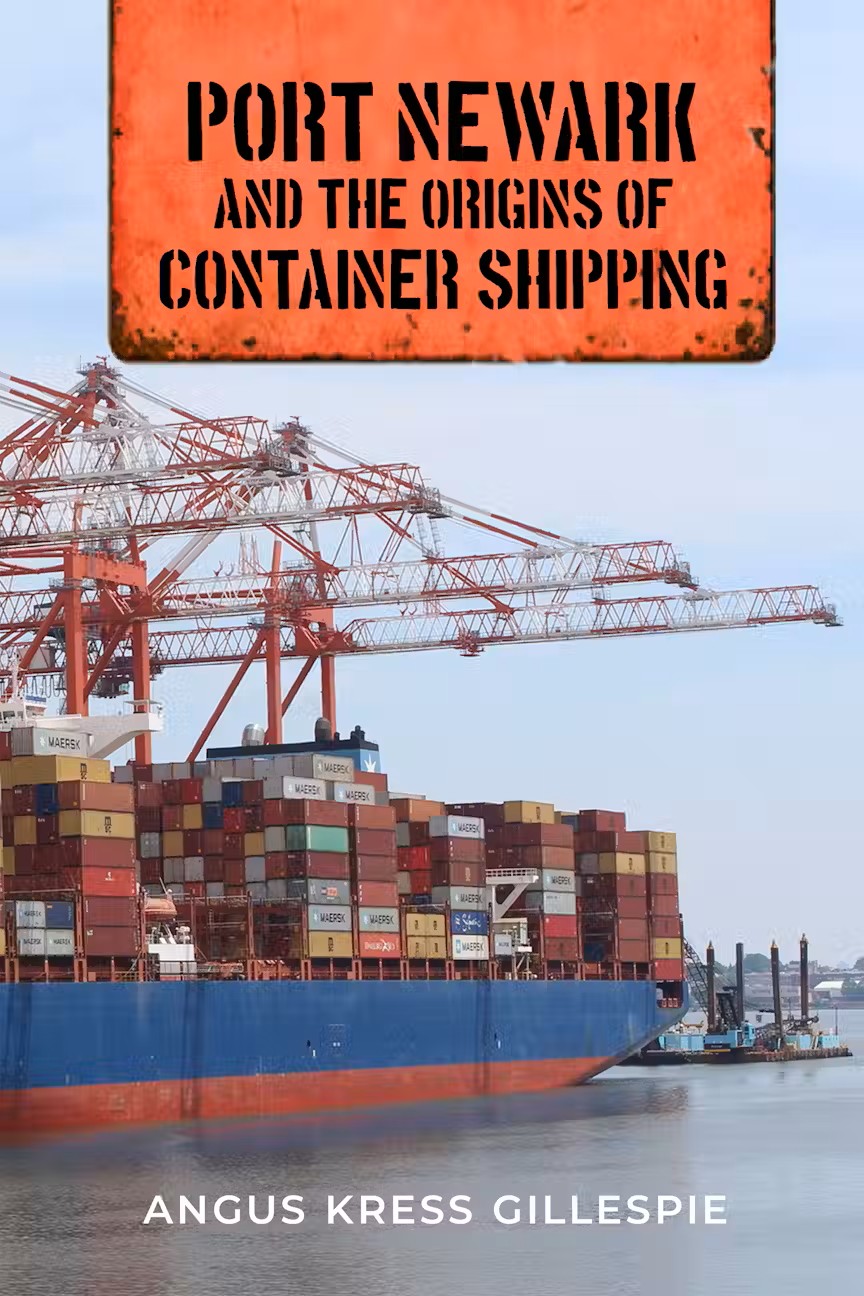
“Port Newark and the Origins of Container Shipping”

Ingo Heidbrink writes in the latest issue of the IJMH a review of “Port Newark and the Origins of Container Shipping” by Angus Kress Gillespie

Read it (requires subscription) at this link.

https://journals.sagepub.com/doi/abs/10.1177/08438714241306478

Port Newark and the Origins of Container Shipping, by Angus Kress Gillespie

Container shipping is a vital part of the global economy. Goods from all around the world, from vegetables to automobiles, are placed in large metal containers which are transported across the ocean in ships, then loaded onto tractor-trailers and railroad flatbeds. But when and where did this world-changing invention get started?

This fascinating study traces the birth of containerization to Port Newark, New Jersey, in 1956 when trucker Malcom McLean thought of a brilliant new way to transport cargo. It tells the story of how Port Newark grew rapidly as McLean’s idea was backed by both New York banks and the US military, who used containerization to ship supplies to troops in Vietnam. Angus Gillespie takes us behind the scenes of today’s active container shipping operations in Port Newark, talking to the pilots who guide the ships into port, the Coast Guard personnel who help manage the massive shipping traffic, the crews who unload the containers, and even the chaplains who counsel and support the mariners. Port Newark shines a spotlight on the unsung men and women who help this complex global shipping operation run smoothly.

Since McLean’s innovation, Port Newark has expanded with the addition of the nearby Elizabeth Marine Terminal. This New Jersey complex now makes up the busiest seaport on the East Coast of the United States. Some have even called it “America’s Front Door.” The book tells the story of the rapid growth of worldwide containerization, and how Port Newark has adapted to bigger ships with deeper channels and a raised bridge. In the end, there is speculation of the future of this port with ever-increasing automation, artificial intelligence, and automation.

“At the Baltic gate: Copenhagen’s role in international shipping in the latter half of the eighteenth century”

Yrjö Kaukiainen writes in the February 2025 issue of the IJMH an articles titled “At the Baltic gate: Copenhagen’s role in international shipping in the latter half of the eighteenth century”:

Check it out at this link (In open access)

https://journals.sagepub.com/doi/full/10.1177/08438714241298334

Abstract

In the late eighteenth century, Copenhagen was the second biggest urban centre in the Baltic Sea area. Its port was both an international terminal and the paramount shipping centre of the Danish–Norwegian monarchy. In the 1750s, over 80 per cent of arriving ships still came from the different parts of the monarchy, but this proportion diminished gradually to two-thirds and, in terms of tonnage, foreign vessels probably accounted for about 60 per cent of the incoming cargo at the beginning of the nineteenth century. Traffic in the port of Copenhagen grew slightly faster than overall shipping through the Danish Sound and, at the end of the period, Copenhagen was, on a par with St. Petersburg, one of the busiest ports in the Baltic Sea area. Its role in the commodity flows between eastern Baltic ports and western Europe remained modest, but in several other trades it became more closely integrated with international shipping.

The Liberty to Take Fish. Atlantic Fisheries and Federal Power in Nineteenth-Century America

Matthew McKenzie writes in the latest issue of the IJMH a review on this book.

Read it (requires subscription) at this link.

https://journals.sagepub.com/doi/abs/10.1177/08438714241306485

“The Liberty to Take Fish. Atlantic Fisheries and Federal Power in Nineteenth-Century America,” by Thomas Blake Earle

In The Liberty to Take Fish, Thomas Blake Earle offers an incisive and nuanced history of the long American Revolution, describing how aspirations to political freedom coupled with the economic imperatives of commercial fishing roiled relations between the young United States and powerful Great Britain.

The American Revolution left the United States with the “liberty to take fish” from the waters of the North Atlantic. Indispensable to the economic health of the new nation, the cod fisheries of the Grand Banks, the Bay of Fundy, and the Gulf of St. Lawrence quickly became symbols of American independence in an Atlantic world dominated by Great Britain.

The fisheries issue was a near-constant concern in American statecraft that impinged upon everything, from Anglo-American relations, to the operation of American federalism, and even to the nature of the marine environment. Earle explores the relationship between the fisheries and the state through the Civil War era when closer ties between the United States and Great Britain finally surpassed the contentious interests of the fishing industry on the nation’s agenda.

The Liberty to Take Fish is a rich story that moves from the staterooms of Washington and London to the decks of fishing schooners and into the Atlantic itself to understand how ordinary fishermen and the fish they pursued shaped and were, in turn, shaped by those far-off political and economic forces. Earle returns fishing to its once-central place in American history and shows that the nation of the nineteenth century was indeed a maritime one.

Editorial of IJMH 37/1

Check out, in open access, the Editorial by Cátia Antunes and Michiel van Groesen of the latest issue of the IJMH.

“Our journal continues to serve as a vital platform for fostering scholarship that explores the diverse and dynamic field of maritime history. We open this issue with a letter from the chair of the Executive Committee of the International Maritime History Association, Ingo Heidbrink.

In this issue, we are proud to present a collection of articles that highlight the richness of maritime studies, encompassing a range of geographies, time periods and thematic approaches. These contributions reflect the ongoing commitment of our global community of scholars to advancing our understanding of the maritime world’s pivotal role in shaping human history.”

Read more at this link: https://journals.sagepub.com/doi/full/10.1177/08438714241306500

The Global Role of Asia’s Great Archipelago

“Empire of the Winds: The Global Role of Asia’s Great Archipelago” by Philip Bowring

Read the review (requires subscription) by Tristan Mostert in the November 2024 issue of the IJMH

https://journals.sagepub.com/doi/abs/10.1177/08438714241274974

A description of the book is available here:

https://www.bloomsbury.com/uk/empire-of-the-winds-9781788314466/

Nusantaria – often referred to as ‘Maritime Southeast Asia’ – is the world’s largest archipelago and has, for centuries, been a vital cultural and trading hub. Nusantara, a Sanskrit, then Malay, word referring to an island realm, is here adapted to become Nusantaria – denoting a slightly wider world but one with a single linguistic, cultural and trading base. Nusantaria encompasses the lands and shores created by the melting of the ice following the last Ice Age. These have long been primarily the domain of the Austronesian-speaking peoples and their seafaring traditions. The surrounding waters have always been uniquely important as a corridor connecting East Asia to India, the Middle East, Europe and Africa. In this book, Philip Bowring provides a history of the world’s largest and most important archipelago and its adjacent coasts. He tells the story of the peoples and lands located at this crucial maritime and cultural crossroads, from its birth following the last Ice Age to today.

Moby-Dick; or, the Whale: Selections

“Moby-Dick; or, the Whale: Selections” by Nora Ruddock and Maxwell Uphaus, eds.

Read the review (requires subscription) by Mary K. Bercaw Edwards in the November 2024 issue of the IJMH

https://journals.sagepub.com/doi/abs/10.1177/08438714241275529

A description of the book is available here:

When Melville completed Moby-Dick, he wrote to Nathaniel Hawthorne that “I have written a wicked book, and feel spotless as a lamb.” While it took the world some time to appreciate the magnitude of Melville’s achievement, Moby-Dick is now widely considered one of the greatest works of American literature. It is, however, long, and students in semester-long courses will often not have a chance to read the novel in its entirety. The Broadview Moby-Dick: A Selection offers a robust sampling of chapters, chosen to give students a thorough initiation into the novel’s plot, as well as into the full range of its themes and stylistic experimentation. This edition also includes substantial, clear, and helpful annotations to help students successfully navigate Melville’s language and range of references.

This volume is one of a number of editions that have been drawn from the pages of the acclaimed Broadview Anthology of American Literature. The series is designed to make selections from the anthology available in a format convenient for use in a wide variety of contexts; each edition features an introduction and exaplanatory footnotes, and is designed to meet the needs of today’s students.

Tempest: The Royal Navy and the Age of Revolutions

“Tempest: The Royal Navy and the Age of Revolutions” by James Davey

Read the review (requires subscription) by J. Ross Dancy in the November 2024 issue of the IJMH

https://journals.sagepub.com/doi/abs/10.1177/08438714241275549

A description of the book is available here:

The French Revolutionary Wars catapulted Britain into a conflict against a new enemy: Republican France. Britain relied on the Royal Navy to protect its shores and empire, but as radical ideas about rights and liberty spread across the globe, it could not prevent the spirit of revolution from reaching its ships.

In this insightful history, James Davey tells the story of Britain’s Royal Navy across the turbulent 1790s. As resistance and rebellion swept through the fleets, the navy itself became a political battleground. This was a conflict fought for principles as well as power. Sailors organized riots, strikes, petitions, and mutinies to achieve their goals. These shocking events dominated public discussion, prompting cynical—and sometimes brutal—responses from the government.

Tempest uncovers the voices of ordinary sailors to shed new light on Britain’s war with France, as the age of revolution played out at every level of society.