Volume 38 Issue 1, February 2026

Please see below our editorial of the latest publication.

The International Journal of Maritime History welcomes all readers to 2026 with a Forum entitled The Rescuing Sovereign at Sea: Historical Perspectives on Maritime Law, Morals, and Politics. This Forum brings together a set of historically rich and conceptually ambitious contributions that address a deceptively simple question: what does it mean to rescue life at sea? Across different periods and regions, maritime rescue has never been merely a technical or humanitarian undertaking. Rather, it has been a dense site in which law, morality, politics, and sovereignty have intersected, clashed, and co-evolved. The Forum’s central proposition is that the sea has long functioned as a laboratory for the articulation of sovereign power, while practices of lifesaving have simultaneously challenged and reinforced state authority and legitimacy.

The contributions approach both rescue and sovereignty not as abstract principles but as historically constituted through concrete practices, institutional arrangements, normative orders, and cultural symbolism. From nineteenth-century lifeboat organisations and imperial infrastructures to international conventions and contemporary border regimes, the articles show how saving lives at sea has been bound up with questions of jurisdiction, responsibility, hierarchy, and moral obligation. Taken together, they situate maritime rescue within broader debates on humanitarianism, empire, international law, and the limits of sovereign power.

Ron Po’s article opens the Forum by shifting attention beyond the familiar Euro-Atlantic narratives of organised lifesaving. Drawing on extensive research into charitable history and volunteerism in late Qing China, Po reconstructs the practices and principles of the Zhengnitang, a local organisation devoted to rescuing people from drowning. While lifesaving has often been framed as part of a global nineteenth-century humanitarian movement originating in Europe, Po demonstrates that Chinese societies developed their own sophisticated and enduring models of rescue. Crucially, he situates these practices within both national and transnational contexts, arguing that Chinese lifesaving organisations influenced European counterparts during the long nineteenth century, even as global humanitarian discourses also fed back into Chinese practices. In doing so, the article complicates linear diffusionist accounts of humanitarian modernity and highlights the multiplicity of moral and organisational traditions underpinning rescue at sea and on inland waterways.

Nebiha Guiga’s contribution examines another foundational moment in the institutionalisation of maritime rescue: the creation of the Société Centrale de Sauvetage des Naufragés (SCSN) in France in 1865. Although formally a private humanitarian organisation, the SCSN was deeply entangled with the Napoleonic state. Its first president was an admiral, and it benefited from substantial patronage by Napoleon III and Empress Eugénie. Guiga explores how these state connections shaped the early life of the organisation, focusing on the political meanings embedded in patterns of donation. Through a quantitative analysis of the 5170 initial contributors, the article reveals complex networks of donors whose motivations ranged from philanthropic commitment to alignment with imperial maritime policy. The tension between presenting lifesaving as a universal humanitarian cause and mobilising it as a tool of political legitimacy is central here, underscoring how rescue could serve simultaneously moral, social, and sovereign ends.

Lukas Schemper’s article extends the Forum’s focus on sovereignty by analysing nineteenth-century maritime safety as a so-called ‘standard of civilisation’. In imperial and semi-imperial contexts, the ability to control maritime hazards, ensure safe navigation, and organise rescue was increasingly treated as a criterion for full sovereign status. Failure to meet this standard could justify external intervention or derogation of sovereignty. Through three case studies (Cape Guardafui, Cape Spartel and the Bosporus Strait) Schemper traces how trans-imperial projects at key chokepoints of global navigation produced different configurations of sovereignty. Some arrangements reflected vertical hierarchies between imperial powers and states deemed less than fully sovereign; others embodied more horizontal forms of shared or pooled sovereignty among empires. Maritime safety thus emerges as both a technical problem and an argumentative resource in the negotiation of imperial order.

Henning Trüper’s contribution offers a genealogical exploration of the normative orders governing maritime lifesaving since around 1800. Rather than assuming a smooth convergence between morality and law, Trüper identifies a series of ruptures. First, humanitarianism is presented as a symbolic break within established moral cultures, introducing new expectations about the value of human life and the obligation to save it. Second, the law imposed another rupture by seeking to codify and regulate these humanitarian impulses. Yet this legalisation remained incomplete and fractured, shaped by diverse and sometimes conflicting legal traditions. By tracing these layered ruptures, the article connects present-day normative disorder – visible in contemporary controversies over rescue at sea – to earlier historical trajectories, reminding readers that the uneasy relationship between law and morality in maritime rescue has deep roots.

Gard Paulsen’s article centres on one of the most iconic maritime disasters of the twentieth century: the sinking of the Titanic. The catastrophe prompted the drafting of the first International Convention on the Safety of Life at Sea (SOLAS) in 1914. Paulsen examines the convention not only as a response to tragedy but as a culmination of nineteenth-century maritime legal developments. The obligation to ‘proceed to the assistance of the persons in distress’ has often been interpreted as a foundational moment in the emergence of an international legal duty to rescue. Paulsen complicates this view by showing how SOLAS combined elements of sovereignty, public responsibility, private authority, and international cooperation that were already characteristic of maritime law. Rescue obligations thus appear less as a radical innovation than as the crystallisation of longer-standing legal and political arrangements.

Irial Glynn’s article brings the Forum’s themes into the late twentieth century, examining responses to boat refugees between 1979 and 2001. Glynn argues that state practices at sea were shaped by shifting configurations of sovereignty and solidarity. When rescuing boat refugees aligned with foreign policy objectives and prevailing moral sensibilities, states demonstrated prolonged and highly visible solidarity. When such conditions were absent, however, governments exploited the legal ambiguities of the sea to intercept, repatriate, or confine refugees in offshore detention centres beyond the reach of national courts. These practices, Glynn suggests, were designed to ‘rescue’ territorial sovereignty by asserting control over borders. Yet they produced a striking paradox: in seeking to preserve sovereignty through dramatic maritime spectacles, states frequently undermined both national and international law.

Beyond the Forum, this issue includes two Research Notes that further demonstrate the journal’s commitment to methodological innovation and interdisciplinary engagement. Gleb Zilberstein, Svetalan Zilberstein, and John McNeill explore the relationship between the ocean routes of the Age of Great Geographic Discoveries and the contemporary distribution of microplastics and plastic debris. By linking early modern maritime circulation with present environmental challenges, the note highlights the longue durée of human impact on the oceans. Gustav Ängeby’s Research Note addresses the methodological challenges of measuring wartime economies of European shipping between c. 1750 and 1815, offering new approaches to quantifying maritime activity in periods of conflict. The issue is rounded out by a diverse set of book reviews that reflect the breadth and vitality of current scholarship in maritime history.

Collectively, the contributions to this issue invite readers to rethink rescue at sea not as a self-evident moral act but as a historically contingent practice deeply embedded in structures of power and meaning. By foregrounding sovereignty (imperial, national, shared, and contested), the Forum demonstrates that lifesaving has long been a site where humanitarian ideals are negotiated against political interests and legal frameworks. At a moment when maritime rescue remains fiercely debated in public and political arenas, these historical perspectives offer essential context. They remind us that the dilemmas faced today are neither unprecedented nor easily resolved, but part of a long and complex history in which saving lives at sea has always been inseparable from questions of who governs, who is responsible, and on what moral and legal grounds.

You can read more of the content for this publication via the following link:

https://journals.sagepub.com/toc/IJH/current

Leith-Built Ships

R. O. Neish, Henry Robb Ltd. (1945-1965). Leith Built Ships, Vol. III

The story of Leith–built ships continues in this third volume from just after the conclusion of World War Two to 1965. However, the world was different; the men came back from the front and those women who had been working in the shipyards lost their jobs.

All shipyards were experiencing full order books, replacing, or repairing ships lost or damaged in the conflict, but the industry was changing albeit slowly at first. The advent of electric welding would eventually change the way ships were built leading to the demise of the Rivet Squad, which was replaced as a cost cutting exercise as it became the accepted method of ship construction.

Henry Robb Shipyard participated in the massive new shipbuilding programme with a great many vessels being ordered from two of the largest customers of the yard. Many orders came from the giant Ellerman Lines, while a great many more were ordered by other customers, such as the Union Steamship Company of New Zealand. The Admiralty also remained a customer and a few large supply ships would be built in this time.

In this volume the author has not forgotten the people who were the very fabric of the yard and community. Personal accounts are included from those who built or sailed on these vessels.

This is the story of a mighty industry, but one which nonetheless had begun its decline. In the century from 1893, this nation went from producing 80% of all the worlds’ commercial ships to producing no commercial ships at all. It is a sad fact, but this volume keeps alive the story of the Leith-built ships and the vibrant industry that once existed.

The May 2024 issue of IJMH includes a review by Colin J. Davis. Read it here (subscription needed): https://journals.sagepub.com/…/10.1177/08438714241232481

8TH IMHA International Congress of Maritime History

header_home_v02

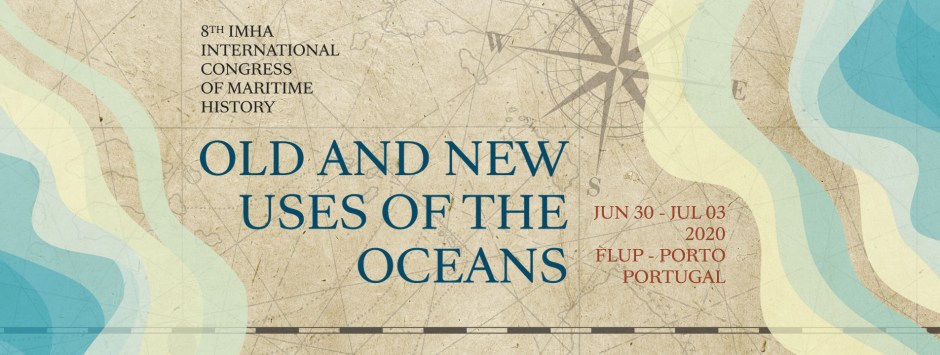
The Organizing Committee appointed by the International Maritime History Association invites proposals for panels and papers to be presented at IMHA’s 8th International Congress of Maritime History in Porto, to be hosted by CITCEM – U. PORTO (Transdisciplinary Research Centre Culture, Space and Memory – University of Porto) on June 30 – July 03, 2020.

The main theme will be “Old and New Uses of the Oceans”, and the aim is to investigate the many aspects of the relationship between humans and the oceans. We sail the surface of the oceans, harvest their resources, and exploit the minerals on and under the ocean floor. The oceans are also used as inspiration, for literature and other forms of art, and they shape relations among humans – both distant and close ones.

As with previous congresses, ICMH8 adopts a broad concept of maritime history, treating it as an interdisciplinary field that covers all historical periods and areas and all aspects of humankind’s relationship with the sea.
Papers will be welcome on a wide range of research areas reflecting people and their activities and interest in, on, around and under the waters of the world. The Organizing Committee also welcomes proposals for full panels and roundtables.

The Congress theme provides opportunities for researchers to share their work with colleagues in their various areas of interest and with researchers in adjoining fields.

Participants are invited to submit a short proposal in English indicating the scope of their intended paper, panel or roundtable, plus short biographical notes for all prospective participants.

Papers from the Congress will be considered for publication by the International Maritime History Association in its International Journal of Maritime History.

The official website of the Congress is https://imha2020.com/

Frank Broeze Prize for Outstanding Doctoral Thesis in Maritime History

International Maritime History Association
Frank Broeze Prize for Outstanding Doctoral Thesis in Maritime History

Professor Frank Broeze was one of the leading maritime historians of his generation. In his honour, the International Maritime History Association has instituted the Frank Broeze Prize to be awarded to the author of a doctoral thesis which, in the opinion of the panel, makes the most outstanding contribution to the study of maritime history.

As befitting Frank’s visionary approach to the field, maritime history encompasses all aspects of the historical interaction of human societies and the sea. The panel of judges will therefore consider works that focus on the maritime dimensions of economic, social, cultural, political, technological and environmental history.
The Frank Broeze Prize carries with it a cash award of €500 and free registration at the Eighth International Congress of Maritime History in Porto, Portugal, 2020. To be considered for this prestigious award, those who have completed a doctoral thesis between 1 September 2015 and 31 August 2019 are invited to submit a copy of their thesis for consideration. If the thesis is written in a language other than English, the entrant should provide a summary of their work (minimum 10,000 words) in English.

The judges will apply the following criteria in deciding the winner of the prize:
• Contribution to knowledge and understanding of the maritime past;
• Originality of approach, source material and/or findings;
• Depth and coherence of argument;
• Choice and application of methodology;
• Presentational and stylistic quality.

Eligible candidates should submit their entries, including a letter of support from their supervisor, via e-mail attachment to each of the panel members no later than 15 September 2019. The winner will be notified as early as possible in 2020, and the prize will be awarded at the Congress in Porto.

For this competition, there will be a panel of five judges:
Maria Fusaro (University of Exeter); M.Fusaro@exeter.ac.uk
Gelina Harlaftis (Ionian University); gelinaharla@gmail.com
Ingo Heidbrink (Old Dominion University); IHeidbri@odu.edu
Graeme Milne (University of Liverpool); G.J.Milne@liverpool.ac.uk
Malcolm Tull (Murdoch University); m.tull@murdoch.edu.au


Categories UncategorizedTags

Latest issue of IJMH, February 2019

37ff21e1d3cf003f11c99f27f3800e8b--new-books-journals


https://journals.sagepub.com/toc/IJH/current

Table of Contents

Volume 31 Issue 1, February 2019


Editorial

David J. Starkey

Articles

The first voyage of Giovanni da Empoli to India: Mercantile culture, Christian faith, and the early production of knowledge about Portuguese Asia

Matteo Salonia

Quo patet orbis Dei: Dutch Deputies for maritime affairs and their global network in the seventeenth and eighteenth centuries

(Leon) van den Broeke, J.C.A. (Joost) Schokkenbroek

Profits from under the water: The international blubber market, Russian monopolistic companies and the idea of whaling development in the eighteenth century

Alexei Kraikovski

The anti-piracy activities of the Nguyen Dynasty in the South China Sea, 1802–1858

Nguyen Thi My Hanh

Chr. Christensen and C. A. Larsen: A comparative analysis of two whaling entrepreneurs

Bjørn L. Basberg

Sibling rivalry, shipping innovation and litigation: Henry Burrell and the ‘Straightback Steamship’

Martin Bellamy

When does war end? Armistice and the Prize Courts of the twentieth century

Sarah Craze

From wooden pigeons to Telstar: Precursors of modern maritime satellite communications

Dimov Stojce Ilcev

The development of maritime satellite communications since 1976

Dimov Stojce Ilcev

Book Reviews

Centre of Maritime History, Institute for Mediterranean Studies

Establishment of the new Centre of Maritime History at the Institute for Mediterranean Studies
The Institute for Mediterranean Studies of the Foundation of Research and Technology – Hellas based in Rethymnon, Crete, Greece, announces the foundation of a new Centre for Maritime History Studies headed by the Director of the IMS/FORTH Professor Gelina Harlaftis. The aim of the Centre is to expand research on a broad range of topics of Maritime History related to the areas of the Mediterranean, the Black Sea and beyond, having the global, interdisciplinary and comparative studies in the epicenter.
The Centre will provide the necessary resources for young and experienced scholars to carry out their research in a stimulating and encouraging environment. Among these resources will be digital data bases and archives, a specialized library, and a cohesive and experienced group of researchers working in maritime history. Furthermore, the Center will devote funding resources to attract talented Ph.D. students who are willing to pursue research on maritime history. The Centre will also organize workshops, conferences and lectures in order to provide academic meetings on a regular basis and opportunities for scholars to discuss research problems and questions and exchange ideas for further research development.
The first workshop titled “What is Maritime History?” to be organized by the new Centre will take place on 25-26 April 2018 where leading maritime historians will inaugurate the Centre and will discuss developments in Maritime History in the last 20 years.
The new Center of Maritime History in Crete already hosts two ongoing research projects of IMS/FORTH in Maritime History.
The first is the ERC STG 2016 project entitled “Seafaring Lives in Transition. Mediterranean Maritime Labour and Shipping during Globalization, 1850s-1920s”, directed by Dr Apostolos Delis in partnership with the Universities of Barcelona, Genoa and Aix-Marseilles, and will last from 2017 to 2021. It is worth noting that Dr Apostolos Delis is the first Greek historian to have received an ERC grant. The project explores the transition from sail to steam navigation and the effects of this technological innovation on seafaring populations in the Mediterranean and the Black Sea, between the 1850s and the 1920s, whose lives were drastically changed by the advent of the steam.
The second project is entitled “Onassis Business History” and is directed by Gelina Harlaftis, with post-doc Dr Alexandra Papadopoulou, and will run during the period 2017-2020. The project is funded by the Onassis Foundation. It is rather impressive that despite the global reach of Aristotle Onassis, there is not one extensive study of his business edifice based on archival materials and not one to analyze the scope and impact of his entrepreneurial activity in Greece or abroad, either of his shipping business, or of Olympic Airways. In this way, the aim of this research project is twofold: the creation of the Onassis Archive and the writing of Onassis Business History.

Mechanisms of Global Empire Building in the First Global Age

Mechanisms of Global Empire Building in the First Global Age, edited by Amélia Polónia
and Cátia Antunes, 2017.
This book maps out the crucial mechanisms of global empire building during the Early Modern period and poses at center stage global exchanges between, across and among individuals and empires. The book focuses on instances in which individuals or groups systematically looked for ways to connect beyond the territorial and institutional limitations imposed by their respective empires. In doing so, it showcases a set of clear mechanisms of individual and collective agency. They challenged, cooperated with, or represented imperial interests, in what should be perceived as a sliding scale of individual behaviours and motivations, rather than an absolute stance run by central powers. How did people connect empires and what happened to empires as a result? How did individual and collective agency contribute to the constitution of global maritime empires during the Early Modern period?

This book will answer these questions by looking at the role individuals played in the construction of ‘informal empires’, resulting from the enactment of a multitude of self-organized networks operating world-wide, whose main goal was safeguarding their personal social and economic advantages, sometimes cooperating with formal powers, frequently regardless of (and in spite of) state intervention.

British Shipping in the Mediterranean during the Napoleonic Wars

British Shipping in the Mediterranean during the Napoleonic Wars. The Untold Story of a Successful Adaptation, by Katerina Galani, Ionian University

http://www.brill.com/products/book/british-shipping-mediterranean-during-napoleonic-wars 

Categories UncategorizedTags