Distant Shores: Colonial Encounters on China’s Maritime Frontier

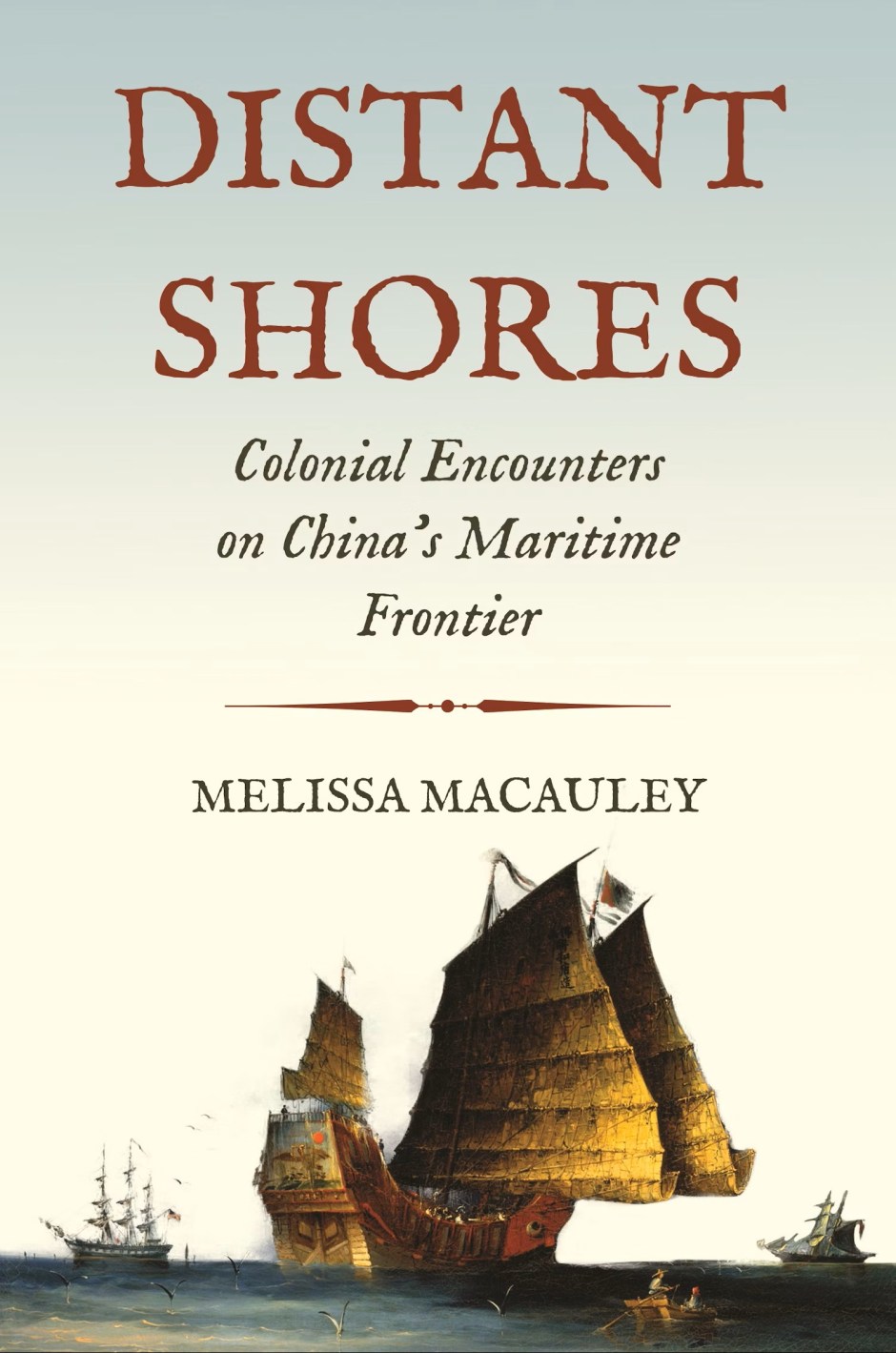
Daria Dahpon Ho publishes a review of the recent book by Melissa Macauley, Distant Shores: Colonial Encounters on China’s Maritime Frontier

Read it online (requires subscription) at https://journals.sagepub.com/doi/abs/10.1177/08438714251332122

China has conventionally been considered a land empire whose lack of maritime and colonial reach contributed to its economic decline after the mid-eighteenth century. Distant Shores challenges this view, showing that the economic expansion of southeastern Chinese rivaled the colonial ambitions of Europeans overseas.

In a story that dawns with the Industrial Revolution and culminates in the Great Depression, Melissa Macauley explains how sojourners from an ungovernable corner of China emerged among the commercial masters of the South China Sea. She focuses on Chaozhou, a region in the great maritime province of Guangdong, whose people shared a repertoire of ritual, cultural, and economic practices. Macauley traces how Chaozhouese at home and abroad reaped many of the benefits of an overseas colonial system without establishing formal governing authority. Their power was sustained instead through a mosaic of familial, fraternal, and commercial relationships spread across the ports of Bangkok, Singapore, Saigon, Hong Kong, Shanghai, and Swatow. The picture that emerges is not one of Chinese divergence from European modernity but rather of a convergence in colonial sites that were critical to modern development and accelerating levels of capital accumulation.

A magisterial work of scholarship, Distant Shores reveals how the transoceanic migration of Chaozhouese laborers and merchants across a far-flung maritime world linked the Chinese homeland to an ever-expanding frontier of settlement and economic extraction.

https://press.princeton.edu/books/hardcover/9780691213484/distant-shores?srsltid=AfmBOopbeEdklKyWemrKfssI4TZBSw8JZpuuNkvydrSD-aP3rhGcIgjQ

Transformation and adaptability in Greek shipowners’ collective representation

Ilias Bissias publishes in the forthcoming issue of the IJMH an article titled “Why do professional associations change their strategies? Transformation and adaptability in Greek shipowners’ collective representation after the fall of the Greek military dictatorship”

Read it in OnlineFirst at

https://doi.org/10.1177/08438714251330704

The 1970s was a decade when societies, especially in Europe, demanded more extroversion, transparency and social responsibility from state and private organisations. In this context, the Greek shipowning community’s strategic shift and willingness to cooperate with the state and trade unions in Greece reflected the collaborative spirit that prevailed globally at that time. This study aims to examine the reasons behind this negative sentiment expressed by the post-dictatorship Greek political system and the Athenian press, its impact on the collective representation bodies of Greek shipowners and the strategy the Union of Greek Shipowners chose to adopt in order to turn the tide.

https://journals.sagepub.com/…/10.1177/08438714251330704

Fukushima Futures: Survival Stories in a Repeatedly Ruined Seascape

Read (subscription needed) in the February 2025 issue of the IJMH Robert Winstanley-Chesters’s review of “Fukushima Futures: Survival Stories in a Repeatedly Ruined Seascape” by Satsuki Takahashi

Book Review: Fukushima Futures: Survival Stories in a Repeatedly Ruined Seascape by Satsuki Takahashi – Robert Winstanley-Chesters, 2025

A probe of the environmental and sociocultural effects of industrialization and nuclear disaster on coastal livelihoods

Both before and after the 2011 “Triple Disaster” of earthquake, tidal wave, and consequent meltdown at the Fukushima Daiichi nuclear power plant, anthropologist Satsuki Takahashi visited nearby communities, collecting accounts of life and livelihoods along the industrialized seascape. The resulting environmental ethnography examines the complex relationship between commercial fishing families and the Joban Sea—once known for premium-quality fish and now notorious as the location of the world’s worst nuclear catastrophe. Fukushima Futures follows postwar Japan’s maritime modernization from the perspectives of those most entangled with its successes and failures. In response to unrelenting setbacks, including an earlier nuclear accident at neighboring Tokaimura and the oil spills of stranded tankers during typhoons, these communities have developed survival strategies shaped by the precarity they share with their marine ecosystem. The collaborative resilience that emerges against this backdrop of vulnerability and uncertainty challenges the progress-bound logic of futurism, bringing more hopeful possibilities for the future into sharper focus.

Fukushima Futures

Atlas of navigation in France

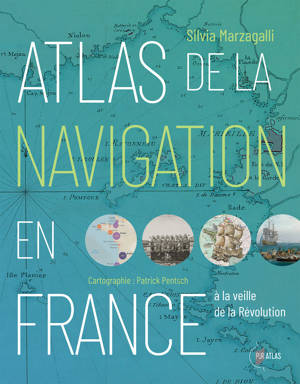
Read (subscription needed) in the February 2025 issue of the IJMH Kalliopi Vasilaki’s review of “Atlas de la navigation en France à la veille de la Révolution: Une effervescence portuaire” by Silvia Marzagalli

Book Review: Atlas de la navigation en France à la veille de la Révolution: Une effervescence portuaire by Silvia Marzagalli – Kalliopi Vasilaki, 2025

Based on several tens of thousands of historical records of ship departures and arrivals of all sizes, this book offers, for the first time, a comprehensive overview of the bustling activity along the French coastlines on the eve of the Revolution. Drawing on 90 previously unpublished maps and a rich collection of illustrations, it sheds new light on lesser-known aspects of navigation and challenges a number of commonly held assumptions.

As the pages unfold, the reader will discover the unique journey of a vessel, the extent of trade from a particular port or province, the flags under which this commerce was conducted, and the various types of navigation that defined maritime traffic in France at the end of a century marked by strong commercial growth in an increasingly interconnected world. From smuggling to fishing, from colonial and slave trade to salt expeditions, from voyages beyond the Cape of Good Hope to passenger transport in the Mediterranean, the text offers a clear and educational account of the extraordinary variety of activities that animated French ports, and of the wide diversity that characterized them—while also illustrating how the historian works, confronted with the gaps and uncertainties inherent in the sources.

Marzagalli Silvia – Atlas de la navigation en France à la veille de la Révolution

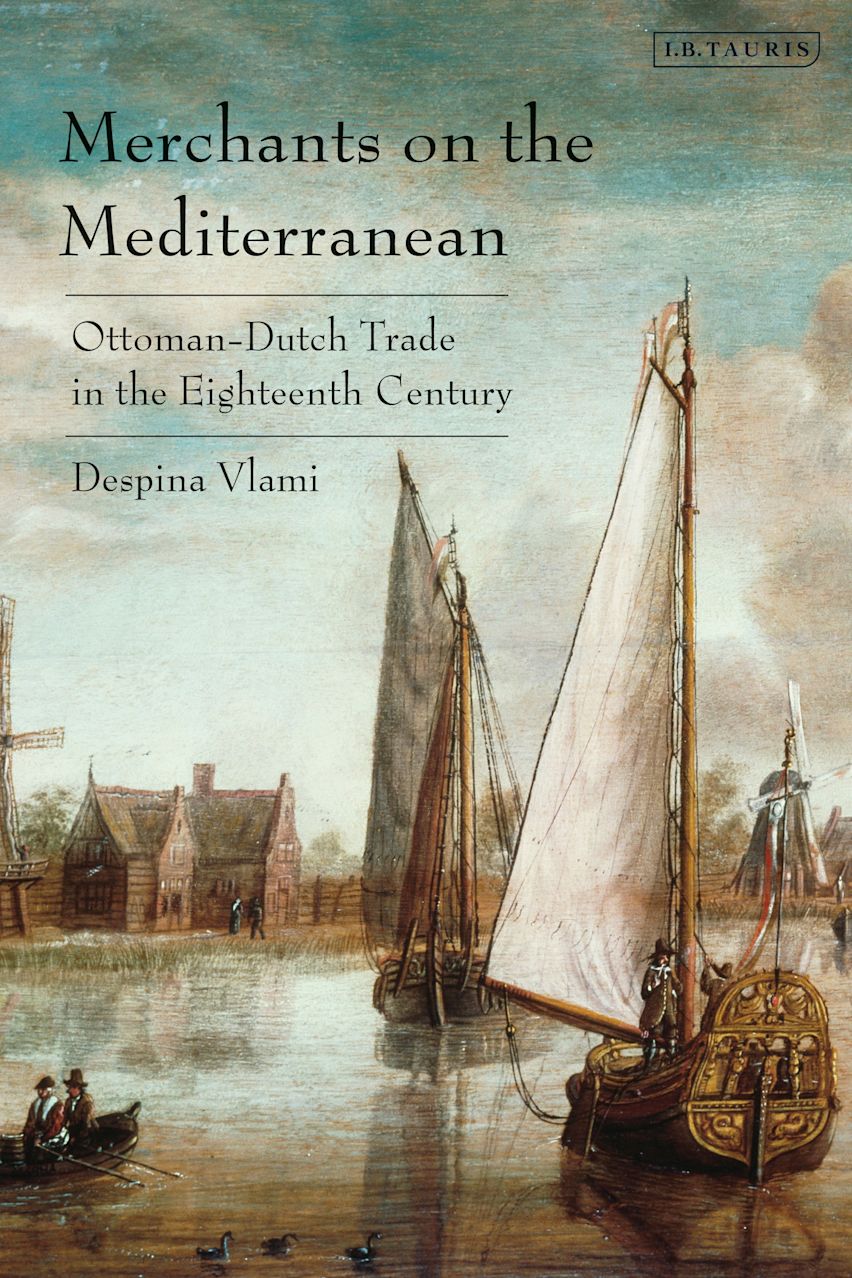
Merchants on the Mediterranean: Ottoman–Dutch Trade in the Eighteenth Century

Read (subscription needed) in the February 2025 issue of the IJMH Erica Heinsen-Roach’s review of “Merchants on the Mediterranean: Ottoman–Dutch Trade in the Eighteenth Century” by Despina Vlami

https://journals.sagepub.com/…/10.1177/08438714241307850

How easy and uncomplicated was it for an 18th-century, medium-sized, Ottoman trade company to expand its business in the West? Which kind of resources, in terms of knowledge, information, experience, contacts and capital, could guarantee its successful passage from the business environment of a precapitalist oriental market to that of a major commercial and financial center of western Europe?

Following the venture of the Ottoman Greek merchants Bartholo and Raphael Cardamici, who in the 1760s traded goods between Smyrna, Constantinople and Amsterdam, Despina Vlami investigates various aspects of the organization and strategy necessary for such an important transition. To expand their wholesale trade business to Amsterdam, the Cardamicis chose as their local correspondent an experienced and strong-minded Dutch merchant, Thomas De Vogel. De Vogel’s letters addressed to his Ottoman clients reveal the course of their business transactions and the making of their personal relationship. At the same time, they are comprehensive and efficient tutorials on trade business and strategy guiding the Ottoman Greek merchants through the unpredictable and unfamiliar 18th-century international business universe.

https://www.bloomsbury.com/…/merchants-on-the…/

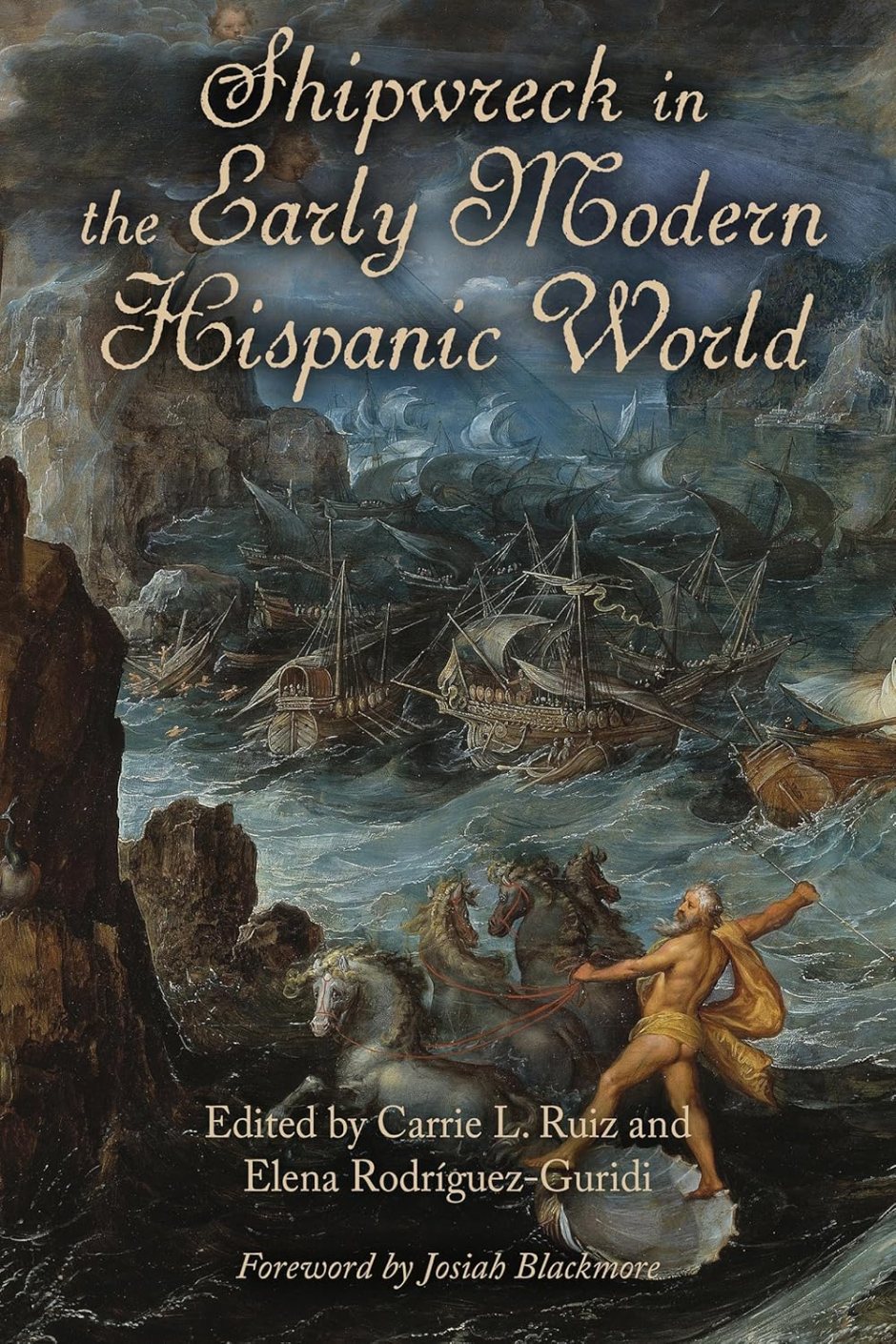
Shipwreck in the Early Modern Hispanic World

Read (subscription needed) in the February 2025 issue of the IJMH Marta García Garralón’s review of “Shipwreck in the Early Modern Hispanic World” by Carrie L. Ruiz and Elena Rodríguez-Guridi, eds.

Book Review: Shipwreck in the Early Modern Hispanic World by Carrie L. Ruiz and Elena Rodríguez-Guridi, eds. – Marta García Garralón, 2025

Seafaring activity for trade and travel was dominant throughout the Spanish Empire, and in the worldview and imagination of its inhabitants, the specter of shipwreck loomed large. Shipwreck in the Early Modern Hispanic World probes this preoccupation by examining portrayals of nautical disasters in sixteenth- and seventeenth-century Spanish literature and culture. The essays collected here showcase shipwreck’s symbolic deployment to question colonial expansion and transoceanic trade; to critique the Christian enterprise overseas; to signal the collapse of dominant social order; and to relay moral messages and represent socio-political debates. The contributors find examples in poetry, theater, narrative fiction, and other print artifacts, and approach the topic variously through the lens of historical, literary, and cultural studies. Ultimately demonstrating how shipwrecks both shaped and destabilized perceptions of the Spanish Empire worldwide, this analytically rich volume is the first in Hispanic studies to investigate the darker side of mercantile and imperial expansion through maritime disaster.

Shipwreck in the Early Modern Hispanic World – Bucknell University Press

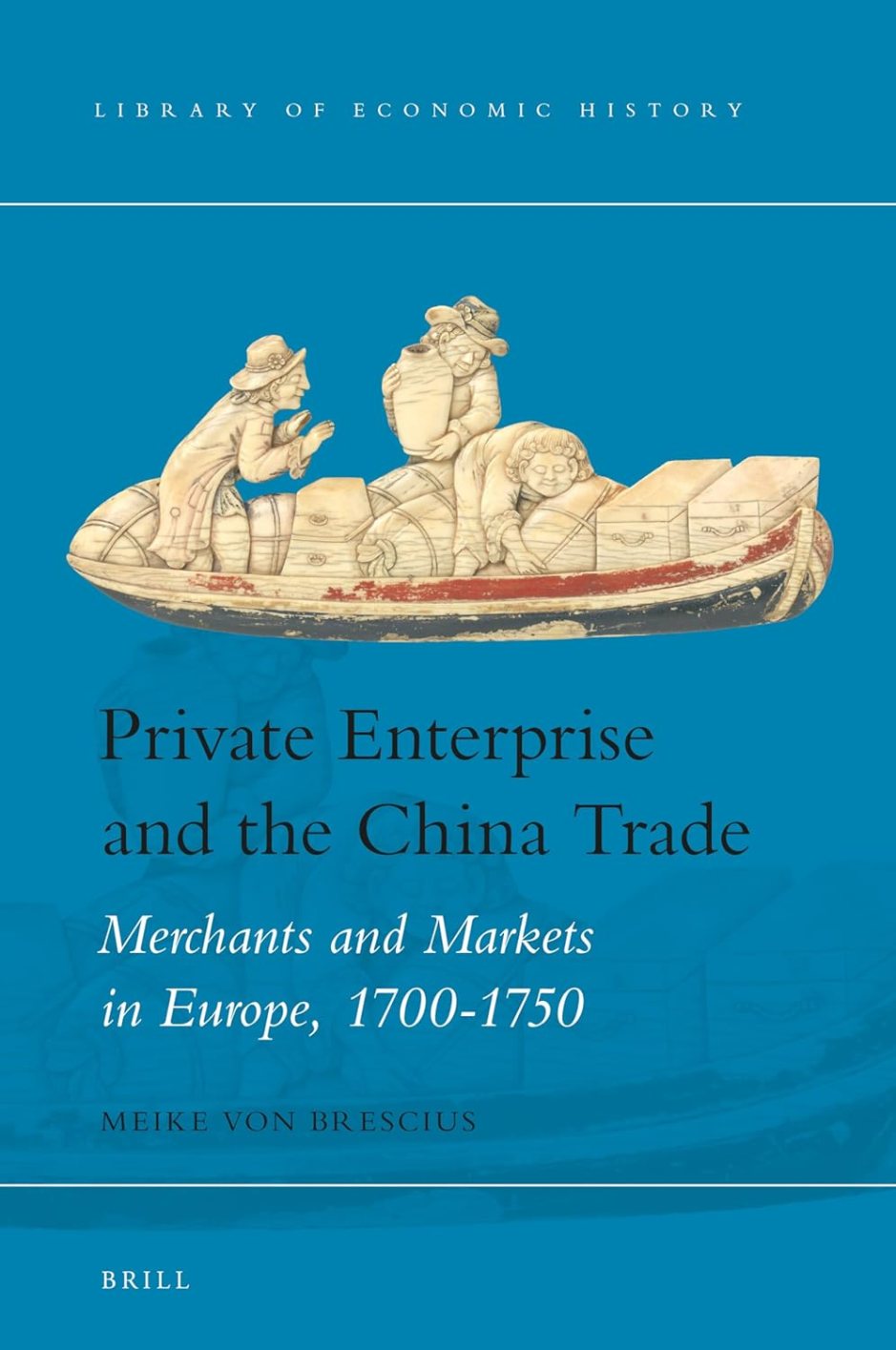
Private Enterprise and the China Trade

Read (subscription needed) in the February 2025 issue of the IJMH Anna Knutsson’s review of “Private Enterprise and the China Trade: Merchants and Markets in Europe, 1700–1750” by Meike von Brescius

Book Review: Private Enterprise and the China Trade: Merchants and Markets in Europe, 1700–1750 by Meike von Brescius – Anna Knutsson, 2025

The book is in open access.

This book examines the European commercial landscape of the early China trade, c.1700–1750. It looks at the foundational period of Sino-European commerce and explores a world of private enterprise beneath the surface of the official East India Company structures. Using rich private trade records, it analyses the making of pan-European markets, distribution networks and patterns of investment that together reveal a new geography of a trading system previously studied mostly at Canton. By considering the interloping activities of British-born merchants working for the smaller East India Companies, the book uncovers the commercial practices and cross-Company collaborations, both legal and illicit, that sustained the growth of the China trade: smuggling, wholesale trading, private commissions and the manipulation of Company auctions.

Private Enterprise and the China Trade – Merchants and Markets in Europe, 1700-1750 | Brill

Eating the Ocean: Seafood and Consumer Culture in Canada

Read (subscription needed) in the February 2025 issue of the IJMH Bjørn-Petter Finstad’s review of “Eating the Ocean: Seafood and Consumer Culture in Canada” by Brian Payne

Book Review: Eating the Ocean: Seafood and Consumer Culture in Canada by Brian Payne – Bjørn-Petter Finstad, 2025

The failure of government-funded Canadian seafood marketing in the first half of the twentieth century.

During the first half of the twentieth century, Canadian fisheries regularly produced more fish than markets could absorb, driving down profits and wages. To address this, both industry and government sought to stimulate domestic consumption via increased advertising.

In Eating the Ocean Brian Payne explores how government-funded marketing called upon Canadian housewives to prepare more seafood meals to improve family health and aid an industry central to Canadian identity and heritage. The goal was first to make seafood a central element of a “wholesome” diet as a solution to a perceived nutritional crisis, and, second, to aid industry recovery and growth while decreasing Canadian fisheries’ dependency on foreign markets. But fishery managers and policymakers fundamentally miscalculated consumer demand, wrongly assuming that Canadians could and would eat more seafood. Fisheries continued to extract more fish than the environment and the market could sustain, and the collapse of the nation’s fisheries that we are now seeing has as much to do with failed assessments of market demand as it does with faulty extraction practices.

Using internal communications between industry leaders and Ottawa bureaucrats, as well as advertising and promotional material published in the nation’s leading magazines, national and local newspapers, and radio programming, Eating the Ocean traces the flawed understanding of not only supply but demand, a misguided gamble that caused fisheries to become the most mismanaged resource economy in early-twentieth-century Canada.

Eating the Ocean | McGill-Queen’s University Press

L. H. Roper’s review of “Global Trade and the Shaping of English Freedom” by William A. Pettigrew

Read (subscription needed) in the February 2025 issue of the IJMH L. H. Roper’s review of “Global Trade and the Shaping of English Freedom” by William A. Pettigrew

https://journals.sagepub.com/doi/abs/10.1177/08438714241306496

This book offers a new account of the connections between seventeenth century English history and the history of the rest of the world. Eschewing nationalist narratives, it demonstrates how greater engagement with the world beyond Europe shaped signature aspects of the English experience. Early modern trading corporations are the central actors in the story. Global Trade and the Shaping of English Freedom offers a profoundly altered reading of the practices of these entities. The companies were not monolithic entities pursuing narrow nationalist interests overseas. Nor were they inefficient monopolies doomed to commercial failure. In the seventeenth century, as this book shows, they were driven and transformed by the immediate and local interests of Company agents and their foreign networks. Because the trading companies were the most important bridge between international contexts and English legal and political debates, they connect non-European power and preference to those debates. These unappreciated actors within the corporate sphere play leading roles in this book as the shapers of English debate about the meaning of English freedom and the futures of the trades they participated in overseas. The book offers a new perspective on the foreign actors who shaped English commercial and legal ideas and practices in the seventeenth century, as well as the Ottoman, Bantenese, Huedan, Siamese, and Mughal contributions to the ideological, institutional, and procedural underpinnings that would develop, slowly but surely, into the British Empire.